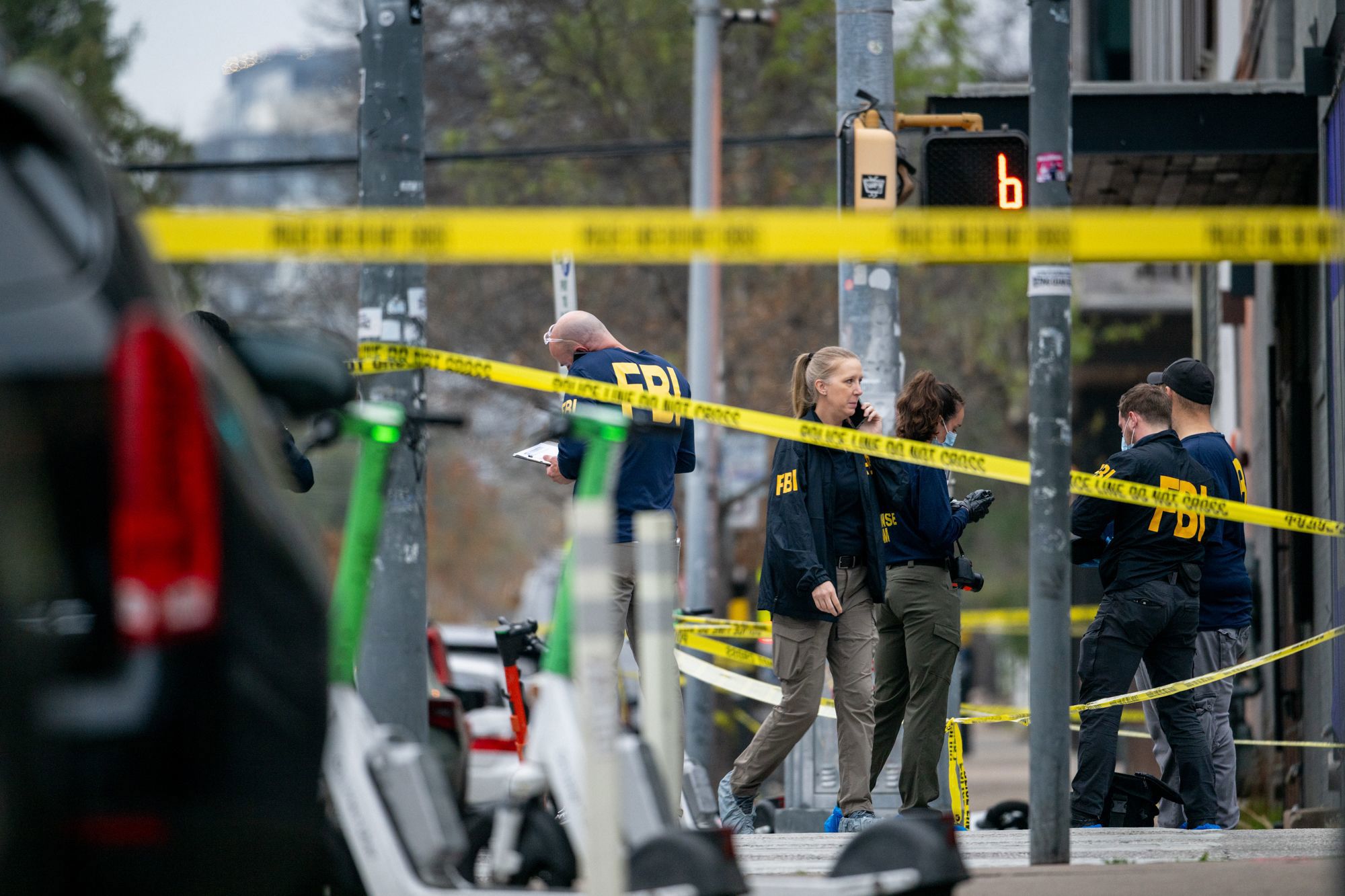
The ink wasn't even dry on the police reports from the Texas shooting before the "geopolitical analysts" crawled out of the woodwork to find a tidy, international explanation for a chaotic, local tragedy. They want you to believe that a kinetic strike in the Middle East ripples through the ether to pull a trigger in a suburban American driveway. It’s a comforting fiction. It suggests the world is a giant chessboard where every move is calculated.
The reality is much uglier and far more disorganized.
Linking domestic mass shootings to US foreign policy—specifically strikes on Iran—is the ultimate lazy consensus. It’s an attempt to impose a narrative of "cause and effect" on what is almost always a cocktail of digital radicalization, systemic mental health failure, and the catastrophic collapse of local community guardrails. By focusing on Tehran, we ignore the rot in our own data streams.
The Geopolitical Red Herring
Every time a tragedy strikes, the media follows a predictable script: find a manifesto, find a social media post, and find a way to blame a global conflict. If the shooter mentioned Iran, the headlines claim "Foreign Policy Blowback." If they mentioned a different border, it's "Immigration Tensions."
This is a category error.
Geopolitics involves rational (or semi-rational) state actors seeking power, resources, or security. Mass shootings are the antithesis of this. They are acts of expressive, nihilistic violence. To suggest that a US drone strike in the Persian Gulf motivated a lone wolf in Texas is to grant that individual a level of strategic political agency they simply do not possess.
I’ve spent years analyzing how extremist narratives travel through encrypted channels and dark-web forums. These shooters aren't motivated by the tactical nuances of the Joint Comprehensive Plan of Action (JCPOA) or the logistical footprint of the IRGC. They are motivated by the aesthetic of conflict. They are looking for a banner to fly over their own internal wreckage.
The Algorithmic Feedback Loop
Instead of looking at the map of the Middle East, we should be looking at the architecture of the platforms where these individuals reside. The "strike on Iran" isn't the cause; it’s just the latest piece of content fed into a high-velocity grievance machine.
We are dealing with a phenomenon I call "Open Source Radicalization." In this environment, the specific ideology is almost secondary to the sense of belonging provided by the conflict itself.
- The Trigger Event: A news cycle (like a strike on Iran) provides a fresh set of "villains" and "heroes."
- The Synthesis: The individual blends this global event with their personal failures—job loss, social isolation, or perceived persecution.
- The Validation: Algorithms detect their interest in the topic and flood their feed with increasingly extreme interpretations.
- The Action: The violence is committed not to change US policy, but to finally be a "character" in the global drama they’ve been watching through a screen.
The competitor's argument that we can "prevent" these shootings by adjusting our stance on Iran is not just wrong; it’s dangerous. It suggests that if we just played nicer on the global stage, our domestic instability would vanish. That’s a fantasy.
The Myth of the "Political" Shooter
We need to stop using the word "motivated" so loosely. If a man burns down his house because he thinks the CIA is sending signals through his toaster, we don't say his actions were "motivated by intelligence agency overreach." We recognize it as a breakdown of reality.
Yet, when a shooter adopts the language of a global conflict, we suddenly treat them like a dissident intellectual or a foreign operative. This legitimizes the violence. It gives future shooters a template for how to make their personal misery feel "historic."
I’ve seen this play out in dozens of cases. The shooter's digital footprint usually reveals a desperate search for any cause that fits. Last month it might have been environmental collapse; this month, it's the strike on Iran. They are "cause-shopping."
The Data Gap
If foreign policy strikes truly caused domestic shootings, we would see a statistically significant correlation between military engagements and domestic terror incidents. We don't.
- 1990s: High domestic militia activity during a period of relatively low Middle Eastern kinetic involvement (pre-9/11).
- 2000s: Massive military engagement in Iraq and Afghanistan, but domestic mass shootings were driven more by school-based grievances and workplace disputes.
- 2020s: A surge in shootings during a period of "strategic pivot" and reduced boots-on-the-ground.
The variable that has actually changed? Bandwidth. The speed at which a person can go from "unhappy loner" to "global martyr" has been reduced to zero. You can download a manifesto, watch a live-streamed strike, and buy tactical gear in the same afternoon.
Stop Asking "Why Iran?"
The "People Also Ask" section of your search engine is likely filled with questions like: Does Iran have sleeper cells in Texas? or How do US strikes affect domestic safety?
These are the wrong questions. They assume an organized, top-down threat. They ignore the bottom-up reality of the "lonely-to-lethal" pipeline.
If you want to understand why a shooting happened in Texas, stop looking at the State Department’s briefing notes. Look at the local mental health funding. Look at the disintegration of the nuclear family. Look at the fact that we have millions of young men who feel their only path to significance is through a high-definition exit.
The Cost of the Wrong Narrative
When we blame Iran (or our reaction to Iran), we give ourselves an "out." We can blame the President, the Pentagon, or a foreign dictator. We don't have to look at our neighbors. We don't have to look at our own screens.
The hard truth is that we are living in an era of "Degenerative Violence." This is violence that has no goal, no "ask," and no political utility. It is the waste product of a society that has optimized for engagement over stability.
Imagine a scenario where the US never struck Iran. Would that shooter still have been isolated? Yes. Would he still have had access to high-capacity weapons? Yes. Would he still have been marinating in a digital culture that prizes infamy above all else? Absolutely. He just would have picked a different excuse. Maybe it would have been a dispute over a video game, or a perceived slight from a co-worker, or a different conflict on a different continent.
The Industry Insider's Reality Check
I’ve sat in the rooms where "threat assessments" are made. The most terrifying people aren't the ones with ties to foreign intelligence. They are the ones with no ties to anything at all.
Organized groups are easy to track. They have patterns. They have hierarchies. They have something to lose. The "unaffiliated" shooter—the one the media loves to link to Iran—is a ghost. They are a glitch in the system.
By pretending these people are "motivated" by complex international relations, we are essentially trying to negotiate with a hurricane. You can’t change the weather by changing your foreign policy.
We have to stop treating these events as "news" in the traditional sense. They aren't political developments. They are public health crises disguised as warfare.
The next time you see a headline linking a domestic atrocity to a strike in some far-off land, ignore it. It’s a distraction designed to make a terrifyingly random world feel predictable.
The fire isn't being set from overseas. The house is already soaked in gasoline; the news just happens to be the match that fell.
Stop looking for a "strategic" reason for a "senseless" act.
Accept the chaos, or you'll never be able to fix it.