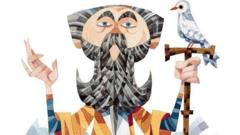
You won't find them on Instagram. They don't have TikTok accounts, and they couldn't care less about the latest smartphone. In a corner of Western Ukraine, specifically within the Ivano-Frankivsk and Ternopil regions, a group of people has decided that the last two hundred years of "progress" were essentially a mistake. They’re often called the "Kashketnyky" because of the dark cloth caps the men wear, but they call themselves "Simple Believers."
Living without electricity isn't a performance for them. It’s a theology. While the rest of the world is screaming into the digital void, these communities are quietly proving that you can actually survive—and maybe even thrive—by rejecting almost everything we consider essential.
Living in a world without switches
Most people assume living without power is a nightmare. We panic when our phone hits 5% battery. For the Simple Believers, the absence of a power grid is freedom. They don't use electricity. No light bulbs, no refrigerators, no washing machines. When the sun goes down, they use glass oil lamps.
It changes the way you think about time. Your day isn't dictated by a work schedule or a television lineup. It’s dictated by the horizon. They cook on wood-burning stoves. They wash clothes by hand in cold water or heated basins. It’s grueling, physical labor that occupies the entire day. You don't have time for an existential crisis when you have to chop wood just to boil tea.
This isn't just about being "old-fashioned." It’s a deliberate shielding of the soul. They believe that modern technology brings "temptation" and "vanity" into the home. By cutting the cord, they’ve effectively built a fortress against the noise of the 21st century.
The community of the caps
The nickname "Kashketnyky" comes from the kashket—the peaked cap that every male member wears from childhood. It’s their uniform. It signals who they are and what they value. The women wear colorful headscarves, usually tied tightly. They don't wear jewelry. They don't use makeup.
Their villages, like Kosmarchyk or Stinka, look like something out of a 19th-century painting. But don't mistake their simplicity for a lack of sophistication. They are master builders and farmers. They have to be. If your roof leaks or your crop fails, you can't just call a contractor or go to a supermarket. You rely on your neighbor.
This radical self-reliance creates a social bond that’s almost extinct in the West. In our world, we pay for services. In their world, they trade sweat. If a young couple gets married, the community helps build their house. There’s no mortgage. There’s no debt. There's just a collective understanding that everyone survives together or no one does.
Why they shun the state
The Simple Believers aren't just hiding from technology; they’re largely opting out of the state. Many refuse to accept government subsidies or pensions. Some even avoid getting passports or official identification if they can help it. To them, the state is just another worldly distraction that interferes with their relationship with God.
This creates a fascinating legal and social gray area. They live within Ukraine, but they aren't exactly of Ukraine in a political sense. They don't vote. They don't run for office. During the ongoing war, their pacifism and isolationism have put them in a unique position. While the rest of the country is mobilized for a high-tech conflict involving drones and satellite links, these villages remain quiet pockets of pre-industrial life.
The theology of the simple
Their faith is a branch of Pentecostalism, but it’s been stripped down to the studs. They don't have ornate cathedrals or golden icons. Their "churches" are often just large rooms in houses or simple dedicated buildings. No organs, no sound systems. Just human voices singing in harmony.
They interpret the Bible with a literalism that would make most modern Christians sweat. If the Bible says "be not conformed to this world," they take that as a direct order to stop using plastic.
- No Television: It’s seen as a window for the devil.
- No Radio: Music and news are considered worldly noise.
- No Cars: Most travel is done by horse and cart or on foot.
- Large Families: It’s common to see families with 10, 12, or even 15 children.
The cost of the quiet life
It’s easy to romanticize this. We sit in our ergonomic chairs and dream of a cottage in the woods. But the reality for the Simple Believers is brutal. Infant mortality is higher because many refuse modern medical intervention, preferring prayer and traditional remedies. Education is basic. Children learn to read and write, mostly so they can study the Bible, but higher education is viewed as a path toward pride and secularism.
There's also the pressure of the outside world. The youth aren't blind. They see the trucks driving past. They see the soldiers. Sometimes, a young person decides they’ve had enough of the wood-stove life and leaves for the city. It’s a devastating blow to the family, often resulting in a total break in contact.
Yet, despite these pressures, the community is growing. Their high birth rates mean that even if some leave, the villages are getting larger. They aren't a dying breed. They’re an expanding one.
What we get wrong about isolation
We tend to look at groups like the Simple Believers or the Amish and see "backwardness." We think they're missing out. But if you spend any time observing the pace of their lives, you realize they’ve gained something we’ve lost: presence.
When a Simple Believer talks to you, they aren't checking their watch. They aren't distracted by a notification on their wrist. They're entirely there. Their focus is on the dirt in their fields, the wood in their hands, and the people in their sight. There’s a psychological weight to that kind of living that modern life has systematically stripped away.
They aren't "simple" in the sense of being unintelligent. They’re simple in the sense of being singular. They have one goal, one way of living, and one community. In a world of infinite choices that lead to infinite anxiety, there’s a strange, hard-won peace in having no choices at all.
If you want to understand what it looks like to truly opt out, don't look at "digital nomads" with their laptops in Bali. Look at a man in a black cap in a Ukrainian village, hauling water from a well in the dead of winter. That’s the real counter-culture.
Go find a local farmers market this weekend and talk to the producers. Don't look at your phone while you do it. See if you can handle ten minutes of pure, undistracted human interaction. It’s harder than it sounds. That’s the first step toward understanding a world where the light comes from a wick, not a screen.