Miguel Díaz-Canel stands before a microphone in Havana and invokes the ghost of "unbreakable resistance." It is a script written decades ago, performed by a new actor facing an old audience. The Cuban leader's recent vows to defy any perceived American attempt to "take over" the island are not merely populist rhetoric. They are a calculated survival mechanism for a government currently presiding over the worst economic collapse since the fall of the Soviet Union. By framing the island’s internal decay as an external existential threat, the administration attempts to pivot the narrative away from a failing electrical grid and toward a struggle for national sovereignty.
The reality on the ground is far more complex than a simple David versus Goliath standoff. Cuba is currently suffering through a perfect storm of systemic inefficiency, the lingering effects of the pandemic on tourism, and a tightening of the U.S. embargo. However, the "unbreakable resistance" mentioned in official state broadcasts serves a specific internal purpose. It justifies the suppression of dissent and the maintenance of a centralized command economy that many younger Cubans see as an anchor dragging them into the sea.
The Architecture of Constant Crisis
To understand why the Cuban leadership returns to this specific well of defiance, one must look at the mechanics of the Cuban state. For sixty years, the threat of U.S. intervention has functioned as the glue holding the revolutionary project together. When the lights go out in Santiago or food rations fail to arrive in Matanzas, the official explanation rarely points to the mismanagement of the state-run distribution companies. Instead, the blame is cast northward.
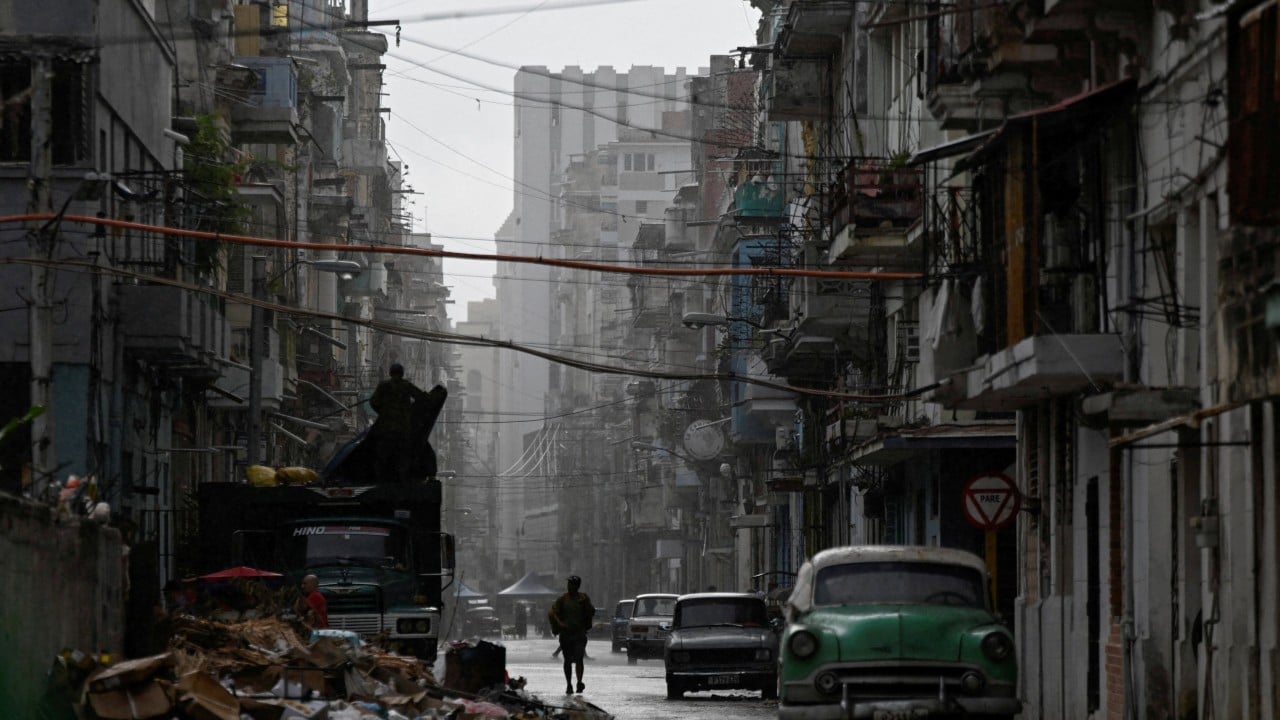
The electrical crisis is perhaps the most visible sign of this structural rot. The island’s power plants are ancient, often dating back to Soviet technology from the 1970s. They require specialized parts that are increasingly difficult to source. Instead of pivoting toward a diversified energy portfolio or allowing for significant private investment in infrastructure, the government has largely doubled down on emergency repairs and floating Turkish power ships. These are expensive, short-term bandages. When Díaz-Canel speaks of resistance, he is asking the population to accept these blackouts as a patriotic sacrifice. It is a hard sell for a generation that has grown up with smartphones and a window into the prosperity of the outside world.
Digital Sovereignty as a New Battleground
While the rhetoric remains rooted in 20th-century geopolitical tropes, the method of control has shifted into the digital space. The Cuban government has realized that physical resistance is no longer enough; they must control the flow of data. Following the historic protests of July 11, 2021, the state accelerated its efforts to monitor and restrict internet access.
This is where the "technology" aspect of the current crisis becomes paramount. The government uses Decree 35 and Resolution 105 to criminalize online content that might "disturb public order" or "defame" the state. When the leadership speaks of protecting the island from a takeover, they are increasingly referring to an ideological takeover via social media. They view platforms like Facebook and WhatsApp not as tools for communication, but as weapons of "unconventional warfare" deployed by Washington.
The irony is that the same internet the government fears is the only thing keeping the economy breathing. The rise of small and medium-sized enterprises, known as MSMEs or mipymes, relies heavily on digital transactions and international networking. The state is caught in a paradox: it needs a connected economy to survive, but a connected citizenry threatens its monopoly on information. Resistance, in this context, means building a domestic intranet that mimics the openness of the web while remaining under the thumb of the Ministry of Communications.
The Myth of the Monolithic Enemy
The official Havana narrative treats the United States as a monolithic entity purely focused on the destruction of the Cuban Revolution. This ignores the internal friction within U.S. policy circles. While the embargo—referred to in Cuba as el bloqueo—remains a heavy burden, the Biden administration has made incremental moves to support the Cuban private sector. These include allowing U.S. banks to process certain transactions for private Cuban entrepreneurs.
The "takeover" that Díaz-Canel warns against is not a military invasion. No serious military analyst believes the U.S. has the appetite or the strategic reason to put boots on the ground in Havana. The actual "takeover" is the slow, grinding influence of the dollar. As the Cuban peso loses its value, the country is undergoing a de facto dollarization. Businesses that can source goods from abroad and sell them in hard currency are the only ones flourishing. The government’s vow of resistance is, in many ways, a desperate attempt to stop its own currency from becoming a historical relic.
The Demographic Drain
You cannot have a resistance without people to man the barricades. Cuba is currently facing its largest migratory wave in history. Hundreds of thousands of people, mostly young and educated, have left the island in the last three years. They are heading to the United States, Spain, and Mexico, fleeing a future defined by scarcity.
The departure of this human capital is the ultimate indictment of the "resistance" strategy. When the best and brightest leave, the state is left with an aging population and a shrinking tax base. The doctors, engineers, and teachers who were supposed to be the pride of the revolution are now driving Ubers in Miami or working in construction in Madrid. This brain drain is a far greater threat to the Cuban state than any CIA plot. It hollows out the very core of the nation, leaving behind a shell of a country that struggles to perform basic functions.
The Role of Foreign Allies
In the absence of a functional relationship with the U.S., Havana has looked toward Moscow and Beijing. This is not a partnership of equals, but a series of transactional arrangements. Russia has provided oil and talk of long-term economic leases, while China has invested in telecommunications and infrastructure.
However, these allies are not the Soviet Union of old. They expect a return on their investment. Russia’s involvement in Ukraine has limited its ability to provide the massive subsidies Cuba needs. China is wary of Cuba’s ability to repay its debts. The "unbreakable resistance" is thus partially funded by a rotation of foreign creditors who are increasingly skeptical of the island's long-term stability.
Tactical Defiance as a Negotiation Tool
There is a school of thought among veteran Caribbean analysts that this heightened rhetoric is a precursor to negotiation. By appearing unyielding and warning of a "takeover," the Cuban leadership sets a high bar for any future diplomatic thaw. They want to ensure that if a rapprochement occurs—perhaps after the next U.S. election cycle—it happens on terms that do not require them to dismantle their one-party system.
They are watching the "Vietnam Model" closely. Vietnam managed to normalize relations with the United States and integrate into the global economy while maintaining strict Communist Party control. Cuba wants that same deal. The problem is that Vietnam has a massive manufacturing base and a younger demographic. Cuba has a crumbling sugar industry and a population that is moving away as fast as they can find a flight.
The Breaking Point of the Social Contract
For decades, the social contract in Cuba was simple: the state provided healthcare, education, and basic food security, and in exchange, the people provided political loyalty. That contract has been torn to shreds. Healthcare facilities are facing chronic shortages of basic medicine like aspirin and bandages. Education is hampered by a lack of materials and teachers who have left for better-paying jobs in the private sector.
When the state can no longer provide the basics, the only tool left is the police. The crackdown on protesters and the long prison sentences handed out to those who voiced their frustration in 2021 suggest that the government is aware the "resistance" is no longer a shared national sentiment. It is an imposed state of being. The "unbreakable" nature of this resistance is currently being tested by a population that is simply exhausted.
The Economic Mirage of Reform
The introduction of mipymes was supposed to be the safety valve. By allowing small-scale private ownership, the government hoped to stimulate the economy without losing control. It has created a new class of entrepreneurs, but it has also highlighted the massive inequality on the island. Those with family abroad who can send remittances can start businesses; those without are left to survive on state salaries that are worth less every month.
This inequality is a poison to the revolutionary narrative. It is hard to preach "unbreakable resistance" against "capitalist imperialists" when the state is allowing a form of capitalism to take root in Havana's suburbs. The leadership is walking a tightrope, trying to allow enough economic freedom to prevent a total collapse while maintaining enough central control to prevent a political uprising.
The Future of the Revolutionary Guard
The transition from the Castro brothers to Miguel Díaz-Canel was meant to signal a new era of institutionalized leadership. However, the old guard—the históricos—still holds significant sway behind the scenes, particularly within the military-run conglomerate GAESA. This entity controls a vast portion of the Cuban economy, including tourism and retail.
The military’s involvement in the economy is the real barrier to any significant change. They have the most to lose from a "takeover" or even a legitimate opening of the market. To them, "resistance" means protecting their assets and their grip on the nation's purse strings. Any analysis of Cuban policy that ignores the financial interests of the military is incomplete.
The current rhetoric coming out of Havana is the sound of a regime that has run out of ideas. It is a return to the comfort of the bunker. But a bunker is not a country, and resistance is not an economic policy. As the infrastructure fails and the youth depart, the "unbreakable" wall the leadership is building may eventually find itself standing over an empty house.
Monitor the shifts in the Cuban Central Bank’s policies regarding foreign currency exchange. This will be the first indicator of whether the state is truly prepared to reform or if it will continue to lean on the narrative of the external enemy to justify internal stagnation.