Anjali stands before her bathroom mirror in a quiet suburb of New Jersey, steadying her hand. She holds a small tube of vermilion paste. With the precision of a surgeon, she applies a perfect, circular tilak between her eyebrows. It is a morning ritual, a silent connection to a lineage that spans millennia. But as she reaches for her car keys, she pauses. She thinks about the meeting at the tech firm. She thinks about the aggressive thread she saw on her social feed last night.
She wipes it off.
This isn't a story about religion in the abstract. It is a story about the erosion of the self. For millions of Indian-Americans, the "American Dream" was always a simple bargain: bring your talent, your work ethic, and your culture, and in exchange, you get a seat at the table. But lately, that seat feels increasingly unstable. A new, digital-age shadow is stretching across the diaspora, transforming ancient symbols into targets and turning quiet success into a liability.
The Geography of a New Prejudice
When we talk about prejudice in America, we often look for the obvious. We look for the shouted slur or the physical confrontation. Those exist, certainly. However, the modern strain of Hinduphobia operates with a more surgical, quiet efficiency. It lives in the "progressive" boardroom where a swastika—a symbol of peace and well-being for billions—is intentionally conflated with Nazi iconography despite centuries of distinct history. It lives in the academic hallways where "caste" is used as a shorthand to essentialize and vilify an entire community, regardless of their individual lived experiences.
Consider a hypothetical professional named Vikram. He is a software architect in Austin. He is third-generation. He doesn't know much about the intricacies of Indian geopolitics, but he enjoys his family’s Diwali celebrations. Suddenly, he finds himself excluded from a Diversity, Equity, and Inclusion (DEI) seminar because his background is labeled "overrepresented" and "privileged." When he mentions a hike in his local temple’s property taxes, a colleague makes a "joke" about cows and "regressive" rituals.
Vikram laughs it off. But the laughter is hollow.
This is the "bamboo ceiling" meeting a spiritual wall. According to recent data points from organizations monitoring hate speech, Indian-Americans are experiencing a surge in online vitriol that often bleeds into the physical world. The FBI’s hate crime statistics have shown a fluctuating but concerning trend regarding anti-Hindu sentiment, yet it remains one of the least understood and most frequently dismissed forms of bigotry in the Western consciousness.
The Troll in the Machine
The internet has changed the physics of hate. In the past, if someone harbored a grudge against a community, they had to find a physical megaphone. Now, they have an algorithm.
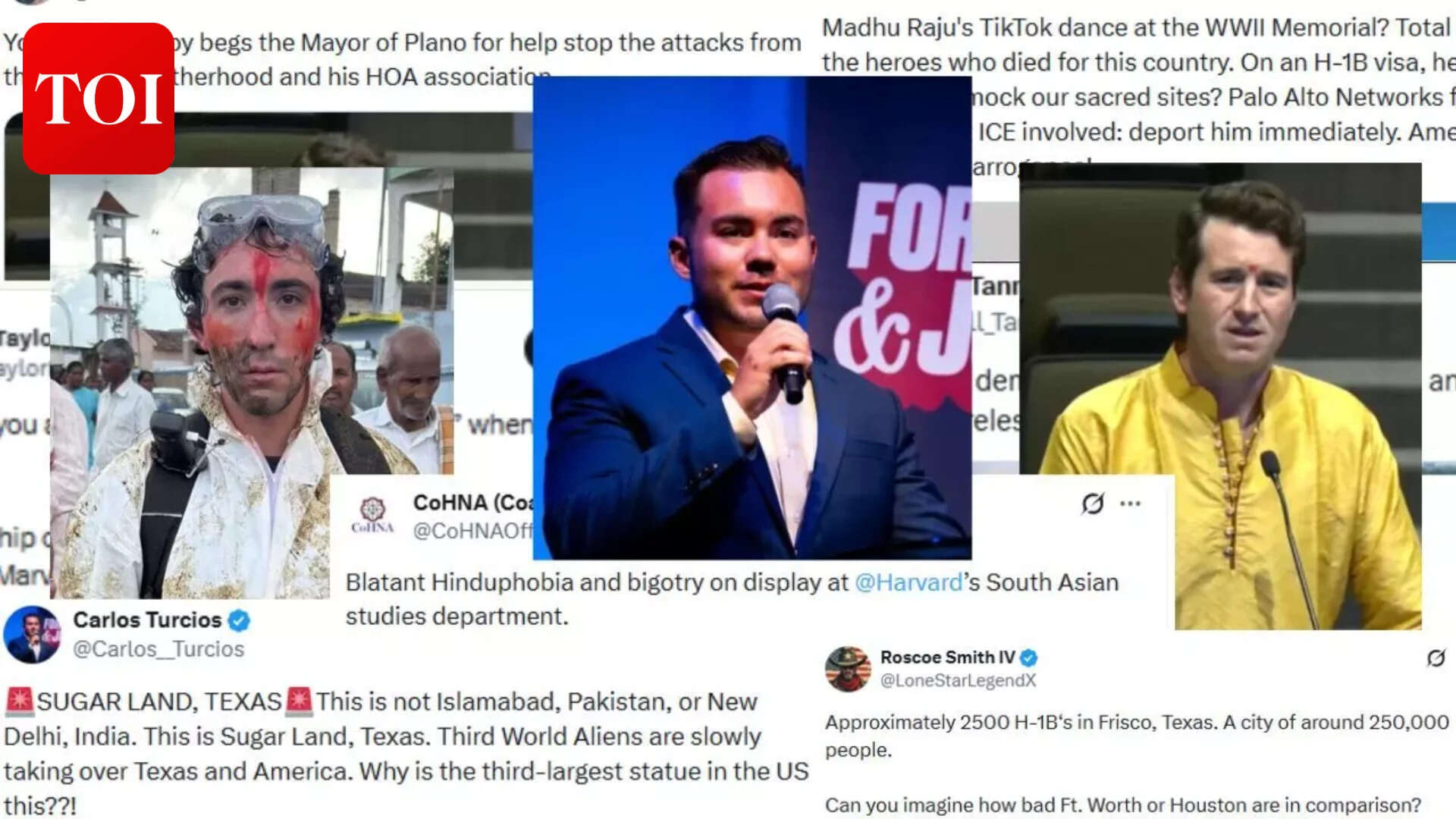
A single post questioning the "loyalty" of Hindu-Americans can go viral in an hour. These digital campaigns often follow a specific script. They pick a facet of Hindu practice—be it the bindi, the temple architecture, or the vegetarian diet—and rebrand it as a sign of "nationalism" or "exclusivism." They weaponize the complexities of South Asian history to paint a diverse group of physicians, engineers, and teachers as a monolith of oppression.
The stakes are invisible until they aren't.
For a college student in California, it looks like being interrogated by a peer group about "Modi's policies" simply because they wear a "thali" necklace. It is a demand for a political litmus test that is rarely asked of any other immigrant group. If they don't denounce their heritage in the specific vocabulary of the current month's social justice trend, they are cast out.
Isolation. That is the goal of the troll. By making the cost of identity too high, they force the Anjalis of the world to reach for the makeup remover.
The Myth of the Model Minority
For decades, the Indian-American community was held up as the "model minority." This was always a double-edged sword. While it celebrated professional achievement, it also functioned as a shield that blinded the public to the community's vulnerabilities.
If you are successful, the logic goes, you cannot be a victim.
But wealth and education do not protect a child from being bullied in a school cafeteria because of the "smell" of their lunch. They do not protect a temple in Fremont from being defaced with hateful graffiti. The "model minority" label actually makes it harder to report these incidents because there is a collective pressure to remain stoic—to keep the head down and keep working.
The pressure is internal, too. There is a generational rift forming. Older immigrants, who arrived with nothing and built empires, often favor silence. "Don't make a scene," they say. "Just work harder." The younger generation, born into a culture of vocal advocacy, finds this silence suffocating. They are caught between a heritage they are told to be ashamed of and a society that views them as an exoticized commodity.
A Language of Erasure
We must look at how words are being hijacked.
Take the term "Hindutva." In a theological sense, it refers to the essence of being Hindu. In the modern media landscape, it has been stripped of nuance and turned into a political bludgeon used to smear anyone who expresses pride in their faith. When a community’s vocabulary is taken from them and redefined by outsiders, the community loses the ability to define its own reality.
This isn't just a grievance about semantics. It is about safety. When you dehumanize a faith by reducing it to a set of political buzzwords, you make the practitioners of that faith "fair game."
Imagine a neighborhood watch meeting where a resident expresses concern about a new temple being built. They don't use racial slurs. Instead, they use the language of "secularism" or "social concern." They talk about "noise" and "traffic," but the subtext is clear: You don't belong here. Your gods are too loud. Your presence is a disruption.
The Cost of the Silent Withdrawal
What happens when a community begins to hide?
When the doctors, the teachers, and the creators who make up the backbone of the American diaspora decide it is safer to be invisible, the entire country loses. We lose the vibrancy of the pluralism we claim to cherish. We lose the unique perspectives that come from a worldview that sees the divine in all living things.
The tragedy is that most Hindu-Americans are not asking for special treatment. They are asking for the same baseline of respect afforded to every other tile in the American mosaic. They are asking for a world where a child can explain their holiday to a teacher without being met with a confused or judgmental stare.
Change won't come from a policy memo or a single legislation. It comes from the realization that prejudice against one is a crack in the foundation for all. It comes from the neighbors who show up to the temple when the windows are broken. It comes from the colleague who asks about the significance of the bindi with genuine curiosity rather than an agenda.
Anjali is back at the mirror the next morning.
The tube of paste is there. The car keys are there. The world outside hasn't changed much overnight; the threads are still toxic, and the meetings will still be long. But she looks at her reflection and realizes that erasing herself is a price she can no longer afford to pay. If the American Dream requires the death of her history, it isn't a dream at all.
She applies the dot. It is small. It is red. It is a defiance.
She walks out the door, her head held at an angle that refuses to apologize for the space she occupies, waiting for a world that is finally ready to look her in the eye.
The reflection in the glass remains, a silent witness to the fact that you cannot build a future by burning the bridges to your past.