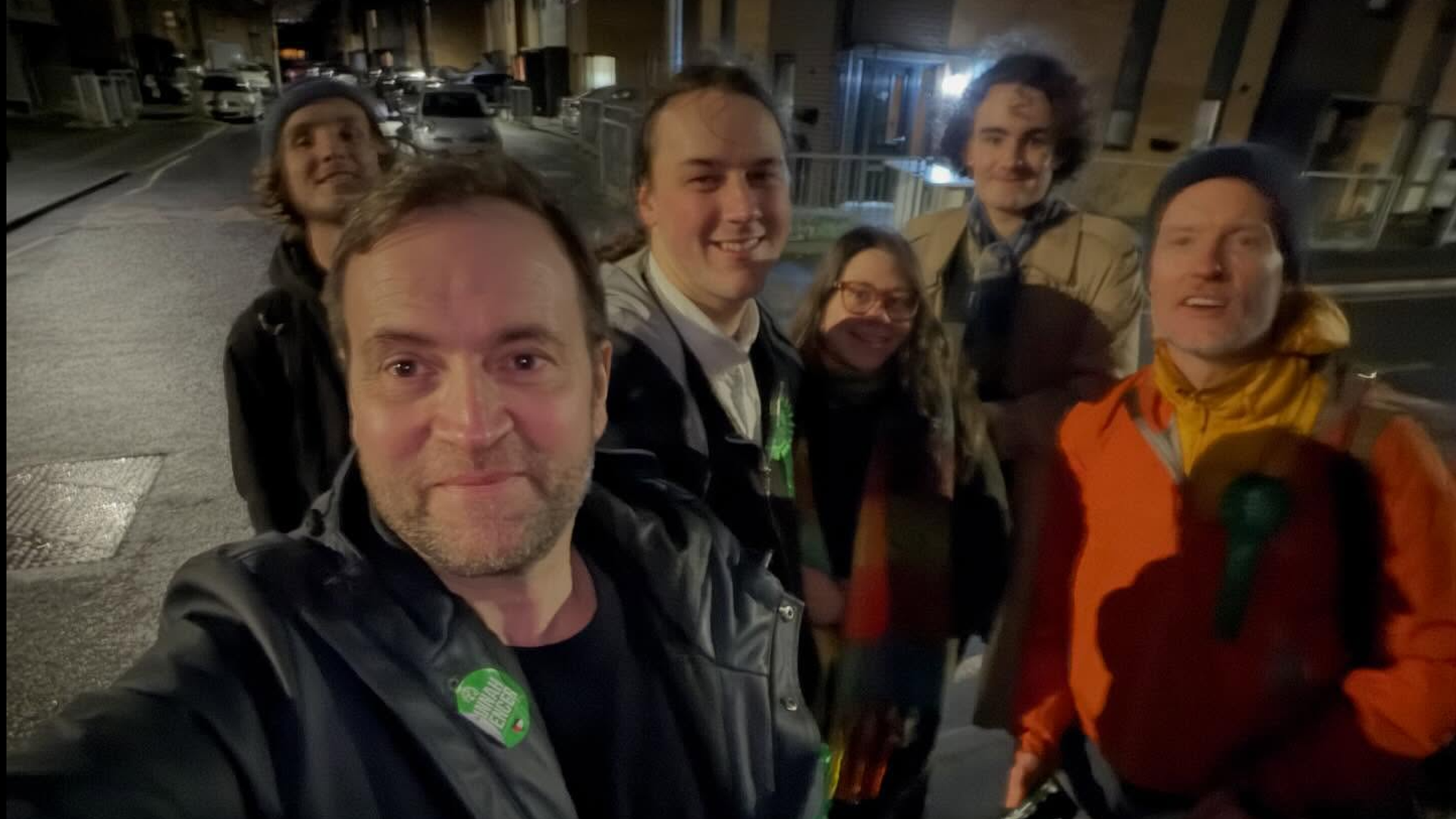
John Prescott was the fist-swinging, straight-talking heart of the Labour Party for decades. He was the bridge between the champagne-sipping Blairites and the grit of the working-class North. So, when his own son, David Prescott, decides to pick up a Green Party membership card, it isn't just a bit of family drama. It’s a loud, ringing alarm bell for the modern Labour movement.
David Prescott isn't some political novice or a rebellious teenager looking to annoy his dad. He’s a seasoned communications pro who spent years inside the Labour machine. He worked closely with Jeremy Corbyn. He understands the mechanics of the party better than almost anyone. His decision to join the Green Party in early 2026 is a statement about where the UK political landscape is shifting.
It feels like the end of an era. The Prescott name is synonymous with the very foundation of New Labour. Seeing that name attached to a rival party shows that the traditional "tribal" loyalty of the British left is dying a slow, messy death.
Why the Prescott Legacy Matters to Modern Politics
John Prescott represented something real. He was the Deputy Prime Minister who didn't care about looking polished on camera. He famously punched a protester who threw an egg at him. He was the "Prezza." He was the guy who could talk to union leaders in a way that Tony Blair simply couldn't.
David Prescott wasn't just living in his father's shadow. He was an active, vocal part of the Labour Party’s communication strategy for years. He helped shape the messaging that nearly won the 2017 General Election for Corbyn. He’s someone who has been in the room where it happens.
When a guy like that says "I’m out," you have to pay attention. He isn't just leaving a job; he’s leaving a legacy. He’s signaling that the Labour Party under Keir Starmer has moved too far from the values he believes in. It’s about more than just policy. It’s about the soul of the party.
People are tired of the same old "lesser of two evils" argument. The Green Party is no longer just the party of recycling and hemp shirts. They’re becoming the home for the disillusioned left. David Prescott’s move proves that the Greens are attracting people with serious political weight.
The Green Party Is No Longer a Fringe Movement
For a long time, the Green Party was treated like a protest vote. You’d vote for them if you wanted to make a point, but you didn't expect them to actually run the country. That’s changing fast. In 2026, the Greens are a legitimate force in local councils and are eyeing more seats in Westminster.
David Prescott’s defection is a huge PR win for the Greens. It gives them instant credibility with a specific type of voter: the traditionalist who feels the modern Labour Party is too centrist, too cautious, and too afraid to take big risks on climate and social justice.
The Greens are leaning into this. They’re positioning themselves as the only party willing to talk about "The Great Transition" without flinching. They want massive investment in green energy, a total overhaul of the public transport system, and a radical rethink of the economy. For someone like David Prescott, who has seen the inner workings of a cautious Labour leadership, that’s clearly an attractive proposition.
The Shift in Political Identity
We’re seeing a massive realignment. It used to be that you were born into a Labour family or a Tory family. That was your identity. It was like supporting a football team. You didn't switch sides just because the manager made a few bad signings.
But that’s over. Voters are becoming more like consumers. They look at the platform, they look at the track record, and they move on if they aren't satisfied. David Prescott is the ultimate example of this. If a Prescott can leave Labour, anyone can.
The Greens are capitalising on this fluidity. They aren't trying to be "Labour Lite." They’re trying to be the genuine alternative. And with high-profile members like David Prescott joining the ranks, they’re starting to look like a serious government-in-waiting, at least in terms of their policy depth and strategic thinking.
What This Means for Keir Starmer
Keir Starmer has spent a lot of time trying to make Labour look "electable" again. He’s purged the far left of the party. He’s embraced business. He’s tried to look like a Prime Minister in waiting. But in doing so, he’s left a lot of people behind.
The departure of David Prescott is a direct critique of Starmer’s leadership. It suggests that in the quest for the center ground, Labour has lost its connection to the radical, transformative energy that many of its supporters crave.
Starmer’s team might dismiss this as a one-off. They might say that David Prescott was always more aligned with the Corbyn era anyway. But that’s a dangerous game to play. If you keep alienating the people who know how to win elections and communicate with the base, you’re eventually going to find yourself with a party that has no heart.
The Greens are waiting with open arms. They don't have to worry about being "electable" in the same way Labour does. They can be bold. They can be radical. And right now, that looks a lot more exciting to many voters than Starmer’s cautious pragmatism.
The Climate Factor as the New Political Divide
Climate change isn't just an issue anymore. It’s the lens through which every other issue is viewed. For David Prescott, the Green Party’s focus on the climate emergency likely felt more urgent and more honest than Labour’s tempered approach.
Labour has to balance the needs of industrial unions with the demands of environmental activists. It’s a tough tightrope to walk. The Greens don't have that problem. They can be 100% committed to a green agenda without having to worry about upsetting a faction of the party that wants to keep coal mines open or build more runways.
As we move further into the 2020s, this divide is only going to grow. The parties that can offer a clear, uncompromising vision for a sustainable future are going to win the hearts and minds of the younger generation. David Prescott’s move is a sign that even the older generation is starting to see the Greens as the only party taking the climate crisis seriously.
Beyond the Headlines
Don't just look at the name "Prescott." Look at the "why." David Prescott isn't looking for a cabinet position or a fancy title. He’s looking for a political home that matches his values.
This isn't just about one man. It’s about a trend. We’re seeing more and more people from across the political spectrum realise that the old way of doing things is broken. The two-party system is cracking. The Greens are the biggest beneficiaries of those cracks.
If you’re a Labour supporter, this should worry you. If you’re a Green supporter, this should embolden you. And if you’re just a casual observer of British politics, this should fascinate you. It’s a rare moment where history and the future collide in a single news story.
The Green Party has a real chance to become the second party of the left in the UK. They’re already doing it in parts of Europe. In Germany, the Greens have been a major power player for years. There’s no reason to think the same thing couldn't happen here.
Your Next Steps in Navigating This Political Shift
The political landscape is moving faster than most people can keep up with. If you want to stay ahead of the curve, you need to look beyond the major parties.
- Watch the local elections. That’s where the Green surge is really happening. Keep an eye on council seats in traditionally Labour areas.
- Follow the money. Look at where political donations are going. The Greens are seeing a massive uptick in small-donor contributions.
- Listen to the messaging. Notice how the Greens are framing their arguments. They’re moving away from "saving the planet" and towards "saving your quality of life."
- Don't ignore the defections. Every time a high-profile figure like David Prescott moves, it changes the conversation. It normalises the idea of leaving the big two.
British politics isn't a two-horse race anymore. It’s becoming a complex, multi-party system where ideas matter more than heritage. The Prescott defection is just the beginning. Get used to it. The old rules don't apply.