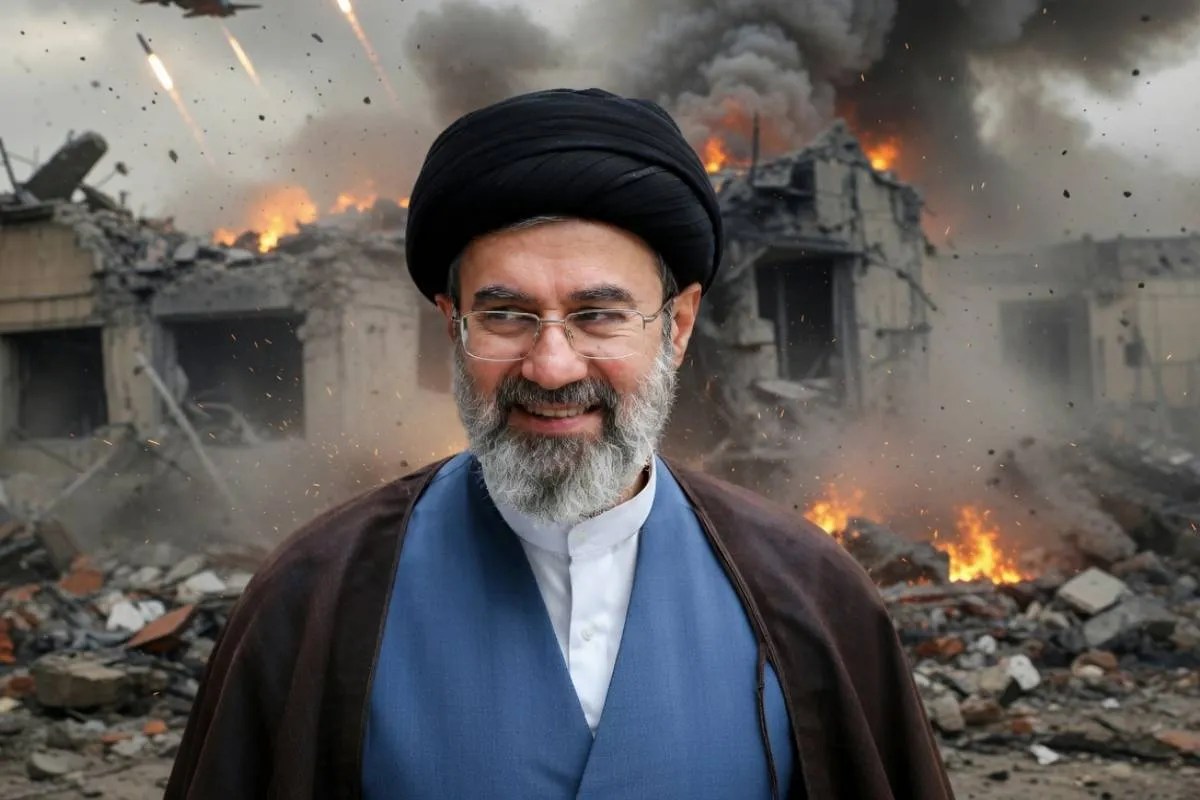
The headlines are predictable. They scream about "chaos," "panic," and "unprecedented blows" every time a high-value target in Tehran is neutralized. The competitor pieces read like a Tom Clancy fever dream—action-oriented, binary, and fundamentally wrong about how power actually works in the Middle East. If you believe that killing a top scientist or a minister of intelligence "halts" a nuclear program or "cripples" a regime, you aren't just misinformed; you’re falling for theater.
I have spent years watching intelligence agencies burn through nine-figure budgets for tactical wins that provide zero strategic shift. We see a puff of smoke in a secure compound and assume the chessboard has been cleared. It hasn't. The board just got more complicated.
The Myth of the Irreplaceable Man
The loudest argument in the wake of these attacks is that the loss of "top minds" creates a vacuum. This is a comfort-food narrative for Western audiences. It suggests that complex, state-sponsored military industrial complexes are fragile house of cards held up by a single genius.
It is a lie.
Modern weaponization and intelligence gathering are not 19th-century artisanal crafts. They are bureaucratic, institutionalized processes. When a lead scientist is eliminated, the data doesn't vanish. The blueprints aren't burned. The centrifuge arrays don't stop spinning.
In any state-level program, redundancy is the first page of the manual. For every "Top Scientist" the media puts on a pedestal, there are three deputies who have been waiting ten years for their boss to move out of the way.
Why Decapitation Often Backfires
- Institutional Hardening: Every strike is a free audit for the target. It reveals exactly where the security breach occurred. It allows the regime to purge the ranks, tighten protocols, and move operations even further underground.
- The Martyrdom Multiplier: In the West, we measure success in bodies. In the ideological landscape of the IRGC, success is measured in resolve. You aren't just killing a bureaucrat; you are creating a recruitment poster that pays dividends for a decade.
- Information Darkness: When you kill the person you’ve been tracking for five years, you lose your best source of passive intelligence. You know his habits, his phone calls, and his mistakes. The successor is a ghost. You’ve just reset your own intelligence clock to zero.
The Intellectual Laziness of "Shock and Awe"
The term "humpage" or "panic" is used to describe the global reaction. Let’s be honest: the only people panicking are the ones who have to write the press releases. The actual players—the ones moving the hardware—are simply recalibrating.
The assumption that these strikes "deter" future action is arguably the most dangerous misconception in modern geopolitics. Deterrence requires a rational actor who fears loss more than they value the objective. When the objective is existential survival or religious mandate, "loss" is just a cost of doing business.
I’ve sat in rooms where military analysts cheered for a successful kinetic strike, only to realize six months later that the target’s replacement was younger, more radical, and significantly more tech-savvy. We are trading known commodities for unknown volatiles.
Follow the Hardware, Not the Faces
If you want to know if a strike worked, stop looking at the obituary section. Look at the logistics.
Is the procurement of maraging steel slowing down? Are the carbon fiber shipments being intercepted? Is the specialized software for centrifuge balancing being corrupted? These are the metrics of a successful disruption. A dead minister is a PR win; a seized shipment of high-frequency inverters is a strategic win.
The media obsesses over the "who" because it’s easy to put a face on a thumbnail. The "what" is boring, technical, and requires an understanding of dual-use technology that most newsrooms simply lack.
A Reality Check on "Intelligence Success"
Consider the Stuxnet era. That was a sophisticated, quiet, and devastatingly effective disruption. It didn't need a flashy explosion. It didn't need a "top scientist" to die in a street ambush. It attacked the logic of the machine itself.
Contrast that with today’s headline-grabbing assassinations. These are loud because they are meant to be. They are political signals sent to domestic audiences to prove "we are doing something." They are the geopolitical equivalent of security theater.
The False Promise of Delay
The consensus view is that these attacks "buy time."
Time for what?
Unless that time is used for a fundamental diplomatic pivot or a total economic blockade that actually holds, you aren't buying time. You are just loaning it at a high interest rate. Every delay caused by a kinetic strike is met with an acceleration in hardening defenses.
Imagine a scenario where a tech company loses its CTO. Does the company fold? No. It hires from a competitor or promotes from within, usually with a mandate to "never let that happen again." The state is no different.
The Real Cost of Tactical Obsession
By focusing on individuals, we ignore the structural reality:
- Redundancy: Programs are decentralized across multiple sites.
- Knowledge Transfer: The "secrets" are already digitized and distributed.
- Resilience: The regime uses these events to justify increased internal repression and larger defense budgets.
Stop Asking if They Are "Dead"
The question isn't whether a scientist or a minister is gone. The question is whether the capability is gone.
In almost every instance of the last decade, the answer is a resounding no. The capability remains, often accelerated by the vengeful energy of the "martyr's" successors. We are playing a game of Whac-A-Mole while the machine underneath is being upgraded to steel.
If you want to dismantle a threat, you don't cut off a head that grows back. You poison the soil. You disrupt the financing, the raw materials, and the international partnerships that allow the program to breathe.
Everything else is just a firework show for people who want to feel safe without doing the actual work of security.
Stop celebrating the tactical "win" while you’re losing the strategic war. Turn off the news, ignore the body counts, and start looking at the shipping manifests. That is where the real conflict is won or lost.
The minister is dead. Long live the next minister.
Get over it.