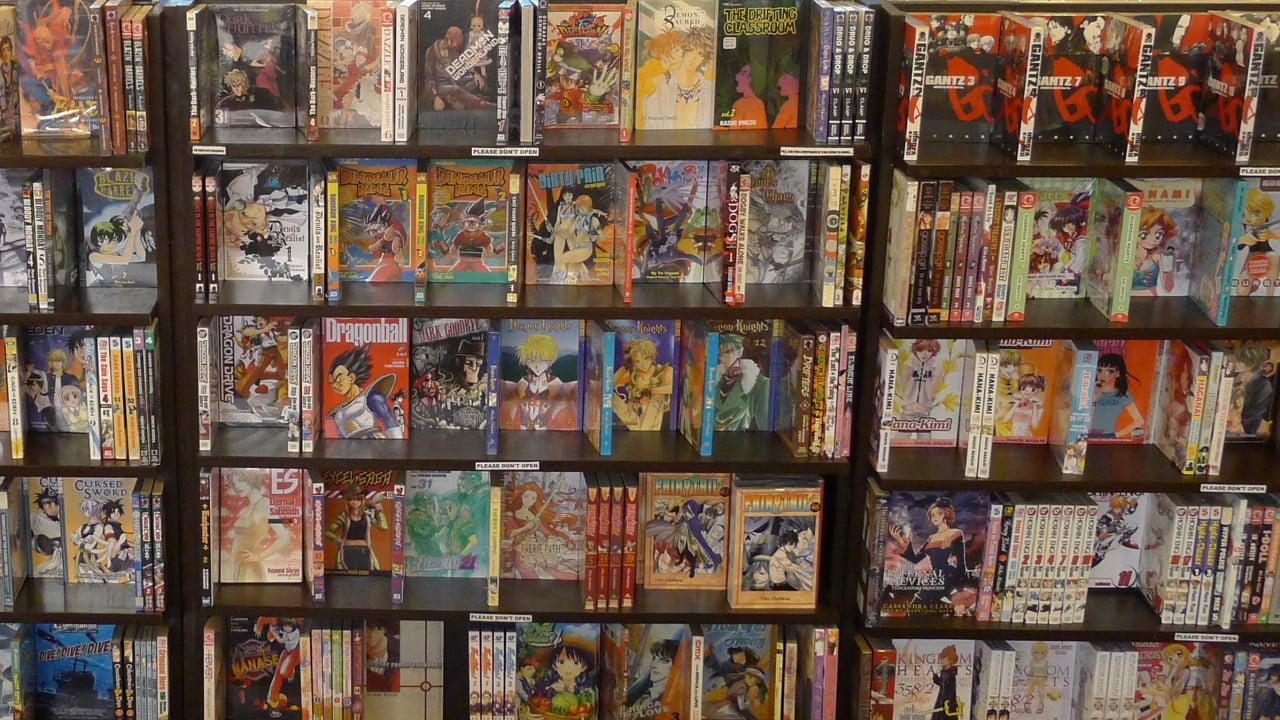
The ink smells like vinegar and old promises. For a mangaka, that scent is the air they breathe for eighteen hours a day, trapped in a cycle of pen strokes and caffeine. In Japan, the manga industry is more than a business. It is a cultural heartbeat. It is a multibillion-dollar machine fueled by the dreams of creators who often trade their health and their boundaries for a chance to see their characters on a subway advertisement.
But lately, the ink has begun to stain.
The tragedy began with a quiet displacement of power. When a beloved story moves from the printed page to the television screen, a metamorphosis occurs. The creator, once the god of their own universe, becomes a guest in it. This tension snapped into the public consciousness following the devastating loss of Hinako Ashihara, the brilliant mind behind Sexy Tanaka-san. Her death was not just a private grief; it was a klaxon for an entire industry that has long treated its creators as disposable assets in the pursuit of the "media mix."
The Script and the Sword
Imagine, for a moment, a hypothetical creator named Yuki. Yuki has spent a decade building a world. She knows the exact shade of her protagonist’s grief. She knows why a specific character refuses to wear red. When a television network buys the rights to her life’s work, they promise "faithfulness."
Then the scripts arrive.
The protagonist is suddenly a caricature. The nuance is stripped away to fit a thirty-minute time slot. When Yuki objects, she is met with a wall of polite, corporate resistance. In the Japanese manga industry, the "original creator" (原作者, gensakusha) is supposed to hold ultimate moral rights. The reality is far more fragile.
In the case of Shogakukan, one of Japan’s most powerful publishing houses, the fallout from the Sexy Tanaka-san adaptation revealed a systemic failure to protect these rights. Reports emerged of a breakdown in communication between the publisher, the broadcaster (Nippon TV), and the author. Ashihara had reportedly insisted on strict adherence to her source material, even writing the final scripts herself when the professional screenwriters failed to capture the essence of her work. The backlash she faced online, combined with the pressure of the industry, created a perfect storm of isolation.
The industry is now facing its own #MeToo moment, but it isn't just about physical misconduct. It is about the "power harassment" (pawa-hara) inherent in a system where a single editor or a network executive can dictate the fate of a creator’s legacy. It is about the systemic silencing of those who dare to say, "This is not what I wrote."
The Weight of the Shogakukan Scandal
Shogakukan’s internal investigation was meant to provide answers. Instead, it served as a mirror for a culture that prioritizes the "smooth" operation of business over the mental well-being of its stars. The investigation acknowledged "insufficient communication" but stopped short of revolutionizing the power dynamic.
This is where the human element gets crushed by the machinery.
The manga industry operates on a foundation of extreme hierarchy. A young artist is beholden to their editor. The publisher is beholden to the production committee. The production committee is beholden to the advertisers. In this food chain, the artist is the most essential, yet often the least empowered.
Consider the statistics that haunt the background of this narrative. According to industry surveys, a significant portion of mangaka report working over 80 hours a week. Many do not have formal contracts that detail their rights during an adaptation. They operate on "gentleman’s agreements" in a world of sharks.
- Fact: Most manga-to-live-action contracts are heavily weighted in favor of the broadcaster.
- Fact: Authors often receive a flat fee for the adaptation rights, regardless of the show’s massive success.
- Fact: The psychological toll of "social media lynching" has become a primary concern for the Japan Cartoonists Association.
When the Shogakukan scandal broke, it wasn't just a news story. It was a catalyst. High-profile creators began to break their silence. They spoke of "crying themselves to sleep" after seeing their work mutilated on screen. They spoke of the fear of being blacklisted if they complained.
The Invisible Stakes
The stakes are not just financial. They are existential. To a creator, a story is a horcrux—a piece of their soul hidden in paper and ink. When a network takes that story and changes it against the author's will, it is an act of creative violence.
The #MeToo comparison is apt because it deals with the abuse of power and the reclamation of agency. For decades, the industry's mantra was "ganbare" (do your best/endure). But endurance has a breaking point. The "shush" culture of Japan—the idea that you should not "kick up a dust storm"—is being challenged by a generation that has seen the cost of silence.
The problem isn't just one publisher or one network. It is the very structure of the "Media Mix" strategy. This business model, pioneered in the 1980s, views a manga as a "seed" that must be planted in as many fields as possible: anime, live-action, toys, and games. The goal is to maximize the intellectual property.
But a story is not a seed. It is a living thing.
If you prune a plant too aggressively to make it fit a decorative pot, the plant dies. The industry is currently holding a pair of rusted shears, wondering why the garden is wilting.
A Shift in the Wind
There are signs of a slow, painful awakening. Following the outcry, the Japan Cartoonists Association and various legal groups have begun pushing for standardized contracts. They are demanding that the "Right of Integrity"—the right of an author to prevent distortion of their work—be more than just a legal theory.
But laws don't change hearts.
The real change comes when the reader looks at the volume in their hand and realizes the person who drew it is not a machine. They are a human being who is vulnerable to the same pressures, the same anxieties, and the same need for respect as anyone else.
The Shogakukan incident has forced a conversation that cannot be un-had. It has ripped the veil off the "dream job" and shown the industrial gears grinding beneath. The "moment" Japan is having isn't just about a single scandal. It is about whether the world’s most vibrant creative engine can learn to value the people who provide the fuel.
The ink is still wet. The next chapter hasn't been written. But for the first time in a long time, the creators are holding the pen with a slightly firmer grip, looking at the publishers, and waiting for an answer that doesn't involve an apology for "miscommunication."
They are waiting for a world where their "yes" means yes, and their "no" doesn't cost them their lives.
The silence in the studio is no longer peaceful. It is expectant.