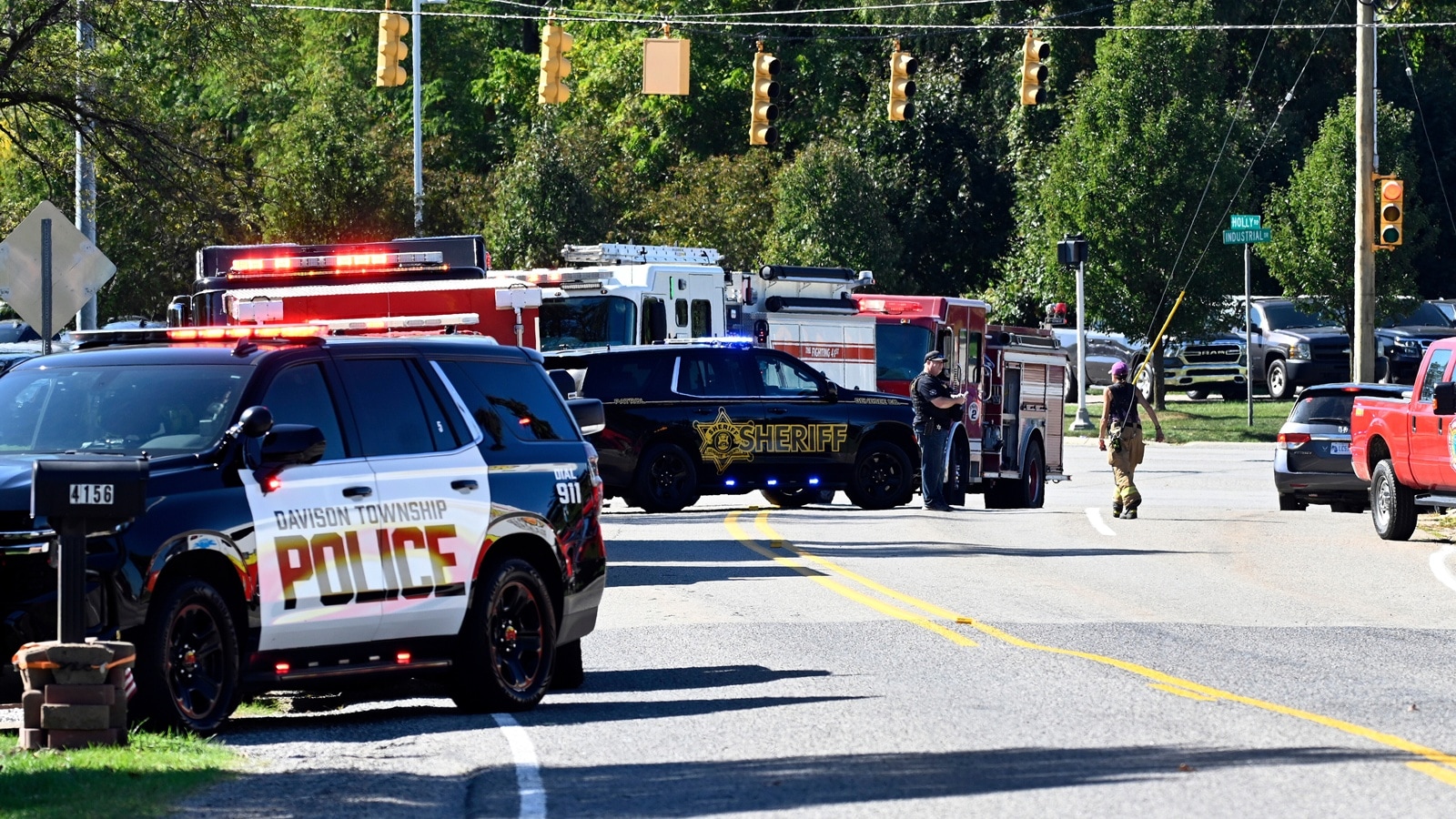
The intersection of high-density religious gatherings and active threat mitigation requires a sophisticated understanding of rapid-response architecture and perimeter integrity. When law enforcement agencies converge on a site like Temple Israel in West Bloomfield, the situation transitions from a localized security concern to a multi-jurisdictional tactical operation. This analysis deconstructs the structural components of the active shooter response, the physical vulnerabilities of suburban religious campuses, and the communication hierarchies that dictate the speed of containment.
The Architecture of Immediate Response
The immediate deployment of police units to a religious institution during a suspected active shooter event follows a specific escalation ladder. In the Detroit metropolitan area, this typically involves the West Bloomfield Police Department as the primary agency, supplemented by Oakland County Sheriff assets and potentially state-level tactical units. The efficacy of this response depends on three foundational variables:
- Initial Triage and Verification: The delay between the first 911 call and the arrival of the first "contact team" is the most critical window in any kinetic event.
- Perimeter Serialization: Law enforcement must simultaneously establish an inner perimeter to contain the threat and an outer perimeter to manage traffic and secondary safety risks.
- Intellectual Synchronization: Disseminating accurate descriptions of the suspect and the location within the sprawling Temple Israel complex to all arriving units.
The physical layout of Temple Israel, one of the largest Reform congregations in the United States, presents unique tactical challenges. Large sanctuaries, multiple points of entry, and subterranean levels create a complex internal topography. Clearing such a structure requires a systematic room-by-room sweep, a process that is time-intensive and requires high levels of coordination to avoid friendly-fire incidents.
Vulnerability Mapping in Religious Infrastructure
Soft targets, such as synagogues, churches, and community centers, are defined by their public-facing mission, which often conflicts with hard-site security requirements. The vulnerability of these locations can be categorized through the lens of a Security Trade-off Function.
The conflict arises between "open-door" communal values and "closed-circuit" security protocols. A high-security posture (armed guards, metal detectors, limited access points) reduces the probability of a successful breach but increases the friction for congregants. Conversely, a low-friction environment increases the attack surface.
The Buffer Zone Deficit
Suburban synagogues like Temple Israel are often surrounded by parking lots and landscaping that can serve as concealment for an approach or as "kill zones" during an evacuation. The lack of a "stand-off distance"—the space between the public road and the building facade—means that any threat reaches the structure almost immediately upon arrival. This necessitates a reliance on early warning systems (EWS) and real-time surveillance rather than physical distance.
Structural Integrity and Ballistic Resistance
Most religious structures are built for acoustics and aesthetics, not ballistic protection. Large glass windows and hollow-core doors provide negligible resistance to high-velocity projectiles. In an active shooter scenario, the "Run, Hide, Fight" protocol is often limited by the building's internal layout, where "hiding" becomes difficult in open-plan social halls or sanctuaries with fixed seating.
The Information Vacuum and Social Media Acceleration
One of the most disruptive forces during a live police operation is the rapid proliferation of unverified data. In West Bloomfield, as news of the police presence at Temple Israel spreads, a "Signal-to-Noise" crisis develops.
- The First-Responder Bottleneck: Law enforcement must prioritize life-saving actions over public communication. This creates a vacuum.
- The Speculation Cycle: Bystanders and remote observers fill the vacuum with anecdotal evidence, often misidentifying sounds of breaching equipment as additional gunfire.
- The Tactical Leak: Real-time social media posts from individuals inside or near the scene can inadvertently provide the perpetrator with information regarding police positions or victim locations.
Effective incident management requires a centralized Public Information Officer (PIO) to provide a "Single Source of Truth." Without this, the psychological impact of the event scales exponentially, regardless of the actual kinetic outcome on the ground.
Inter-Agency Interoperability and Command Hierarchies
An active shooter response is rarely a solo endeavor. The West Bloomfield incident necessitates the integration of local police, fire/EMS, and specialized SWAT (Special Weapons and Tactics) teams. The success of this integration is measured by the Unified Command Model.
This model prevents "freelancing," where individual officers or units act without centralized direction. In a suburban environment, the primary friction point is radio interoperability. If different agencies are operating on different frequencies or using incompatible hardware, the "Common Operating Picture" breaks down.
The second friction point is the transition from "Search and Neutralize" to "Rescue Task Force" (RTF) operations. In modern tactical doctrine, paramedics enter the "Warm Zone"—areas that have been cleared but are not yet fully secured—to begin triage while the threat is still being mitigated. This requires a level of trust and pre-coordinated training between police and fire departments that is often absent in less prepared jurisdictions.
The Psychological Aftermath and Institutional Resilience
The impact of a high-profile police response at a house of worship extends far beyond the physical site. It triggers a localized "Security Shock," leading to an immediate reassessment of safety protocols across similar institutions in the region.
Institutional resilience is built on the Pre-Event Hardening Loop:
- Risk Assessment: Identifying the most likely vectors of attack.
- Mitigation Strategy: Implementing physical barriers or electronic surveillance.
- Drill Frequency: Ensuring the staff and clergy have muscle memory for lockdowns.
- Community Intelligence: Maintaining open lines of communication with local law enforcement regarding threats or suspicious activity.
The incident at Temple Israel serves as a diagnostic tool for these systems. If the response was rapid and the threat was neutralized without loss of life, it validates the existing investment in security. If there were delays or communication failures, it exposes the structural deficits that must be addressed before the next event.
Tactical Recommendation for Institutional Leadership
Institutional leaders must move beyond the "Compliance Mindset"—doing only what insurance or local fire codes require—and adopt an "Operational Mindset." This involves conducting unannounced drills that test not just the locking of doors, but the ability of leadership to communicate with 911 under extreme stress. It also requires the installation of redundant communication systems, such as hardwired panic buttons that bypass the cellular network, which can become congested during an emergency.
The final strategic move for any religious or community organization is the establishment of a "Crisis Continuity Plan." This plan dictates how the organization will function in the hours and days following a police action, including mental health support, media management, and the rapid restoration of the physical site to minimize the symbolic victory of the aggressor.
Prioritize the immediate audit of all "blind spots" in existing surveillance coverage and ensure that the local police department has updated floor plans and digital access codes for the facility.