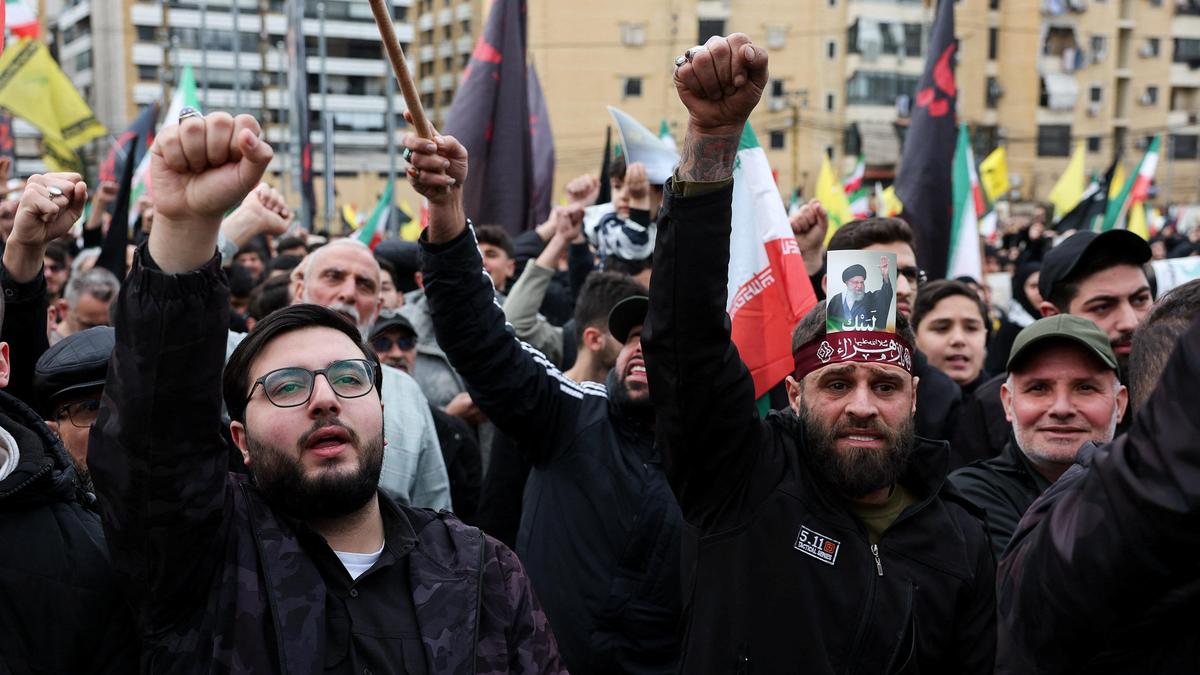
The coffee in Beirut is never just coffee. It is a ritual of defiance. You sit on a plastic chair on a sidewalk that has seen more history than most entire continents, and you sip the thick, dark liquid while the Mediterranean breeze tries to scrub the scent of exhaust from the air. For decades, the people here have mastered the art of living in the "meantime"—that fragile, shimmering space between the last crisis and the next one.
Then the pagers started exploding.
It sounds like a dark tech-thriller plot, but for the residents of the Lebanese capital, it was the opening note of a symphony of chaos. When Hezbollah launched a barrage of missiles toward Israel, claiming a new phase in the West Asia conflict, the atmospheric pressure in Beirut didn't just drop. It curdled. Everyone knew what was coming. The "meantime" had officially expired.
The Sound of a City Holding Its Breath
War in the modern age is rarely a cinematic clash of armies on a distant field. It is a series of intrusions into the mundane. It is the hum of a drone that sits above your neighborhood for seventy-two hours until it becomes a part of the local soundtrack, like a cicada made of titanium and spite.
When the Israeli Air Force began its retaliatory strikes on the southern suburbs of Beirut, the sound wasn't a single "bang." It was a visceral tearing of the air. Imagine the heaviest door in the world being slammed in a room made of glass. The shockwave hits your chest before the sound hits your ears.
For a mother in Dahieh, the primary concern isn't the geopolitical alignment of the "Axis of Resistance" or the strategic depth of the Israel Defense Forces. Her reality is the vibration in the floorboards. It is the frantic calculation of whether the hallway is safer than the basement. Basements in Beirut are often just concrete traps if the building above them pancaking.
The strikes were precise, or so the military briefings say. But "precision" is a cold word when it’s applied to a densely populated urban labyrinth. Even if a missile hits its intended target—a hidden cache, a command center, a specific individual—the neighborhood pays the tax in shattered windows and terrified children who will wet the bed for the next three years.
The Invisible Strings of West Asia
To understand why a missile fired from a valley in Southern Lebanon matters to a trader in London or a voter in Ohio, you have to look past the fireballs. This isn't just a border skirmish. It is a giant, interlocking machine where every gear is connected to a nerve.
Hezbollah is not a ragtag militia. It is a state within a state, a social service provider, and a regional power player backed by an Iranian architecture that views the entire Middle East as a single chessboard. When they fire into Northern Israel, they aren't just aiming at Galilee. They are signaling to Gaza, to Yemen, and to the halls of power in Washington.
Israel’s response is equally multifaceted. It isn't just about stopping the rockets. It is about "restoring deterrence"—a fancy way of saying they need to prove that the cost of poking the lion is higher than any potential gain.
Consider the logistical nightmare. Thousands of civilians on both sides of the Blue Line have been displaced. Israeli families in the north have lived in hotels for months, their lives packed into suitcases, their businesses rotting. Across the border, Lebanese farmers watch their olive groves burn under phosphorus shells.
These aren't statistics. They are broken cycles. An olive tree takes twenty years to reach full productivity. A missile takes three seconds to turn it into ash.
The Geometry of Fear
The escalation follows a grim, mathematical logic. If Hezbollah fires $X$ distance, Israel responds with $Y$ force. The problem is that the variables are no longer stable. For a long time, there were "rules of the game." You hit a military post; we hit a military post. You stay ten miles back; we stay ten miles back.
Those rules are gone.
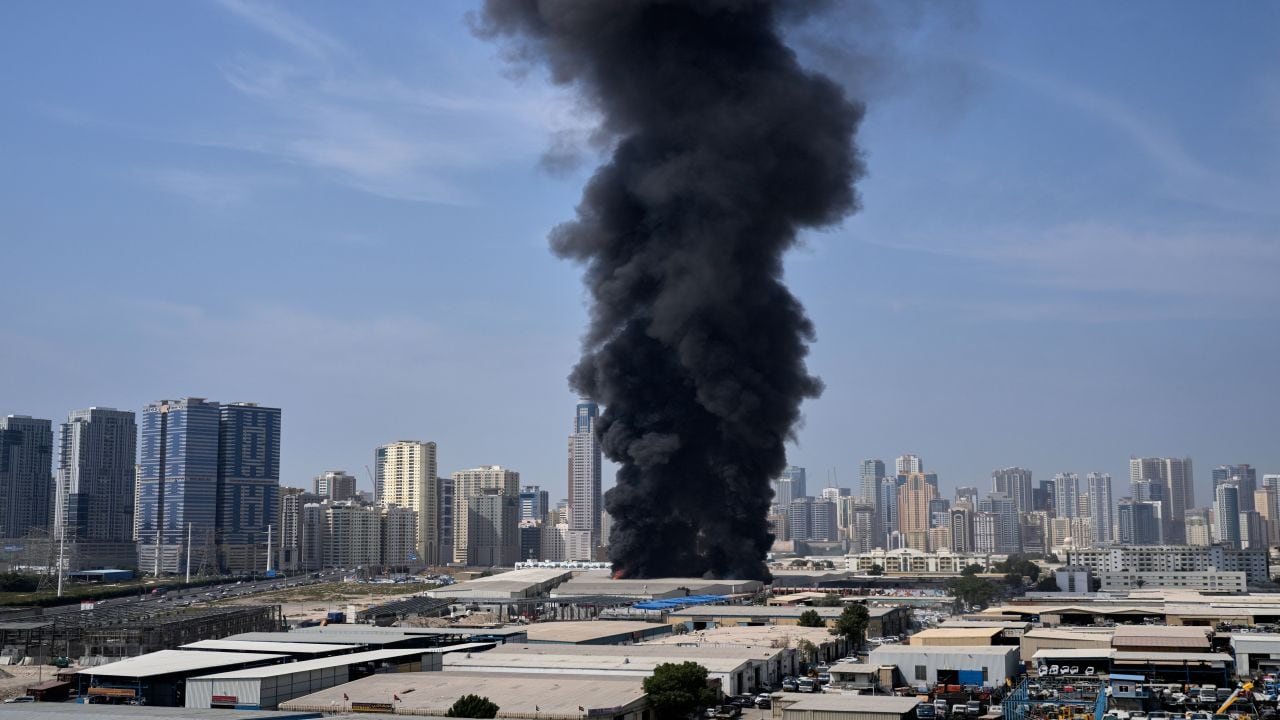
The strikes on Beirut represent a piercing of the "red lines" that kept the conflict simmering rather than boiling. When the sky over the capital glows orange at 2:00 AM, the message is clear: nowhere is off-limits.
The complexity of this environment is staggering. Imagine a city where the electrical grid is a web of illegal generator wires, where the water comes from private trucks, and where the political loyalties are carved into the very stone of the buildings. Now, drop a high-tech, 21th-century war on top of it.
The friction is unbearable.
Health workers in Beirut are currently operating on adrenaline and a crumbling infrastructure. Hospitals that were already struggling with Lebanon’s catastrophic economic collapse—where the currency has lost 95% of its value—are now bracing for mass casualties. It is a nightmare of scarcity. Do you use the remaining diesel to run the incubators for premature babies, or the surgical lights for the victims of the latest blast?
The Ghost of 2006
Everyone in Lebanon talks about 2006. It is the ghost that haunts every dinner table conversation. That was the last time a full-scale war broke out between Israel and Hezbollah. It lasted 34 days, destroyed the country's infrastructure, and ended in a stalemate that both sides claimed as a victory.
But 2026 is not 2006.
The weaponry is smarter. The hatred is deeper. The regional stakes are higher. In 2006, the world felt like it could contain the fire. Today, with the shadows of the conflict in Gaza looming over every decision, the fire feels like it’s made of gasoline.
The missiles fired by Hezbollah are no longer just unguided Katyushas. They are precision-guided munitions capable of reaching Tel Aviv’s skyscrapers. Israel’s Iron Dome, a marvel of engineering, is being tested by volume. Even a system with a 90% success rate struggles when the sky is filled with hundreds of targets at once.
It is a game of exhaustion. Who runs out of interceptors first? Who runs out of willpower first? Who runs out of places to hide?
The Human Cost of Strategic Depth
We often speak of "proxy wars" as if the people involved are just stand-ins for larger powers. It’s a sanitized way of looking at the world. But there is no such thing as a proxy child. There is no such thing as a proxy grandmother.
I spoke to a man who fled the south for Beirut, only to find the strikes following him to the suburbs. He told me he wasn't afraid of dying. He was afraid of surviving in a world where he had nothing left to go back to.
"The house is just stones," he said, his voice flat. "But the memories are in the stones. My wedding was in those stones. My father's funeral was in those stones. When the missile hits, it doesn't just kill people. It kills the past."
This is the hidden cost of the West Asia conflict. It is the systematic erasure of a sense of "home." When a population is constantly in flight, they stop building for the future. They stop investing in businesses. They stop dreaming. They just survive.
The Echoes of the Mediterranean
As the sun sets over the Mediterranean, the beauty of the horizon is a cruel joke. The same sea that brought trade and civilization for millennia is now a highway for warships and surveillance planes.
The international community issues statements. They "urge restraint." They "monitor the situation with grave concern." These words are like tissue paper against a hurricane. The people on the ground know that the only thing that determines their fate is the finger on the trigger and the cold, hard logic of a military computer.
Wait.
Listen.
There it is again. That low, rhythmic thrum. It might be a car with a bad muffler. Or it might be the next wave. In Beirut, you learn to tell the difference by the way the birds react. If the pigeons stay on the wires, you’re okay. If they take flight all at once, a silver cloud of wings against the smog, you have about four seconds to decide where you want to be when the world opens up.
The tragedy is that the birds are flying more than they are sitting these days.
The conflict has entered a new chapter, one written in fire and typed on the screens of drones. While the analysts debate "strategic objectives" and "regional hegemony," the reality remains rooted in the soil of a small, beautiful, battered country. It is the sound of a window shattering in the middle of the night. It is the smell of burnt plastic and ancient dust. It is the look in a father's eyes when he realizes he can't protect his family from a sky that has turned against them.
History is being made in Beirut tonight, but it isn't the kind of history anyone wanted to write. It is a story of what happens when the "meantime" finally runs out, and all that is left is the hard, cold reality of a world that has forgotten how to speak any language other than force.
The city waits for dawn, not because the light brings safety, but because it’s easier to see what you’ve lost when the sun is up.