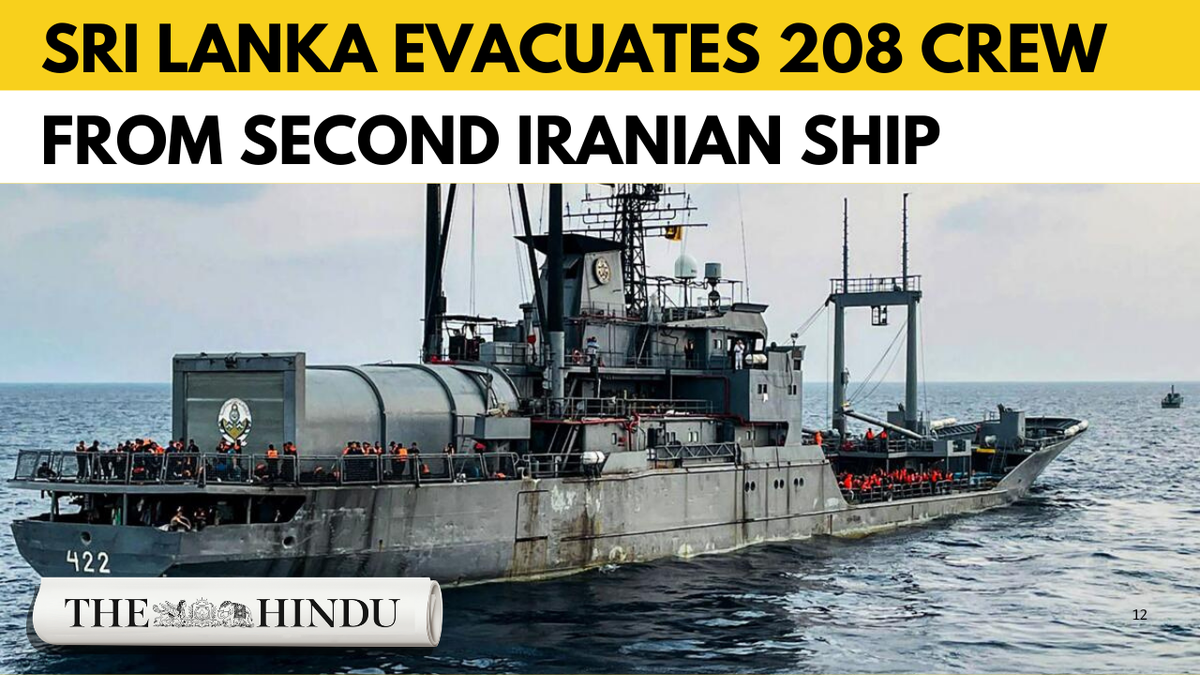
The ocean does not care about geopolitics. It does not recognize the lines drawn on a map in a boardroom in Tehran or a naval office in Colombo. To the ocean, a ship is merely a guest, and sometimes, an unwelcome one. When the MV Shahraz began to lose its battle with the elements off the coast of Sri Lanka, the 208 human souls on board weren't thinking about shipping lanes or international trade. They were thinking about the cold. They were thinking about the sound of metal screaming against rock.
Sri Lanka’s coastline is a postcard of serenity for most. For a merchant mariner, it is a graveyard. The currents here are deceptive. They pull with a strength that defies the calm surface. When the second Iranian vessel in as many weeks found itself paralyzed in these waters, the situation shifted from a logistical headache to a race against a ticking clock.
The Weight of Two Thousand Tons
Steel is buoyant until it isn't. When a vessel the size of a city block loses power, it becomes a drifting mountain. Imagine standing on a floor that is tilting ten degrees every few seconds. Now imagine that floor is surrounded by a thousand miles of salt water, and the only thing keeping you from the abyss is a hull that is currently grinding against the seabed.
The Sri Lankan Navy didn't just see a ship. They saw a potential ecological catastrophe. If that hull breached, the pristine beaches of the south would be choked in thick, viscous fuel oil. The local fishing communities, people who live and die by the health of the reef, would see their livelihoods erased in a single afternoon.
The crew on the Shahraz represented a cross-section of a world most of us never see. These are the "invisible" workers of global commerce. They spend months away from their families, living in cramped quarters, ensuring that the goods we buy on our phones actually arrive at our doors. When the call for evacuation went out, it wasn't a tactical maneuver. It was a plea.
The Mathematics of Mercy
Rescue at sea is a brutal exercise in physics. You have to move 208 people from a massive, unstable platform onto smaller, more agile rescue boats while the swells are trying to smash the two together.
Consider the "Transfer of Weight." As each person steps off the ladder, the center of gravity shifts. The rescue boats have to dance. They move in, take a handful of shivering men, and pull away before the surge of a wave can crush them against the side of the Iranian freighter.
The Sri Lankan sailors involved in this operation weren't working with high-tech luxury. They were working with grit. They used ropes, physical strength, and an intimate knowledge of how the Indian Ocean moves at 3:00 AM. It is a terrifying choreography. One slip, one missed handhold, and a sailor vanishes into the white foam between the hulls.
When the Engines Go Silent
We often talk about "mechanical failure" as if it’s a simple line item in a report. It isn't. On a ship, silence is the most frightening sound you can hear. It means the heartbeat of the vessel has stopped.
When the engines died on this second Iranian ship, the air conditioning stopped. The lights flickered and died, replaced by the eerie red glow of emergency lamps. The galley went cold. For the 208 crew members, the ship transformed from a home into a cage.
The Iranian shipping line has faced an uphill battle lately. Sanctions, aging fleets, and the sheer exhaustion of constant transit take a toll on machinery. But machines don't feel fear. The men on the deck did. As the Sri Lankan Navy approached, they saw 208 faces illuminated by flashlights—men who had been staring into the darkness, waiting for a sign that they hadn't been forgotten by the world.
The Invisible Stakes
Why does this matter to someone sitting thousands of miles away? Because the safety of the seas is the only thing keeping the global economy from a heart attack. When these incidents happen back-to-back, it points to a fraying edge in the fabric of maritime safety.
If we ignore the "minor" groundings and the "routine" evacuations, we miss the warning signs of a larger collapse. The ocean is reclaiming its territory. Ships are getting larger, the weather is getting more unpredictable, and the crews are being pushed harder than ever before.
The evacuation of the 208 was a success, but it was a narrow one. It left behind a ghost ship—a massive, silent monument to the fragility of our modern world.
The Sri Lankan authorities now face the grueling task of salvage. They have to figure out how to move a mountain without spilling its guts into the sea. It is a thankless, expensive, and dangerous job. But they do it because they have no choice. The alternative is a coastline that stays black for a generation.
As the last of the crew stepped onto solid ground in Colombo, the adrenaline began to fade. They were given blankets. They were given hot tea. They were given the chance to call home. For a few hours, they weren't Iranian sailors or pawns in a global shipping game. They were just men who had been saved from the teeth of the sea.
The Shahraz still sits there, a dark silhouette against the horizon. It groans as the tide comes in, the sound of metal on stone echoing across the water like a warning. The sea is patient. It has all the time in the world to wait for the next guest who underestimates the power of the dark water.
Beneath the headlines of "208 Evacuated," there is a deeper truth that remains unwritten in the official reports: we are all just one engine failure away from realizing how small we are in the face of the deep.