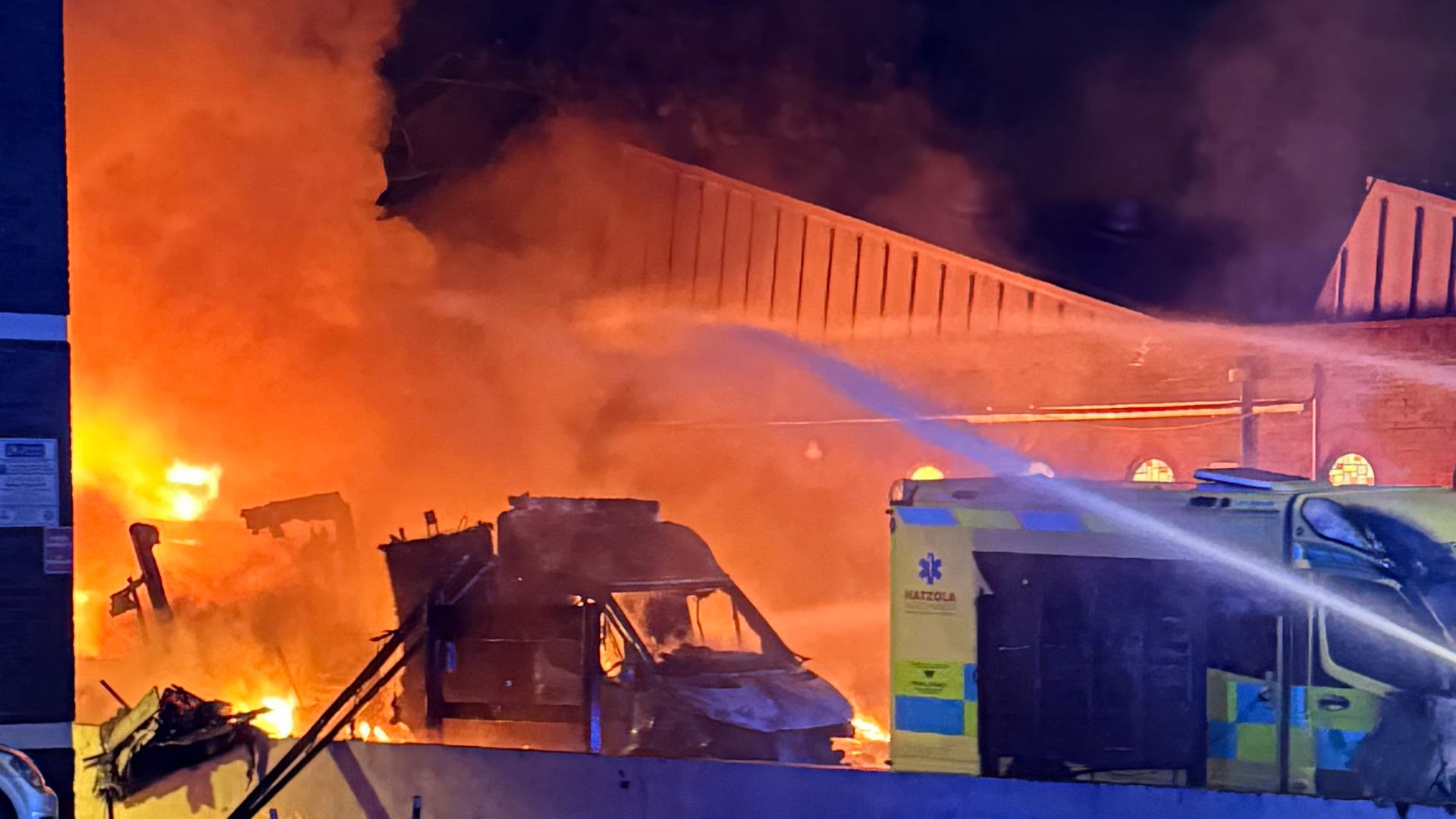
The air in the depot usually smells of industrial floor cleaner and the faint, lingering scent of diesel. It is a sterile smell. It is the smell of readiness. At 3:00 AM, the only sound should be the hum of the charging ports and the occasional settling of a heavy chassis. But on that Tuesday, the silence was replaced by the roar of chemical acceleration.
Fire does not just consume; it screams. It tears through fiberglass and rubber with a hungry, rhythmic thud. When the emergency calls started flooding the switchboard, they weren't for a car accident on the M1 or a heart attack in a quiet suburb. The emergency was the equipment itself.
Two men stood in the shadows of an industrial estate in Hartlepool, watching the very vessels of mercy turn into pillars of salt and ash. They didn't just burn vehicles. They burned time. They burned the thin, fragile margin between a grandmother’s last breath and a paramedic’s arrival.
The Anatomy of a Calculated Cruelty
We often view ambulances as mere machines, white boxes with flashing lights. We forget they are mobile intensive care units, packed with delicate electronics and life-sustaining gases. An arson attack on a fleet of ambulances is not a simple act of vandalism. It is an act of structural violence.
Counter-terrorism officers don’t knock on doors for a bit of teenage mischief. They arrive when the intent behind a crime suggests a desire to destabilize the very foundations of public safety. The arrest of two men—one in his late twenties, the other in his thirties—brought the cold machinery of the law into a situation that felt viscerally chaotic.
Consider a hypothetical dispatcher named Sarah. In the moments after the fire was extinguished, Sarah looked at her screen. Each red icon represented a vehicle that no longer existed. In her world, those icons are not pixels. They are "units."
Unit 42 is usually stationed near the high-street. Unit 19 covers the rural outskirts where the roads are narrow and the response times are already stretched thin. When those units burn, Sarah has to play a lethal game of Tetris. She has to pull a crew from twenty miles away to cover a stroke victim five minutes down the road.
The math is brutal. Seconds are the only currency that matters in trauma care, and these men effectively robbed an entire community of its savings.
The Invisible Stakes of the Aftermath
The wreckage was a skeleton of charred metal and melted sirens. Six vehicles were rendered useless. To the casual observer, that is a line item on an insurance claim. To the community, it is a localized catastrophe.
Modern ambulances are not cheap. A fully equipped frontline vehicle can cost upwards of £150,000, but the price tag is the least interesting part of the tragedy. The real cost is the specialized equipment: the defibrillators, the ventilators, and the ruggedized tablets that transmit vital signs to waiting surgeons.
These tools are calibrated to save lives. When they are incinerated, they cannot be replaced by a trip to a local hardware store. There is a supply chain. There is a backorder. There is a gap in the fence that remains open for months.
The investigators from the Counter Terrorism Policing North East unit aren't just looking for DNA or CCTV footage. They are looking for a "why." What drives a human being to look at a vehicle designed exclusively to help the vulnerable and decide it should be a bonfire?
There is a specific kind of darkness required to strike at the helpers. It isn't the heat of a robbery or the passion of a fight. It is a cold, calculated strike against the communal "we."
The Search for a Motive in the Embers
When the police cordoned off the area, the forensic teams moved in like ghosts in white Tyvek suits. They sifted through the soot to find the accelerant. They tracked the movements of the suspects through the digital breadcrumbs we all leave behind in the 21st century.
One man was picked up in a residential street, the other in a nearby commercial district. The contrast is jarring. Life continues. People walk their dogs. They buy milk. They complain about the rain. Meanwhile, the legal system prepares to dissect an event that could have left a child without a father or a father without a daughter.
We live in an era where information is instant, but consequences are slow. The "Counter Terror" label carries a heavy weight. It implies a threat to the state or a political agenda. But whether the motive was an ideology or a nihilistic thrill, the result is the same: a hollowed-out service.
Imagine the paramedics who arrived for their shift that morning. These are people who spend twelve hours a day in the back of those boxes, performing CPR until their ribs ache and holding the hands of the dying. For them, the ambulance is an office, a sanctuary, and a tool. Seeing it charred to the frame is a personal violation. It is a message that says, "Your work doesn't matter."
But they are wrong.
The Resilience of the Network
The response to the attack was not a collapse, but a tightening of the ranks. Surrounding trusts diverted resources. Mechanics worked double shifts to get older, retired vehicles back into service. The "invisible stakes" became visible in the way the community rallied, even as the two suspects sat in a sterile interview room facing questions they likely couldn't answer with any shred of dignity.
Detectives are currently piecing together the timeline. They are looking at social media, burner phones, and the history of the site itself. They are asking if this was a targeted strike against the NHS or a random outburst of malice.
The truth is often more mundane and more terrifying than we want to admit. Sometimes, there is no grand manifesto. Sometimes, there is just a profound lack of empathy, a vacuum where a soul should be, fueled by the cheap thrill of watching something important break.
The investigation continues under the shadow of the law, but the psychological impact lingers longer than the scent of smoke. Every time a siren wails in Hartlepool this week, someone wonders if it’s one of the remaining few. They wonder if the help will get there in time.
The two men remain in custody. The legal gears are turning. But the burnt-out husks of the fleet serve as a grim reminder that our safety is a collective agreement—one that can be shattered by a single match in the wrong hands.
The sun rose over the depot the next day, catching the silver edges of the one ambulance that had been parked just far enough away to survive. It looked lonely. It looked defiant. It was back on the road by noon, carrying the weight of a city that refused to let its lifelines stay severed.
The charred remains were eventually towed away, leaving black scars on the asphalt that no amount of scrubbing could fully erase.