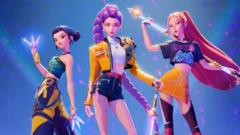
The wait is over for anyone who spent the last few years obsessively rewatching the adventures of our favorite stylish exorcists. Netflix just made it official. K-Pop: Demon Hunters is getting a sequel. It’s the kind of news that stops your scrolling mid-thumb because, let’s be real, the first film left us with way too many questions and a serious need for more neon-soaked action.
You probably remember the original premise. A group of K-Pop idols who spend their days training in high-intensity dance studios and their nights hunting down malevolent spirits. It sounds ridiculous on paper. In practice, it was a visual feast that blended the high-stakes pressure of the music industry with supernatural horror. Now that the sequel is greenlit, the stakes are shifting. We aren't just looking at more ghosts. We’re looking at a massive expansion of the world Sony Pictures Animation and Netflix built together. Expanding on this theme, you can also read: How The Pitt Finally Gets the Chaos of Psychosis Right.
Why the KPop Demon Hunters Sequel Took So Long
Hollywood moves slowly, but animation moves at a glacial pace. If you’ve been wondering why it took years to get a "yes" for a follow-up, look at the complexity of the first film’s aesthetic. The vibrant, jagged lines and the fluid, dance-inspired combat aren't easy to replicate.
The production team, including directors like Maggie Kang and Chris Appelhans, poured immense detail into making the characters feel like actual idols. Kang, especially, brought a personal touch to the project, drawing from her own Korean heritage to ensure the cultural nuances weren't just surface-level. That kind of care takes time. You can’t just "prompt" a masterpiece into existence—it takes thousands of hours of hand-crafted work. Observers at The Hollywood Reporter have shared their thoughts on this matter.
Fans were worried the project might have died in development hell. We've seen plenty of promising animated features get the axe recently due to budget cuts or shifts in streaming strategy. Seeing this one survive the gauntlet is a massive win for fans of stylized animation. It proves that there’s a hungry, global audience for stories that don’t fit the standard Pixar or Dreamworks mold.
What to Expect from the New Storyline
The first film established the dual lives of the hunters. They had to balance the grueling schedules of a world-famous K-Pop group with the life-and-death stakes of exorcism. It was a metaphor for the crushing expectations placed on young performers, just with more literal demons.
In the sequel, expect the scope to widen. Rumors from the production circles suggest we’ll see more of the "Bureau of Supernatural Affairs" or whatever internal organization regulates these hunters. We need to see what happens when the secret leaks. Imagine a world where fans find out their "bias" isn't just talented at singing, but is literally saving their souls from ancient entities. That’s a narrative goldmine.
I’m personally hoping they lean harder into the horror elements. The designs of the demons in the first installment were creepy, sure, but they had a certain "pop" sensibility. Let’s see some darker, more traditional Korean folklore monsters. Give us the Gumiho or the Cheonyeo Gwishin in a way that feels modern and terrifying.
The Music Will Make or Break This Movie
You can't have a movie titled K-Pop: Demon Hunters without a soundtrack that absolutely slaps. The first film succeeded because the music felt authentic. It didn’t sound like "movie music" trying to be K-Pop; it sounded like tracks you’d actually find at the top of the Melon charts.
For the sequel, the pressure is on to collaborate with real-world producers and perhaps even more active idols for the vocal performances. The blend of high-energy electronic beats with the rhythmic sounds of combat is the franchise's signature. If they play it safe with generic pop, the movie loses its soul. I want to hear something experimental—maybe some traditional Korean instruments like the haegeum mixed with heavy bass.
Breaking Down the Animation Style Evolution
Since the first film, the industry has changed. We've seen Spider-Man: Across the Spider-Verse and Arcane push the boundaries of what 2D/3D hybrid animation can do. Netflix knows it can't just repeat the same visual tricks from the first movie and expect the same level of acclaim.
We should expect even more aggressive frame-rate manipulation. Think about the way a dance choreography looks when it's filmed with a high-shutter speed—crisp, jerky, and powerful. Translating that into animation is where this sequel can truly shine. They need to make the "performance" scenes feel just as dangerous as the "hunting" scenes.
The Cultural Impact of Korean-Centric Stories on Netflix
It’s no secret that Netflix is betting big on Korean content. From Squid Game to The Glory, the platform has become a primary hub for K-culture fans. K-Pop: Demon Hunters occupies a unique space because it’s a Western production (Sony) deeply rooted in Eastern themes.
This cross-cultural collaboration is why the movie works. it avoids the "outsider looking in" feel that many Western takes on K-Pop suffer from. By centering the story on Korean protagonists and utilizing a largely Asian creative team, the sequel has a foundation of authenticity. It’s not just using K-Pop as a gimmick; it’s treating the culture with respect.
Honestly, the "idol" industry is a perfect setting for a supernatural thriller. The intense training, the "sasaeng" fan culture, and the grueling public scrutiny all provide a natural tension. Adding demons to the mix is just the icing on the cake.
Why You Should Be Excited Right Now
If you’re a fan of animation, you’re living in a golden age. We are finally moving away from the "everything must look like a toy" era of CG. K-Pop: Demon Hunters is a standard-bearer for this new wave.
The announcement of the sequel isn't just about one movie. It’s a signal to the industry that diverse, stylized, and genre-bending stories have staying power. It tells creators that they can take big risks on "weird" ideas—like idol exorcists—and find a massive audience if the execution is top-tier.
Getting Ready for the Premiere
While we don't have a confirmed release date down to the day, the production cycle for high-end animation suggests we’re looking at a late 2026 or early 2027 window. That feels like a long time, but for the quality we're expecting, it's worth the wait.
In the meantime, go back and watch the original. Pay attention to the background details in the city and the specific choreography of the fight scenes. There are likely plenty of "easter eggs" that will tie into this new chapter.
Keep an eye on Netflix’s social channels during major animation festivals like Annecy. That’s usually where we get the first look at character redesigns or a teaser trailer. Given the hype, they’ll likely start dropping crumbs of information sooner rather than later.
If you haven't yet, start exploring the folklore that inspires these demons. Understanding the "why" behind the monsters makes the "how" of the hunt much more satisfying. You’ll appreciate the character designs on a whole new level when you recognize the myths they’re pulling from. This sequel is going to be a massive moment for the genre, so don't let it catch you off guard.