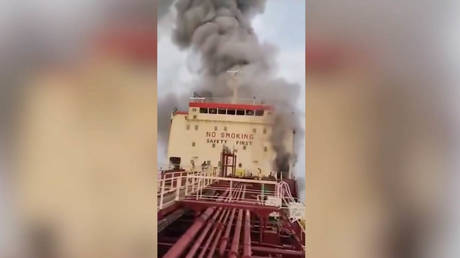
Media outlets are currently salivating over the latest "unprecedented" attack on an oil tanker. They paint a picture of a global supply chain on the brink of collapse, showing grainy footage of smoke on the horizon while whispering about $150 barrels of crude. It is a tired, predictable script. If you are reading the mainstream coverage, you are being fed a diet of manufactured panic designed to benefit the very entities that profit from volatility.
The reality? These attacks are not a bug in the global shipping system. They are a feature.
Market observers who have spent time in the bunkers and on the trading floors know that the "geopolitical risk premium" is often a polite term for a massive wealth transfer from panicked retail investors to calculated institutional players. While the headlines scream about "security failures," the industry's veterans are busy calculating the increased yields on tanker day rates and war-risk insurance premiums.
The Illusion of Scarcity
Every time a drone hits a hull or a boarding party climbs a rail, the "lazy consensus" dictates that oil prices must skyrocket because the world is running out of ways to move energy. This is mathematically illiterate.
The global tanker fleet is remarkably resilient and, more importantly, fungible. When one corridor becomes a "hot zone," the market doesn't stop. It reroutes. Yes, it adds ton-miles. Yes, it increases the time-on-water. But the physical volume of oil remains largely unchanged. The "scarcity" people fear is a temporal delay, not a structural deficit.
Think of it like a traffic jam on a major highway. The cars still exist; they just take twenty minutes longer to reach the garage. In the oil world, those twenty minutes are worth billions to traders who thrive on the "contango" (when the future price of oil is higher than the current spot price). For these players, a minor skirmish in a chokepoint is a godsend. It justifies the storage of millions of barrels on water, effectively turning the ocean into a giant, floating, high-interest savings account.
Why "Ally" Protection is a Farce
The competitor's piece focuses heavily on the fact that the vessel was off the coast of a U.S. ally. The implication is that security should have been ironclad. This reflects a fundamental misunderstanding of maritime law and the economics of naval escort.
- Flag of Convenience Reality: Most tankers aren't registered to the "allies" they serve. They fly the flags of Panama, Liberia, or the Marshall Islands to dodge taxes and labor regulations.
- The Cost of Projection: No navy on earth—not even the U.S. Navy—can provide a "picket fence" defense for every commercial vessel in a transit zone.
- The Insurance Arbitrage: It is often cheaper for a shipping conglomerate to pay a $200,000 war-risk premium and risk a hull hit than it is for a government to spend $2 million per interceptor missile to defend a ship that isn't even paying into that nation's tax base.
I have sat in meetings where the math was laid bare: a certain level of "kinetic friction" is factored into the annual budget. The industry expects a percentage of its fleet to face harassment. If anything, these attacks serve as a convenient excuse for shipping companies to raise their "spot rates" across the board, even for routes nowhere near the conflict. They are using a localized fire to justify a global price hike.
The Technology Gap is the Real Threat
We see videos of explosions and think of 20th-century warfare. We are wrong. The real disruption isn't the physical hole in the ship; it's the digital blindness that precedes it.
The mainstream press misses the nuance of AIS (Automatic Identification System) spoofing. Before that tanker was hit, it was likely "ghosting" or displaying a false location. This isn't just a defensive tactic; it’s a tool used by "dark fleets" to move sanctioned oil. When an attack happens, it often reveals a shadow economy that the "allies" would rather not discuss.
The vulnerability isn't a lack of destroyers. It is the fact that our global energy infrastructure relies on 1970s-era satellite protocols that can be jammed by a $500 device bought on the dark web. We are defending trillion-dollar energy flows with the equivalent of a screen door, and the industry likes it that way because transparency is the enemy of profit.
Stop Asking if the Strait is Safe
The question isn't whether the shipping lanes are secure. They aren't. They never have been. The ocean is a lawless space where might makes right and the highest bidder buys the peace.
If you want to understand the "Controversial Truth," look at the insurance payouts and the freight futures. When a ship gets hit, the stock prices of the major tanker companies often rise. Why? Because the market anticipates higher demand for their specialized services and a "flight to quality" that squeezes out smaller, less-insured competitors.
Actionable Intel for the Skeptical
If you are an investor or a policy analyst, stop looking at the smoke. Look at the "clean" vs "dirty" tanker spreads.
- Ignore the "Oil Shock" Narrative: Unless a major terminal is physically vaporized, the supply will find a way.
- Watch the Insurance P&I Clubs: These are the groups that actually run the world's oceans. If they aren't pulling coverage, the situation is nowhere near as dire as the news suggests.
- Bet on the Reroute: The real winners aren't the oil producers; they are the companies providing the logistics to take the "long way around."
The world isn't falling apart because a ship caught fire. The world is operating exactly as intended: a high-stakes game of chicken where the risk is socialized, and the profits are privatized. You are being told to worry so that you don't notice who is cashing the checks.
Stop mourning the "safety" of the seas. It never existed. Start trading the reality of the chaos.
Move your capital into the logistics of the detour and stop waiting for the "allies" to save a system they are actively profiting from destabilizing.