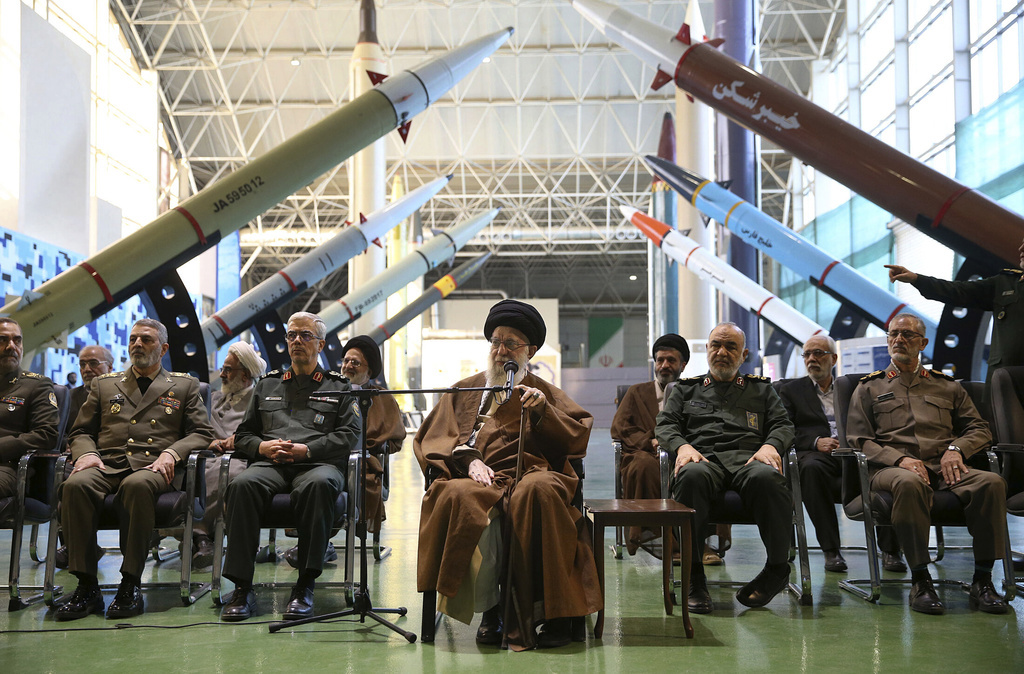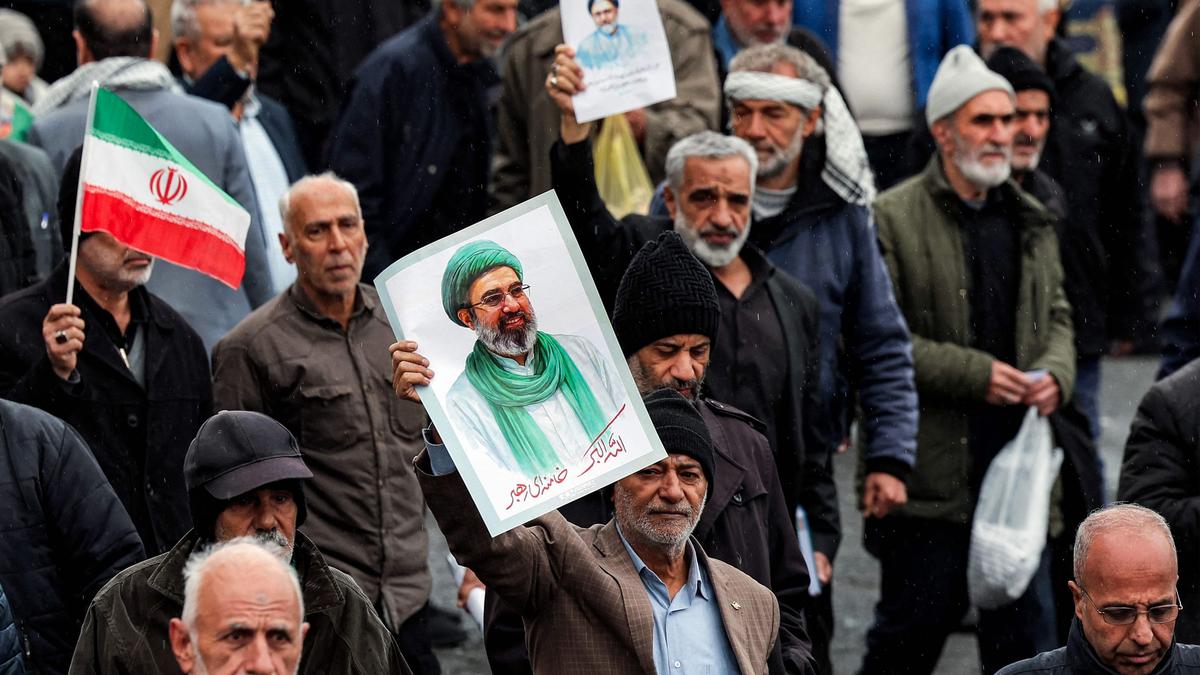
The proclamation from Tehran was as grand as it was expected. In a written message marking the Persian New Year, Iran’s newly elevated Supreme Leader, Mojtaba Khamenei, declared that the Islamic Republic had dealt its enemies a "dizzying blow." The rhetoric paints a picture of a regime standing tall amidst the ruins of a month-long conflict with the United States and Israel. However, the reality behind this "blow" is far more complex, revealing a leadership transition born of fire and a nation teetering on a knife’s edge.
Mojtaba Khamenei's rise to the pinnacle of Iranian power is not a triumph of democratic or even traditional clerical selection. It is a desperate consolidation of power by the Islamic Revolutionary Guard Corps (IRGC) following the devastating February 28 airstrike that claimed the life of his father, Ali Khamenei. While the state-run media broadcasts messages of "victory" and "unity," the silence from the new Rahbar is deafening. Two weeks into his tenure, Mojtaba has yet to appear on camera or even release an audio recording, lending significant weight to reports that he was severely wounded in the same strike that killed his predecessor.
The Architecture of a Narrative
The "dizzying blow" referenced by Mojtaba refers to the Iranian military's ability to maintain a "nationwide defensive front" despite the loss of its top leadership. According to the official narrative, the United States and Israel miscalculated, believing that the decapitation of the regime would lead to an immediate internal collapse or a popular uprising. Instead, the regime claims that the Iranian people have formed an "impregnable fortress."
This narrative serves two critical functions. First, it attempts to retroactively justify the transition to what many see as dynastic rule—a concept fundamentally at odds with the original spirit of the 1979 Revolution. Second, it masks the severe degradation of Iran's strategic assets. While Tehran claims its enemies are "uttering contradictory words," the facts on the ground show a different story:
- Command Vacuum: The loss of Ali Khamenei, along with over a dozen high-ranking security officials, has forced a rapid and perhaps unstable promotion of younger, more radical IRGC elements.
- Infrastructure Collapse: Strategic strikes have significantly hampered Iran’s ballistic missile and drone production capabilities, the very tools Mojtaba claims are dealing the "blows."
- Regional Isolation: Despite denials from Tehran, recent drone and missile incidents in Oman and Turkey have strained Iran's relations with its neighbors, who are increasingly wary of being dragged into a broader conflagration.
The IRGC Proxy State
Mojtaba’s appointment by the Assembly of Experts was reportedly a byproduct of intense pressure from the IRGC. With a narrow majority of 50 votes, his legitimacy among the senior clergy is thin. He is a leader not of the mosque, but of the barracks. For decades, Mojtaba operated as the ultimate gatekeeper in his father's office, cultivating a "loyalty structure" that bypasses traditional government channels.
This shift marks the final evolution of the Islamic Republic from a clerical theocracy to a military-intelligence state. The "resistance economy" Mojtaba now champions is less a plan for prosperity and more a blueprint for survival under siege. By doubling down on hardline rhetoric and rejecting de-escalation proposals, the new leader is signaling to his base—and the IRGC—that he will not be the one to blink.
The Cost of Defiance
The human cost of this "dizzying blow" is staggering. Estimates suggest that over 1,300 people have been killed since the conflict began on February 28. The domestic front remains volatile; the "unity" claimed by the leadership is forced, held together by the same security apparatus that Mojtaba has managed for years. The memory of the nationwide protests earlier this year is fresh, and the regime knows that any perceived weakness could reignite the streets.
Furthermore, the personal dimension of Mojtaba's rule cannot be ignored. Having lost his father, mother, wife, and siblings in a single afternoon, his approach to foreign policy is likely to be viewed through a lens of existential revenge. This makes the prospect of nuclear acceleration a terrifyingly real possibility. If Mojtaba perceives that conventional "dizzying blows" are no longer sufficient to deter his enemies, the ultimate deterrent may be the only path he sees left.
The current stalemate is not a victory for Tehran. It is a pause in a high-stakes game of survival. The world is watching to see if the written word of the new Supreme Leader will ever be matched by a public appearance, or if the "dizzying blow" was merely the final gasp of a regime struggling to breathe under the weight of its own contradictions.
Would you like me to analyze the specific economic impact of the "resistance economy" policy on Iran’s oil exports?