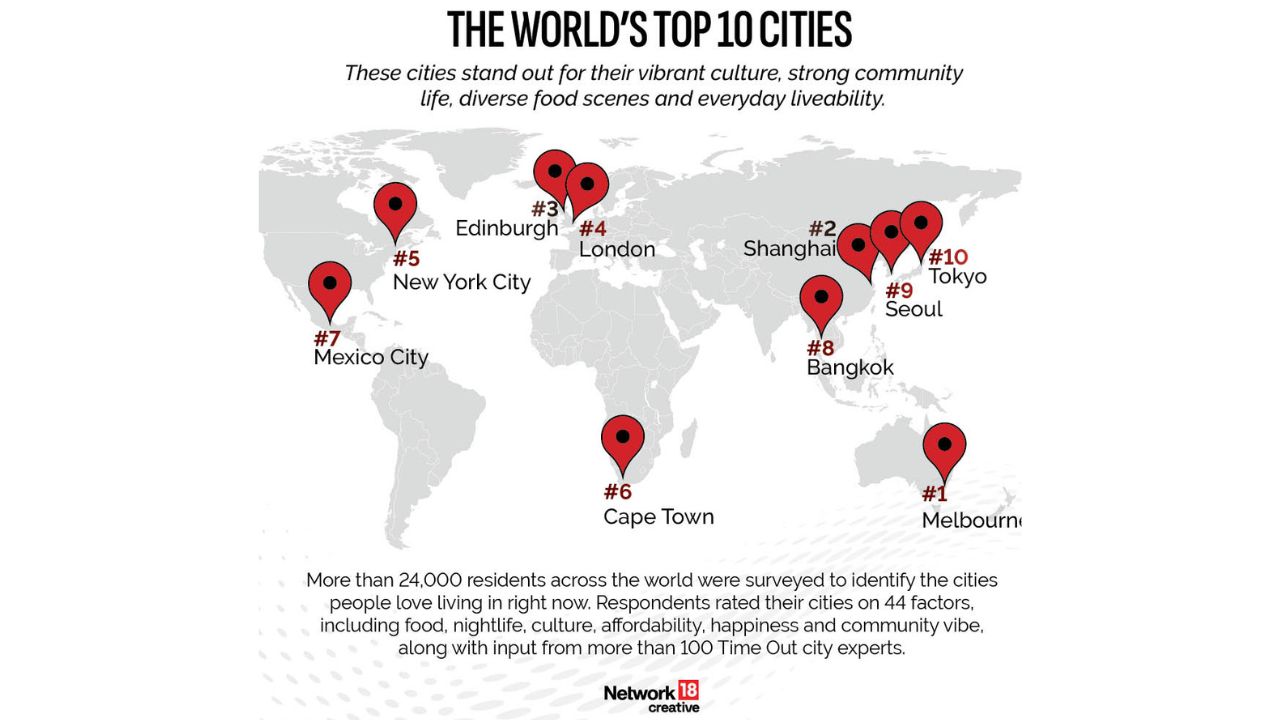
The lifestyle press just crowned Melbourne the king of 2026. They pointed to the flat whites, the spray-painted laneways, and a "liveability" score that makes HR managers weep with joy. It is a comfortable, predictable consensus. It is also completely wrong.
When a city tops a global list for "liveability," it isn't a badge of honor. It is a diagnostic report of stagnation.
I have spent fifteen years embedded in urban planning circles and real estate development. I have watched cities trade their soul for a high ranking in a glossy magazine. Here is the truth: a "best city" is usually just a city that has finally figured out how to price out its own culture in favor of high-end brunch spots.
Melbourne isn't leading the world. It’s leading a retreat into a beige, curated version of reality that prioritizes the comfort of the wealthy over the friction required for true genius.
The Liveability Trap
The "Liveability Index" is a metric designed for mid-level corporate relocations. It measures stability, healthcare, and infrastructure. These are excellent things if you are a 45-year-old actuary with a golden retriever. They are the kiss of death for anyone trying to build something new.
- Stability equals Stasis: High liveability scores reward lack of change.
- Safety masks Sterility: When you optimize for zero risk, you eliminate the "grit" that attracts the creative class.
- Infrastructure over Intent: We celebrate new train lines while ignoring the fact that no one can afford to live at the end of them.
Berlin in the 90s was unliveable. New York in the 70s was a nightmare. London in the 60s was soot-stained and broken. Yet, these are the eras that defined global culture for a century. Melbourne’s 2026 victory is proof that we have stopped valuing what a city produces and started valuing how well it pampers.
The Myth of the 20-Minute Neighborhood
The competitor’s piece gushes over the "20-minute neighborhood." On paper, it’s a dream. Everything you need within a short walk. In practice, it creates a series of disconnected, high-priced silos.
If you don't have to leave your bubble, you never encounter the "other." Urban friction is the primary driver of innovation. When a tech founder, a street artist, and a dishwasher all have to use the same cramped subway or walk the same chaotic street, ideas collide. When you reside in a 20-minute curated zone in Fitzroy, you aren't living in a city; you're living in a gated community without the fences.
The Coffee-Culture Industrial Complex
Let’s address the "food and drink" argument. The article claims Melbourne’s culinary scene is a global benchmark. It’s a benchmark of derivative excellence.
Melbourne has perfected the $28 avocado toast. It has mastered the pour-over. But perfection is the enemy of the avant-garde. I’ve seen this cycle repeat in San Francisco and Copenhagen. Once a food scene becomes "the best," the rents rise so high that only established groups with venture capital backing can open new spots.
The result? Every "cool" new bar looks the same. Exposed brick. Minimalist lighting. A natural wine list curated by the same three distributors.
Why Friction Beats Flavor
If you want the future of food, don't look at the city with the best-reviewed restaurants. Look at the city with the most chaotic, unregulated night markets. Look at the places where people are cooking things they aren't "allowed" to cook because the health department hasn't caught up yet. Melbourne is too regulated to be revolutionary. It is a museum of 2018’s best ideas, polished to a high sheen for 2026.
The Gentrification Paradox
The "best city" ranking is the ultimate gentrification accelerant.
- The Ranking Drops: International investors see Melbourne at #1.
- Capital Floods In: Property prices, already decoupled from local wages, spike again.
- The Talent Flees: The musicians, the coders, and the chefs who made the city "cool" move to Geelong, Adelaide, or Hanoi.
- The Shell Remains: The city keeps its ranking for three more years based on "reputation" while the actual culture is being hollowed out.
I’ve seen developers use these "Best City" lists as marketing collateral to sell off-the-plan apartments to people who will never step foot in the country. We are rewarding cities for becoming high-yield investment vehicles rather than functional habitats for humans.
Stop Asking if a City is "Liveable"
People Also Ask: "What is the most liveable city in 2026?"
This is the wrong question. It assumes that the goal of a city is to provide a frictionless experience. If you want no friction, stay in a hotel. If you want to grow, you need a city that challenges you.
The better question is: "Where is the highest concentration of unapplied talent?"
Melbourne is where talent goes to retire. It’s where you go when you’ve already made your money and you want to spend it on $12 sourdough. If you are 22 and have a world-changing idea, Melbourne is a trap. The cost of failure is too high. In a "best city," you can't afford to spend two years in a basement figuring out a new algorithm or a new sound.
The Metrics That Actually Matter
If we wanted to rank cities by their actual vitality, we would look at:
| Metric | Why it Matters | Melbourne’s Reality |
|---|---|---|
| Rent-to-Income Ratio | Can a poet afford to live here? | Obscene. |
| Regulatory Agility | How hard is it to start a street business? | Red tape nightmare. |
| Intergenerational Wealth Gap | Is the city just a playground for boomers? | Yes. |
| Cultural Exports | Are we making things or just consuming them? | Consuming. |
The Credibility Gap
The travel industry thrives on the "Best City" narrative because it sells flights and hotel nights. They won't tell you that Melbourne’s CBD is struggling with a post-office-work identity crisis. They won't mention the "ghost towers" of vacant investment properties. They certainly won't talk about the fact that the "liveability" of the city depends entirely on an underclass of gig workers who can't afford to live within an hour of the Carlton gardens.
I’m not saying Melbourne is a dump. It’s a beautiful, clean, well-functioning city. But calling it the "best" city in the world is like calling a Lexus the "best" car in the world. It’s reliable, it’s comfortable, and it is profoundly boring.
The Strategy for the Contrarian Traveler (or Resident)
If you want to actually experience the pulse of the decade, stop looking at the top of the list. Look at the bottom.
- Look for "Inconvenient" Cities: Places where the transit is slightly broken but the energy is high.
- Look for "Secondary" Hubs: Cities that are currently being mocked by the elite. That’s where the real work is happening.
- Avoid the "Foodie" Destinations: If a city’s primary identity is "we have great restaurants," it means they’ve stopped building anything else.
Melbourne’s victory is a signal to sell. It is the peak of the bubble. When the mainstream media finally agrees that a place is the pinnacle of civilization, the smart money—and the real talent—is already halfway out the door.
The list-makers aren't rewarding excellence; they are rewarding comfort. And comfort is the primary ingredient in cultural decay. You can have your 20-minute neighborhood and your perfect latte. I’ll take the city that’s still messy enough to produce something the world hasn't seen before.
Go ahead, book your flight to the "best city in the world." Just don't be surprised when you realize you're visiting a very expensive theme park titled Urban Life: 2015-2025 Edition.