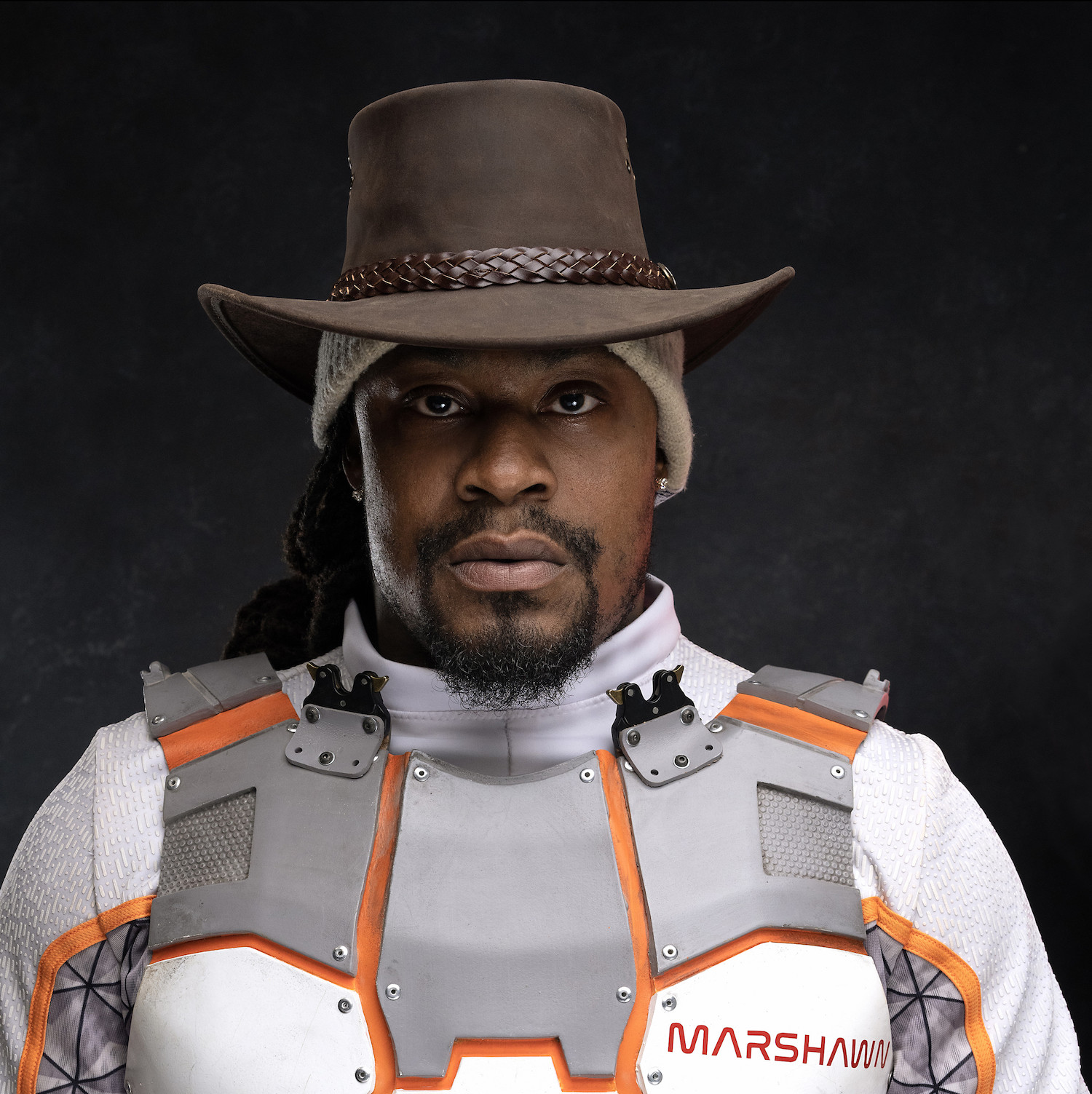
The media is obsessed with a caricature.
Whenever Marshawn Lynch pops up in a scripted series, a viral commercial, or a "crime-fighting" parody, the industry collective loses its mind. They call it "Beast Mode." They call it "keeping it real." They treat a grown man like a shiny new toy because he refuses to use their script.
The consensus is lazy. The narrative says Lynch is the ultimate rebel, the man who beat the system by saying nothing at the Super Bowl and now wins the system by doing whatever he wants. But if you look closer, you aren't seeing a rebellion. You are seeing the final stage of athlete commodification.
We have reached a point where "authenticity" is just another line item on a marketing budget.
The Myth of the Reluctant Star
The standard take on Marshawn Lynch is that he’s an "accidental" media sensation.
I’ve spent years watching how talent agencies and production houses scout for "unfiltered" personalities. There is nothing accidental about it. The industry realized a long time ago that the polished, PR-trained athlete is a dead product. Nobody wants to hear a quarterback talk about "taking it one game at a time" anymore. That doesn't move the needle.
What moves the needle is the perception of a loose cannon.
The media loves Lynch because he gives them a "get out of jail free" card for their own lack of creativity. Instead of writing compelling characters or innovative segments, they just drop Lynch into a scenario, tell him to "be himself," and wait for the clips to trend. It’s the path of least resistance.
But here is the nuance everyone misses: When "being yourself" becomes your primary job description, you are no longer yourself. You are a performer playing a character named after yourself.
The Crime Fighter Trope and Narrative Poverty
The latest fascination involves Lynch playing a gritty, expletive-heavy version of a hero. The reviews are glowing. "He’s so natural," they say. "He’s doing real stuff," they claim.
Stop.
He’s doing exactly what the director told him to do: amplify the Oakland-bred, Skittles-eating, press-conference-avoiding persona that the public already bought a decade ago. It is a feedback loop. The audience wants a specific version of Marshawn, the producers provide it, and Marshawn—being a savvy businessman—delivers the product.
This isn't "real." It’s a highly curated subversion of expectations.
If we actually cared about these athletes as multi-dimensional humans, we would be bored by the repetition. Instead, the industry treats Lynch like a specialized tool—a "vibe" that you can insert into a project to gain instant street cred without having to actually engage with the culture he represents.
Why the "Beast Mode" Business Model is Actually Dangerous
Everyone wants to emulate the Lynch model. Every young player in the NFL or NBA thinks the path to post-career longevity is to be "unfiltered."
They are wrong.
Lynch is a statistical anomaly. He has a specific type of charisma that survives the transition from the field to the screen. For 99% of athletes, attempting this "I don't care" branding leads to unemployment.
Let’s talk about the mechanics of the "Anti-Brand." To make this work, you need:
- Elite-level performance: You can't ignore the media if you're a backup. You need the leverage of being a Hall of Fame caliber talent.
- Financial Independence: Lynch didn't spend his game checks. He had the "walk-away" money that allowed him to treat fines like minor inconveniences.
- A Monolith to Fight: His brand was built in direct opposition to the NFL’s rigid corporate structure.
Without the NFL as a villain, the "Beast Mode" persona has no friction. When he enters the world of entertainment, he is no longer fighting the man; he is the man’s favorite employee. He is the person they hire to make their corporate project feel less corporate.
The Intellectual Laziness of the "Real" Label
"He's just being real."
That is the most condescending phrase in the sports-entertainment crossover. It implies that the athlete isn't capable of craft, or that their value is entirely tied to their lack of professional polish.
When we praise Lynch for being "real" in a scripted environment, we are essentially saying we don't expect him to be an actor. We don't expect him to have range. We just want him to bark the way we remember him barking in 2014.
Imagine a scenario where a classically trained actor was told their only value was to "be themselves." They would call it an insult. In the sports world, we call it a breakthrough.
This creates a ceiling. It prevents athletes from actually evolving into creators, writers, or directors. It keeps them in a box where they are valued only for their proximity to "the streets" or their refusal to follow a teleprompter.
The Cost of the Caricature
There is a downside to this approach that nobody admits: the erosion of the actual person.
When your entire public value is based on being a "real [expletive]," you lose the right to be anything else. You can't be vulnerable. You can't be academic. You can't be quiet. The moment Marshawn Lynch does something that doesn't fit the "Beast Mode" template, the media will turn. They don't want the man; they want the meme.
I have seen dozens of retired stars realize too late that they have built a prison out of their own public image. They spend their 40s and 50s chasing the high of a persona they outgrew years ago, all because the industry won't pay for the actual human.
The "Beast Mode" crime-fighter isn't a sign of progress. It’s a sign that we’ve run out of ideas.
We are so desperate for a break from the plastic, polished world of modern celebrity that we have turned "authenticity" into a costume. We put it on athletes, we clap when they say something "unfiltered," and we ignore the fact that the entire interaction is being filmed for a streaming platform that’s charging us $19.99 a month.
Stop calling it real. Call it what it is: a very effective, very cynical pivot in the attention economy.
The industry doesn't want Marshawn Lynch to be free. It wants him to be a very specific kind of loud. And as long as we keep buying the "Beast Mode" Skittles, he’ll keep selling them. Just don't confuse the transaction for a revolution.
Go watch the film again. Not the highlight reels, but the interviews where he’s actually trying to talk about the community or business. Notice how quickly the interviewer steers him back toward a catchphrase or a joke about a fine.
The "Beast" is on a leash. The leash is just made of "likes" and "shares" instead of league fines.
If you want to see something actually radical, stop asking athletes to "be themselves" for your entertainment. Start asking why you’re so bored with your own culture that you need a retired running back to pretend to be a vigilante just to feel something.
The joke isn't on the NFL or the media. The joke is on the audience that thinks they're watching a rebel when they're actually watching a mascot.