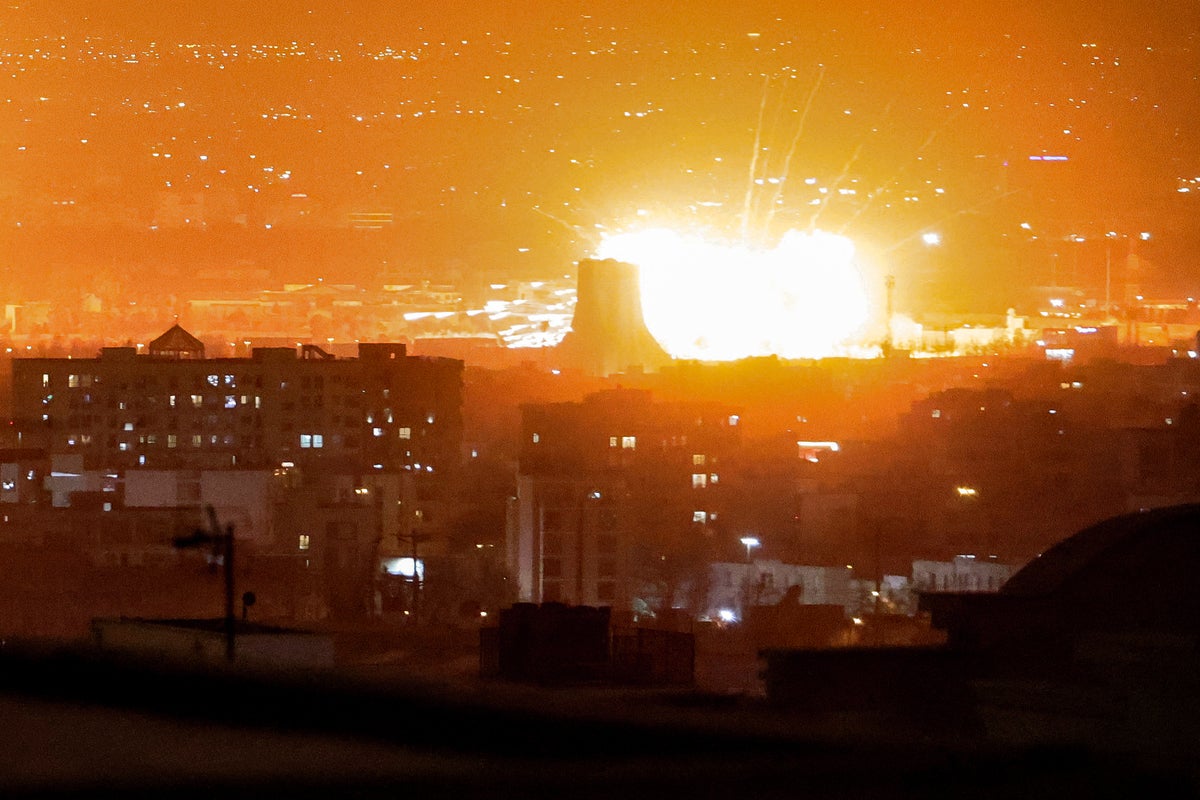
The United States Department of Defense currently faces a mathematical impossibility: sustaining two high-intensity, ammunition-dependent conflicts simultaneously without a corresponding expansion in industrial base throughput. The reported potential to divert "crucial" weaponry from Ukraine to the Middle East is not a shift in political sentiment, but a symptom of a hard ceiling in the global defense supply chain. This inventory crisis is defined by a specific collision between the 155mm artillery shell requirements of a land-based war of attrition in Eastern Europe and the precision-guided missile demands of an escalating maritime and proxy conflict in the Levant.
The Dual-Front Depletion Model
The primary constraint on American foreign policy is the Total Available Munition Volatility (TAMV). This metric tracks the delta between the rate of consumption on the battlefield and the Rate of Industrial Replacement (RIR). For the last twenty-four months, the RIR for critical components has remained below the consumption rate of the Ukrainian Armed Forces. When a second theater—Israel and the broader Middle East—enters a period of sustained kinetic activity, the Pentagon is forced into a zero-sum allocation strategy. Don't forget to check out our recent coverage on this related article.
The tension exists within three specific asset classes:
- 155mm NATO Standard Artillery: The "workhorse" of the Ukrainian counter-offensive.
- Precision-Guided Munitions (PGMs): Specifically Hellfire missiles and Small Diameter Bombs (SDBs).
- Air Defense Interceptors: PAC-2 and PAC-3 missiles for the Patriot system.
Ukraine’s tactical doctrine relies on high-volume indirect fire to compensate for a lack of air superiority. Conversely, the Israeli Defense Forces (IDF) utilize high-precision aerial bombardment to minimize collateral damage in dense urban environments. While these appear to be different needs, they compete for the same upstream components: specialized energetic materials (explosives), microelectronics for guidance systems, and localized assembly line capacity. If you want more about the background of this, Associated Press offers an excellent summary.
The Interceptor Bottleneck
Air defense represents the most acute point of failure in a two-theater scenario. The Patriot system is the primary shield for both Ukrainian energy infrastructure and high-value regional assets in the Middle East. The production rate of PAC-3 MSE interceptors is approximately 550 per year. In a scenario where Russia launches 100+ drones and missiles per week, and Iranian proxies utilize similar swarm tactics, the global stockpile enters a state of Negative Inventory Momentum.
When the Pentagon considers "diverting" weapons, they are calculating the Probability of Asset Survival (PAS). If a Patriot battery in Kyiv is stripped of its reload inventory to protect a carrier strike group in the Eastern Mediterranean, the PAS for Kyiv’s electrical grid drops toward zero. This is a binary choice dictated by the lead time of solid-rocket motors, which currently exceeds 18 months.
Cold War Stockpiles vs. Just-in-Time Defense
The current crisis exposes the fallacy of the "Just-in-Time" logistics model applied to peer-level warfare. During the Cold War, the United States maintained deep "War Reserve Stocks" designed to last for months of high-intensity combat. Post-Cold War optimization led to a "Lean" manufacturing approach that prioritized cost-efficiency over surge capacity.
The mechanism of diversion is triggered by the National Military Command System (NMCS) Priority Level. Israel, as a Major Non-NATO Ally with deep systems integration, often shares a similar priority level to U.S. European Command (EUCOM) requirements. When two "Tier 1" priorities overlap, the decision-making reverts to the Immediate Threat Horizon. A missile in flight toward a U.S. base in Iraq will always supersede a planned shipment of shells for a 2026 Ukrainian offensive.
The Microelectronic Constraint Function
A significant overlooked factor in the "diversion" narrative is the commonality of the Guidance and Control Section (GCS). Whether it is a GMLRS rocket destined for a HIMARS unit in Donbas or a precision bomb for an F-35 over Gaza, both systems rely on:
- Inertial Measurement Units (IMUs): High-grade sensors that detect orientation.
- GPS Jam-Resistant Modules: Critical for operating in EW-heavy environments.
- Programmable Logic Controllers (PLCs): The "brains" that execute flight corrections.
Because the global supply of military-grade semiconductors is centralized among a handful of fabricators, any increase in demand from the Middle East creates a literal queue in the cleanrooms of defense contractors. You cannot "speed up" the curing process of a missile's solid propellant or the etching of a hardened chip. Therefore, diversion is the only immediate lever available to the Pentagon to address a tactical vacuum.
Categorizing the Risks of Reallocation
The strategic risk of shifting resources is not uniform. It can be categorized by its impact on the respective theaters:
1. The Ukrainian Cumulative Degradation
Ukraine operates on a "Consumable-Based Defense." Without a steady stream of 155mm shells, their artillery units must transition from offensive fire missions to "conservation mode." This allows Russian forces to fortify positions without the pressure of counter-battery fire. The risk here is a slow, territorial erosion rather than a sudden collapse.
2. The Middle Eastern Escalation Ladder
In the Middle East, the requirement is for high-end "Exquisite Systems." If the U.S. cannot provide enough interceptors or precision munitions, the IDF may be forced to use less precise "dumb bombs" to achieve military objectives, significantly increasing civilian casualties and geopolitical blowback. Alternatively, a lack of interceptors leaves U.S. personnel in the region vulnerable to proxy strikes, potentially dragging the U.S. into a direct regional war.
Structural Failures in the Industrial Base
The reason the Pentagon cannot simply "buy more" is rooted in the Defense Industrial Base (DIB) Consolidation. In the 1990s, the U.S. had dozens of major defense contractors; today, five "Primes" dominate. This consolidation eliminated the "Hot Standby" production lines that allowed for rapid scaling.
The "Three Pillars of Production" are currently fractured:
- Tooling: The physical machinery required to forge shell casings is specialized and has long procurement cycles.
- Labor: The defense sector requires security-cleared, highly skilled precision welders and engineers, a demographic that is currently in short supply.
- Feedstocks: The precursor chemicals for explosives (such as TNT and RDX) are often sourced from international markets, including some that are politically volatile.
The Geopolitical Cost of Tactical Diversion
Diversion signals a loss of Escalation Dominance. When a superpower is forced to choose which ally receives ammunition, it reveals a lack of "Depth" to its deterrent. Russia and China observe these inventory fluctuations as a measure of American "Stay-Behind" capacity.
If the Pentagon prioritizes the Middle East, it validates the Russian strategy of "Strategic Patience"—the belief that the West will eventually be distracted or depleted by a secondary crisis. Conversely, if the U.S. continues to prioritize Ukraine at the expense of Middle Eastern stability, it risks the collapse of its security architecture in a region vital to global energy markets.
Immediate Strategic Pivot: The Capacity-Building Mandate
The only viable path forward is a transition from Inventory Management to Production Mobilization. This requires three specific tactical shifts:
- Multi-Year Procurement Contracts: The Pentagon must move away from year-to-year funding. Contractors will not invest in new factories (CAPEX) without a five-to-ten-year guaranteed purchase agreement.
- Tech-Transfer to Allied Hubs: The U.S. must expedite the licensing of 155mm and GMLRS production to Poland, Germany, and South Korea. This decentralizes the "Point of Failure" in the supply chain.
- Component Standardisation: Reducing the "bespoke" nature of PGMs. Moving toward modular guidance kits that can be "snapped on" to various airframes and rocket bodies reduces the GCS bottleneck.
The Pentagon's current dilemma is not a choice of who to support, but a forced admission that the post-war "Peace Dividend" has been spent. The decision to divert weapons to the Middle East is the first of many "Sophie’s Choices" that will define the next decade of American foreign policy.
The strategic priority must shift toward Industrial Deterrence. The ability to produce 100,000 shells a month is more intimidating to an adversary than having 1,000,000 in a warehouse. Until the RIR exceeds the consumption rate in both theaters, the Pentagon will remain in a state of reactive crisis management, shuffling a dwindling deck of cards while the house continues to grow.
Establish a "War Production Board" equivalent that bypasses standard civilian procurement regulations to fast-track the domestic production of solid rocket motors and 155mm forgings. Without this, the U.S. will be forced to concede a theater by 2027 simply due to an empty magazine.