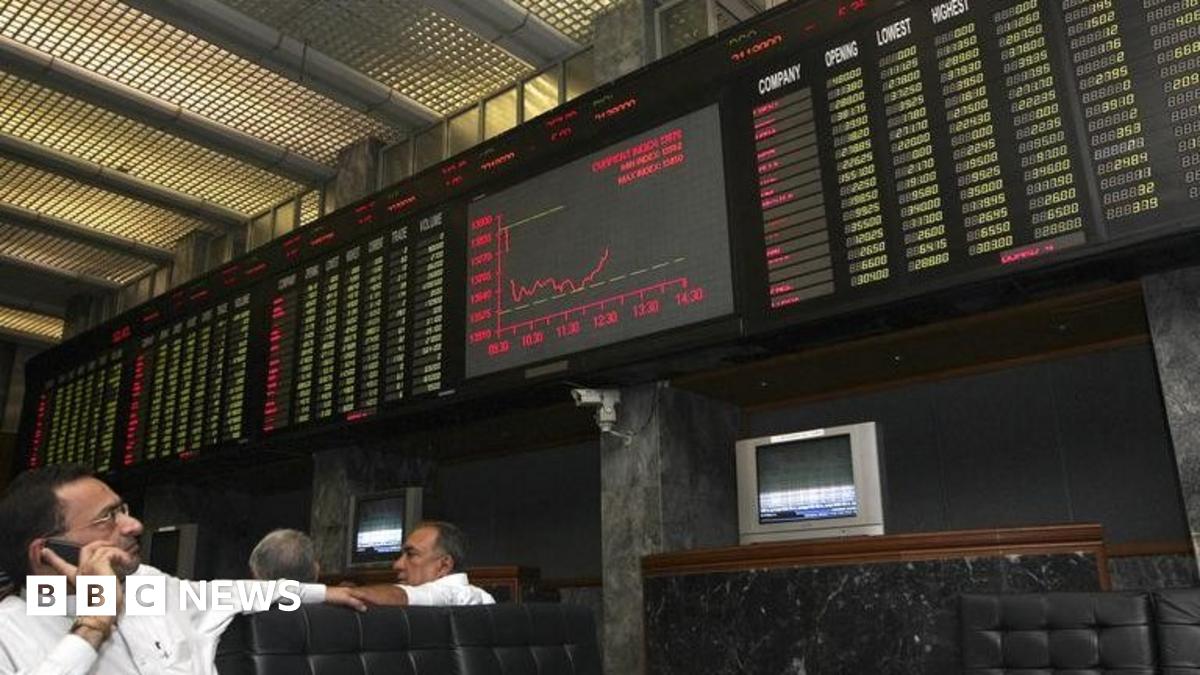
The London Metal Exchange went dark again. The wires are screaming about "technical outages" and "market fragility." They want you to believe this is a bug in the system.
They are wrong. The outage isn't the bug; it’s the only honest thing about the LME right now. Meanwhile, you can find related events here: The Caracas Divergence: Deconstructing the Micro-Equilibrium of Venezuelan Re-Dollarization.
Most traders are crying for "five-nines" uptime—99.999% reliability. They think a digital exchange should be as dependable as a light switch. This demand for constant, frictionless liquidity is exactly what makes the global commodities market a powder keg. We’ve built a financial system that prizes uptime over sanity, and the LME’s recurring "technical glitches" are just the ghost in the machine trying to save us from ourselves.
The High Frequency Delusion
The standard narrative says an outage is a disaster because it prevents price discovery. This assumes that "price discovery" is happening at 10:01:05 AM on a Tuesday during a low-volume slump. It’s not. What’s happening is a feedback loop of algorithms reacting to other algorithms. To understand the bigger picture, check out the detailed analysis by Bloomberg.
When the LME’s Select electronic platform freezes, the industry treats it like a plane crash. In reality, it’s more like a circuit breaker in an old house. If you keep plugging in high-draw appliances—high-frequency trading (HFT) firms, complex derivatives, and massive leveraged bets—the fuse should blow.
The "lazy consensus" is that a 147-year-old institution should behave like a Silicon Valley SaaS product. But the LME isn't selling cloud storage. It’s the final arbiter of the world’s physical industrial base. When the screen goes black, the world doesn't stop spinning. Copper still exists. Zinc is still being mined. The only thing that stops is the frantic, jittery betting on those materials.
The Nickel Ghost Still Haunts the Hallways
You cannot discuss an LME outage without acknowledging the 2022 Nickel crisis. That wasn't a technical outage; it was a manual kill-switch pulled to save the exchange’s clearing members from a systemic margin call.
Now, every time the screen flickers, the market assumes it’s another "save the whales" intervention disguised as a server error. This is the price of destroyed trust. When you intervene in the market to protect the big players, you lose the right to be believed when you claim a router died.
I’ve sat in rooms where "technical difficulties" were discussed as a convenient PR shield for "we don't know who owns what right now." If the LME wants to be a modern exchange, it needs to stop using the "technical outage" excuse as a catch-all for operational incompetence.
Why Fragility is Actually a Feature
Anti-fragility, a concept popularized by Nassim Taleb, suggests that systems should benefit from shocks. The LME is currently the opposite: it’s a brittle system that fears any deviation from the norm.
- The Problem: Electronic trading has compressed time. Decisions that used to take a lunch break now take a microsecond.
- The Result: We have removed all "human friction" from the process. Friction is what prevents a small fire from becoming a firestorm.
- The Solution: Forced downtime.
Imagine a scenario where the LME intentionally went offline for ten minutes every time volatility spiked by a certain percentage. The HFT crowd would lose their minds. Their models would break. Good. The market should belong to those who understand the underlying commodity, not those who have the fastest fiber-optic cable to the data center.
The Infrastructure Debt Nobody Wants to Pay
The LME is a hybrid monster. It’s trying to maintain the "Ring"—that beautiful, anachronistic circle of shouting humans—while competing with the CME and the SHFE in the digital space.
You can’t run a 21st-century global casino on 20th-century plumbing. Most "technical outages" in finance are the result of legacy codebases being wrapped in modern APIs. It’s like putting a Tesla dashboard on a 1985 Ford Escort. It looks great until you hit 60 mph and the wheels fall off.
The exchange's owners, HKEX, are stuck. They want the prestige of the London brand but they are hesitant to perform the "heart transplant" the electronic systems need because it would cost hundreds of millions and potentially alienate the old-school brokers who still provide the core liquidity.
Stop Asking for Stability
If you are a trader asking for "more stability," you are asking for a lie. The global supply chain is not stable. Geopolitics is not stable. Why should the price representation of those things be a smooth, unbroken line?
The obsession with "uninterrupted access" is a symptom of a market that has become addicted to gambling. If you can’t handle a four-hour outage without your firm collapsing, you aren't a trader; you’re a degenerate with a spreadsheet. Real hedgers—the people actually moving physical metal—don't care if the screen is off for an afternoon. They have contracts that span months and years.
The Brutal Reality of Decentralization
The LME is terrified of the word "decentralized." They should be.
Every time a major exchange goes down, it builds the case for peer-to-peer commodity trading. If I can’t trust the central clearing house to stay online, why am I paying them a fee? The only reason the LME still exists is because of its warrants—the pieces of paper that prove you own a specific pile of aluminum in a specific warehouse in Rotterdam.
The "outage" is a signal. It’s telling the market that the era of the centralized, monolithic exchange is reaching its breaking point.
- Physical is King: If you don't have the metal, you don't have anything. The digital price is a hallucination that disappears when the power goes out.
- Diversify Execution: If the LME is your only route to market, you have failed at basic risk management.
- Embrace the Dark: Use outages to re-evaluate your positions without the noise of the ticker. It’s the only time you’ll get a clear head.
Stop Trying to Fix the Uptime
The LME doesn't need better servers. It needs a better philosophy.
It needs to decide if it is a utility for the industrial world or a playground for the financial world. You can't be both. If it's a utility, it should prioritize safety and settlement over the speed of execution. If it’s a playground, it should stop pretending that these outages are "unforeseen technical errors" and admit that the system is simply overwhelmed by the sheer volume of speculative garbage it’s forced to process.
The next time the LME goes offline, don't refresh the page. Walk away. Look at the actual physical demand for the commodities you're trading. You’ll find that the "technical outage" didn't cost you money—your over-reliance on a fragile, centralized bottleneck did.
Build your strategy around the certainty of failure. The screen will go black again. The only question is whether you’ll be left holding a digital ghost or a physical reality.
Stop whining about the outage and start trading like the lights could go out at any second. Because they will.


.jpg)