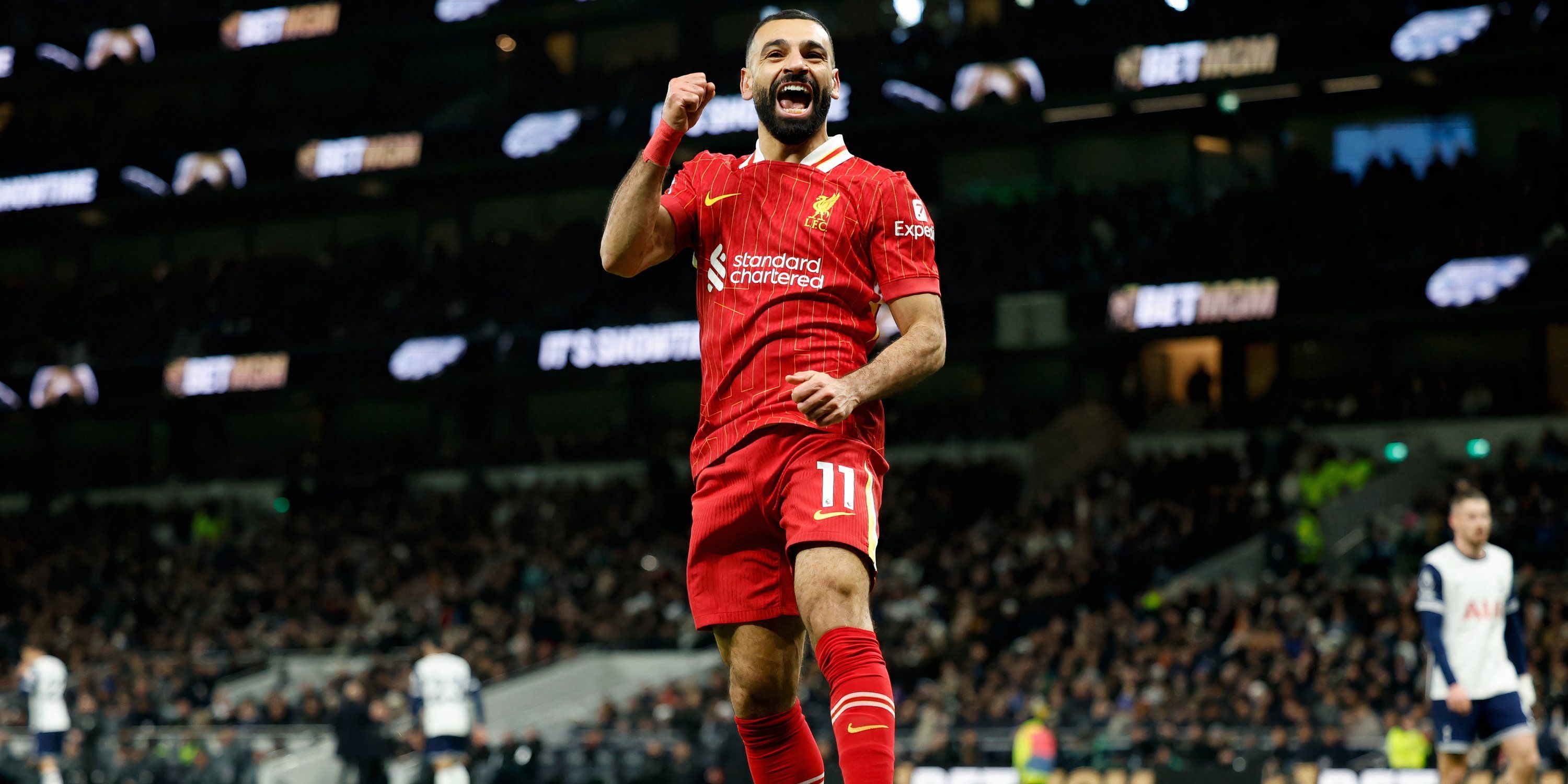
The football media is currently mourning a funeral that hasn't happened yet. They are obsessing over the "tragedy" of Mohamed Salah’s potential departure from Liverpool. They call it the end of an era. They call it irreplaceable loss.
They are wrong.
The lazy consensus suggests that losing a player who guarantees 20 plus goals a season is a sporting catastrophe. In reality, keeping an aging superstar on a record-breaking wage structure is the fastest way to turn a high-performing machine into a stagnant museum. If you think Salah leaving is a disaster, you aren’t watching the numbers; you’re watching the highlights.
The Sentiment Trap
Football fans are sentimental. Owners cannot afford to be.
The narrative currently flooding the back pages is that Liverpool’s hierarchy is "failing" by letting the Egyptian King’s contract tick down. This ignores the most basic principle of asset management: Sell at the peak of the curve, not during the slide.
I’ve seen clubs—Manchester United and Arsenal specifically—strangle their own progress by handed massive "legacy" contracts to players in their 30s. Think Alexis Sanchez. Think Mesut Ozil. When you pay for what a player did rather than what they will do, you lose.
Salah is 31. His physical metrics are still elite, but the cliff-edge in the Premier League is unforgiving. Data from the last decade of elite wingers—Eden Hazard, Sadio Mane, Raheem Sterling—shows that once the explosive pace drops by even 3%, the entire tactical system around them begins to fracture.
The Tactical Rigidity of Greatness
There is a hidden cost to having a "talisman."
When Salah is on the pitch, the gravitational pull of the attack is skewed. Everything must funnel through the right half-space. It makes Liverpool predictable. We saw this with late-stage Cristiano Ronaldo at Juventus and Manchester United. The individual stats stayed high, but the team’s total output and tactical flexibility plummeted.
By removing the sun from the center of the solar system, you allow other planets to breathe.
- Darwin Nuñez stops being a secondary thought and becomes a focal point.
- Luis Diaz and Cody Gakpo are no longer forced to defer.
- The wage bill—currently weighted heavily toward one man—is redistributed to bring in three elite, 23-year-old profiles.
Imagine a scenario where Liverpool pockets a £100m transfer fee from the Saudi Pro League and clears £350,000 a week off the books. That isn’t a loss. That’s a war chest for a total tactical evolution.
The "Irreplaceable" Myth
People said Liverpool couldn't survive without Philippe Coutinho. The "experts" claimed the creativity would vanish. Instead, Jurgen Klopp took that money, bought Virgil van Dijk and Alisson Becker, and won every trophy available.
The industry insiders I talk to aren't worried about Salah leaving; they are worried about who Liverpool scouts next. The club’s recruitment department, led by the returning Michael Edwards, thrives on "Moneyball" principles. They don't look for a "new Salah." They look for the undervalued metrics that Salah currently provides—expected goals (xG), progressive carries, and shot-creating actions—and they find them in a younger, cheaper, more malleable player.
The Saudi Factor is a Gift
Usually, when a player hits 32, their resale value hits zero. The Saudi Pro League has fundamentally broken the market logic for Liverpool’s benefit.
Liverpool is being offered a "Get Out of Jail Free" card. They are being offered a massive premium for a player who is approaching the natural end of his European peak. To reject a triple-digit million-pound offer for a player with one year left on his deal isn't "ambition." It's financial negligence.
The Brutal Truth of the "King"
Let’s be honest about the performances. In the second half of the 2023/24 season, post-AFCON and post-injury, Salah wasn't the same. The sharpness in tight spaces faded. The finishing, while still good, lacked that inevitable lethality.
The "People Also Ask" sections on Google are full of fans asking "How can Liverpool replace Salah's goals?"
The answer is: You don't. You replace the system that required one man to score them all. You move from a "Star System" back to a "Heavy Metal System" where the threat is distributed.
The Risk of Staying
There is a downside to my contrarian view, and it’s purely psychological. If Salah leaves and the replacement fails to hit the ground running, the media will crucify the board. But playing it safe is how you become a mid-table side.
Liverpool’s identity is built on high-intensity, collective pressing. It is incredibly difficult to maintain that intensity when your highest-paid player needs to start "managing his minutes" or "picking his spots" to conserve energy for sprints.
If Salah stays on a new three-year deal, Liverpool is betting £60m+ in wages that he will be a world-class athlete at 34. History says that’s a losing bet.
Stop Mourning and Start Mapping
The smart money is already looking at the scouting reports from the Bundesliga and Eredivisie. The smart money is looking at players like Johan Bakayoko or Mohammed Kudus—players who offer the same verticality Salah did five years ago.
The competitor articles want to sell you a story of heartbreak. I’m telling you this is a business masterstroke.
Liverpool isn't losing a King; they are cashing in a chip at the exact moment the house is overpaying.
Sell him. Take the money. Rebuild the engine. Don't look back.