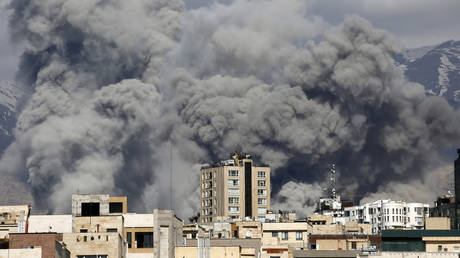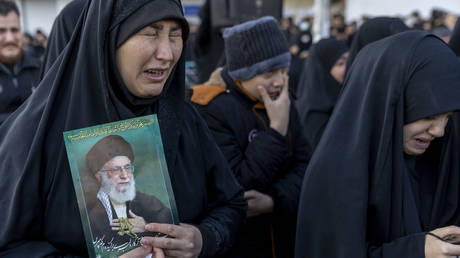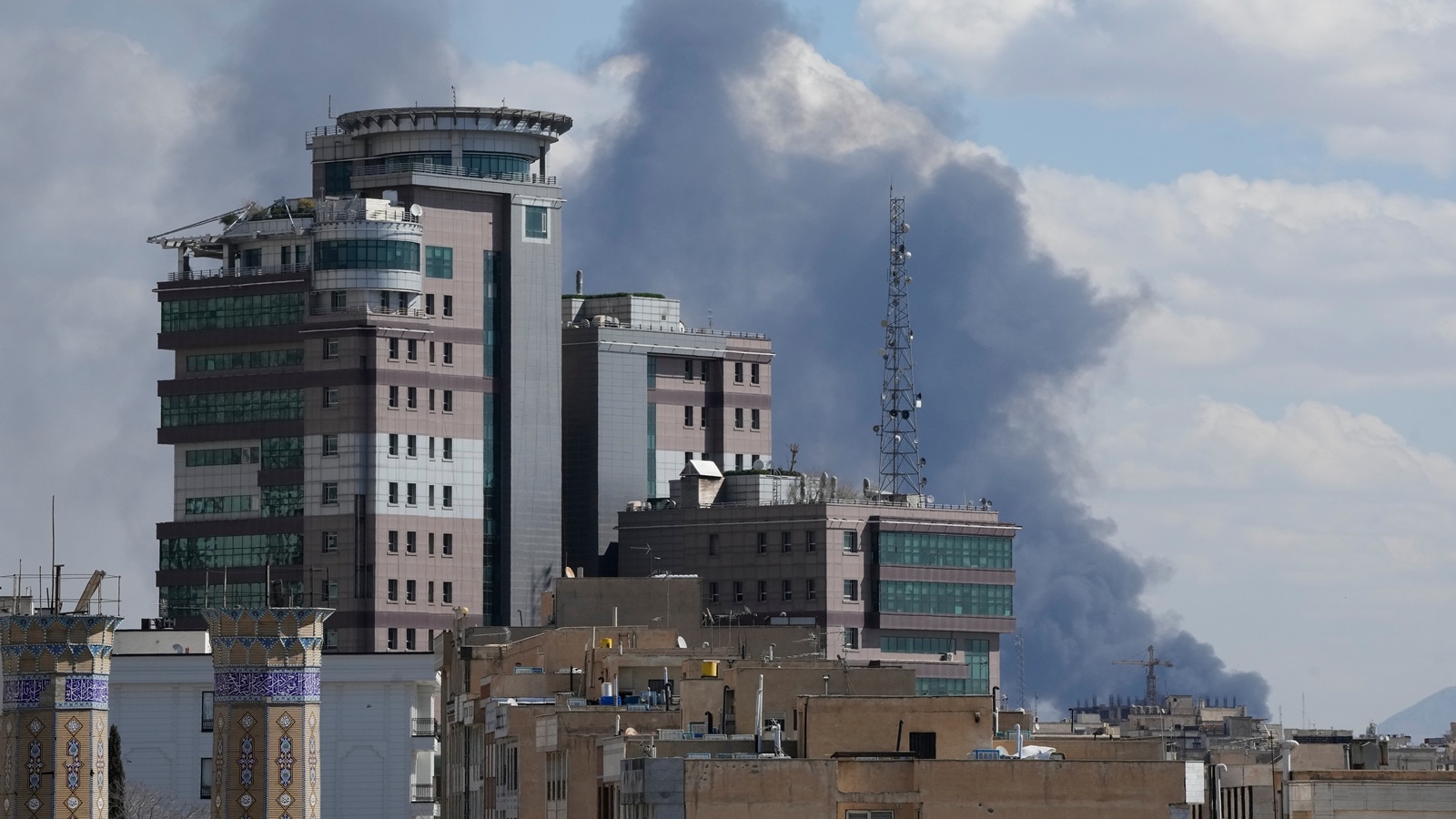
The deaths of three U.S. service members and the serious wounding of five others during operations targeting Iranian-linked infrastructure marks a transition from gray-zone harassment to high-threshold kinetic conflict. This shift is not merely an increase in casualty volume but a qualitative change in the operational risk profile for U.S. Central Command (CENTCOM). The current engagement model relies on a precarious balance between deterrence through precision strikes and the physical vulnerability of distributed "lily pad" outposts. When this balance fails, the result is a catastrophic breach of the force protection envelope.
To understand the strategic gravity of these casualties, one must look past the immediate tactical reports and analyze the structural vulnerabilities of US forward presence, the technical evolution of One-Way Attack (OWA) munitions, and the political cost-function of regional escalation.
The Architecture of Vulnerability: Outpost Geometry
The US military maintains a network of small, often austere bases across Iraq, Syria, and Jordan. While these positions serve as critical nodes for counter-ISIS operations and intelligence collection, they possess inherent structural weaknesses.
- Static Positioning: Unlike carrier strike groups or mobile maneuver units, these outposts are fixed geographic coordinates. This allows adversaries to conduct long-term pattern-of-life analysis and refine targeting solutions over months of observation.
- Perimeter-to-Mass Ratio: Smaller outposts (Level I and II facilities) often lack the deep multi-layered defense-in-depth found at major hubs like Al-Udeid. A smaller physical footprint means that a single successful penetration of the primary defensive screen can result in a higher percentage of mass casualties.
- Logistic Dependence: These sites require regular ground resupply. Each convoy and resupply window provides a predictable "noise" in the base’s electronic and physical signature, which sophisticated actors use to mask the launch of an attack.
The failure at the point of impact usually indicates a saturation of the base's Short-Range Air Defense (SHORAD). Systems like the C-RAM (Counter Rocket, Artillery, and Mortar) or the Coyote interceptor are effective but have finite magazine depths. If an adversary launches a synchronized swarm of low-cost OWA drones alongside indirect fire (IDF), the defensive system enters a state of "target fixation" or exhaustion, allowing a leeward-side munition to strike a high-value target, such as a troop housing unit or a command node.
Technical Asymmetry: The OWA Drone Cost Curve
The primary driver of the current casualty rate is the democratization of precision-guided munitions through the Iranian drone program. We are witnessing an inversion of the traditional cost-exchange ratio.
The US employs interceptors that often cost between $100,000 and $2,000,000 per unit to down drones that cost as little as $20,000 to manufacture. This creates a Fiscal Attrition Loop. The adversary does not need to destroy the US base to "win"; they only need to force the US to expend its limited inventory of high-end interceptors until the defense is porous.
- Guidance Systems: Modern Iranian-designed drones, such as the Shahed variants, utilize commercial-grade GPS and GLONASS jam-resistant modules. While not as accurate as a Tomahawk, they are "accurate enough" to hit a specific building within a base perimeter.
- Low Radar Cross-Section (RCS): Because these drones are often constructed from carbon fiber or treated plywood, they have a minimal radar signature. They fly low, utilizing terrain masking to stay below the horizon of long-range search radars until they are within the "inner layer" of the defense.
- Launch Portability: Unlike ballistic missiles, which require significant thermal signatures and launch pads, OWA drones can be launched from the back of a commercial truck or a simple rail system, making pre-emptive "left-of-launch" strikes nearly impossible without constant, 24/7 aerial surveillance over vast swaths of territory.
The Escalation Ladder and the Threshold of Response
The death of service members forces a recalibration of the "Escalation Ladder," a concept pioneered by Herman Kahn. In the gray zone, both the US and Iran have historically sought to stay below the threshold of open war. However, the introduction of American fatalities crosses a "red line" that mandates a kinetic response of a different magnitude.
The strategic dilemma for the US is the Proportionality Trap. A proportional response (e.g., hitting the specific warehouse that supplied the drone) is often interpreted as a sign of weakness or a lack of political will, encouraging further attacks. Conversely, a disproportionate response (e.g., hitting high-value targets inside Iranian territory) risks a general regional war that would disrupt global energy markets and require a massive surge of forces the US currently prefers to keep in the Indo-Pacific.
This creates a "Security Dilemma" where every move toward stabilization by one side is seen as a preparation for further aggression by the other. The five "seriously wounded" personnel represent a secondary but critical metric: the strain on the regional medical evacuation (MEDEVAC) and Role 3 medical facilities. High-intensity trauma cases require the mobilization of the entire logistics chain, from "Dustoff" flights to Landstuhl Regional Medical Center in Germany, signaling to the adversary that they have successfully impacted US operational readiness.
Intelligence Gaps and the "Dark Side" of Proxy Warfare
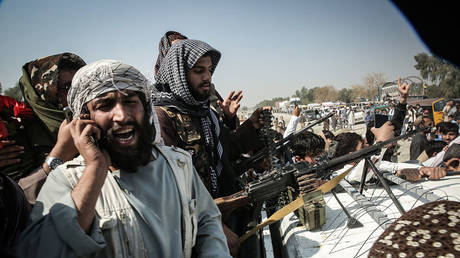
A significant complication in this operation is the lack of direct attribution. Iran utilizes a "Network of Networks"—a decentralized array of militias including Kata’ib Hezbollah, Harakat al-Nujaba, and the Houthis. By providing the technology but not the direct order for a specific strike, Iran maintains a level of "plausible deniability" that complicates US targeting cycles.
The intelligence community faces a Signal-to-Noise Challenge. The US must distinguish between:
- Direct Orders: Attacks planned and directed by the IRGC-Quds Force.
- Opportunistic Strikes: Militias acting on their own initiative using provided Iranian hardware.
- Accidental Escalation: Munitions that were intended for a different target but hit US personnel due to guidance failure.
The "Three Service Members Killed" headline is the output of a failure in this intelligence-deterrence loop. If the US cannot predict the specific timing of these strikes, the only remaining option is "Hardening." This involves moving personnel into underground bunkers (hardened aircraft shelters or subterranean living quarters), which severely degrades the ability to conduct the actual mission. A force that is constantly in a "bunker posture" cannot effectively train local partners or conduct patrols, essentially achieving the adversary's goal of neutralizing US influence without a single shot being fired.
The Attrition of Political Will
In military strategy, "Centres of Gravity" are the sources of power that provide freedom of action. For the US in the Middle East, the primary Center of Gravity is not the number of tanks or planes, but Domestic Political Support.
Adversaries realize that the US public has a low tolerance for "forever wars" and incremental casualties in theaters that do not have a clear, existential link to national security. By inflicting periodic, high-visibility losses, the Iranian-led "Axis of Resistance" seeks to increase the domestic political cost of maintaining a presence in Iraq and Syria.
The "Cost Function" for the US government becomes:
$$C = P + (L \times R)$$
Where:
- $C$ is the total cost of the mission.
- $P$ is the financial and logistical expenditure.
- $L$ is the political impact of life lost.
- $R$ is the risk of broader regional contagion.
When $L$ becomes too high, the mission is often terminated regardless of the tactical successes achieved on the ground. This was the logic behind the 1983 Beirut barracks bombing and the 1993 Mogadishu withdrawal. The current operations are a deliberate attempt to trigger this historical pattern.
Defensive Modernization and Electronic Warfare Limits
The US is rapidly deploying Directed Energy Weapons (DEW)—lasers—to counter this threat. These systems offer a "bottomless magazine" and a near-zero cost per shot. However, they are not a panacea.
- Atmospheric Interference: Dust, humidity, and smoke (common in Middle Eastern environments) can scatter the laser beam, reducing its effective range and "dwell time" required to melt a drone's airframe.
- Thermal Management: These systems generate immense heat and require massive power banks, making them difficult to deploy at the very austere outposts where they are needed most.
- Swarm Saturation: A laser can only engage one target at a time. If twelve drones approach from different vectors simultaneously, the laser’s "slew rate" becomes the bottleneck.
Electronic Warfare (EW) or "jamming" is similarly double-edged. While it can sever the link between a drone and its operator, many OWA drones are now programmed for autonomous terminal guidance. Once they reach a certain waypoint, they no longer need an external signal; they use "optical flow" or simple inertial navigation to find the target. Furthermore, high-powered jamming often interferes with the base's own communication and friendly drone operations, creating "electromagnetic fratricide."
Tactical Requirement: Proactive Denial
The current posture of "intercept and retaliate" is failing to protect US service members. A transition to a "Proactive Denial" strategy is the only viable path forward for maintaining a presence in the region. This requires:
- Expansive Buffer Zones: Moving from base-centric defense to a 20km-50km "active sensor zone" where any unidentified aerial signature is engaged automatically.
- Persistent Aerial Picket: Maintaining continuous UAV presence above outposts to identify launch sites in real-time, shortening the "sensor-to-shooter" loop to minutes rather than hours.
- Asymmetric Retaliation: Moving away from hitting militia "warehouses" and instead targeting the financial and logistical nodes that enable the drone supply chain, specifically targeting the specialized transport vehicles and the personnel trained in drone assembly and flight.
The loss of life in this operation is a definitive signal that the "status quo" of US regional presence is no longer tenable under current force protection standards. Without a fundamental shift in the defensive geometry or a strategic decision to consolidate forces into fewer, more defensible "mega-hubs," the US remains in a reactive posture, conceding the initiative to an adversary that calculates value in decades, not election cycles.
The immediate move is the deployment of the M-SHORAD (Mobile Short Range Air Defense) platforms to even the most minor outposts, bypassing the standard bureaucratic procurement cycles. Failure to do so accepts a "calculated loss" policy that the US military cannot sustain either morally or strategically.