The headlines are screaming about a "new era" for the Middle East. They are calling it a surgical decapitation. They are patting themselves on the back for a tactical masterstroke. They are wrong.
The U.S.-Israeli strike that killed Ali Khamenei isn't the beginning of a democratic spring or the end of a "rogue regime." It is the largest geopolitical short-circuit of the 21st century. While the "lazy consensus" in Washington and Tel Aviv celebrates the removal of a primary antagonist, they have fundamentally ignored the physics of power. In a closed system, you don't remove a king without creating a hurricane.
I have spent two decades watching policy wonks mistake "dead leaders" for "solved problems." I’ve seen the same back-slapping in Baghdad in 2003 and Tripoli in 2011. Each time, the result was the same: a massive expenditure of blood and capital to replace a centralized threat with a decentralized nightmare.
The Myth of the Rational Successor
The biggest mistake analysts make is assuming the Islamic Republic is a monolith that will simply collapse or "reform" under new management. It isn’t. It’s a complex, multi-layered bureaucracy of survival.
By removing the Supreme Leader, the West hasn't triggered a moderate uprising. It has triggered an internal arms race among the most radical elements of the Islamic Revolutionary Guard Corps (IRGC). Khamenei, for all his rhetoric, was a known quantity. He was a practitioner of "strategic patience." He understood the red lines of total war because he spent forty years drawing them.
Now? Those lines are gone.
Imagine a scenario where the IRGC’s regional commanders—the men actually running the militias in Iraq, Syria, and Lebanon—no longer have a central authority to veto their worst impulses. Without a Rahbar to balance the competing factions of the clerical establishment and the military elite, the guardrails are off. We haven't ended the "threat." We have unspooled it.
Why You Should Fear the IRGC Meritocracy
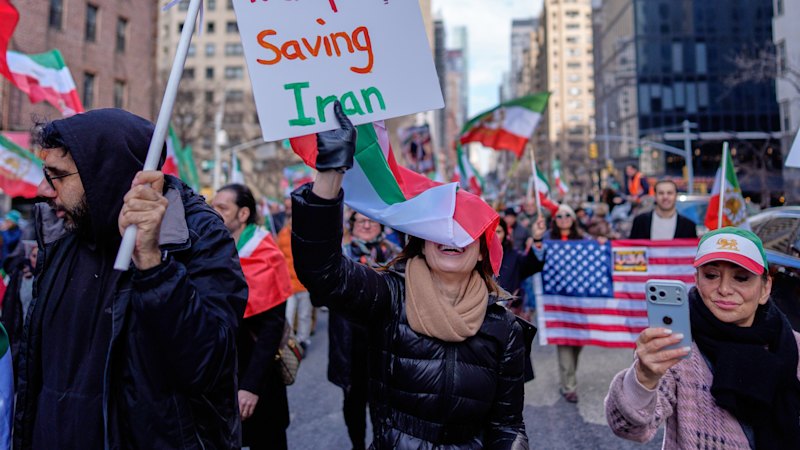
The competitor's narrative suggests the Iranian people will now rise up and seize the moment. This is a fairy tale for people who don't understand how paramilitary grip works.
When a central figurehead falls, the most organized, most armed, and most ruthless faction wins. In Iran, that is the IRGC. They don't need a Supreme Leader to collect oil revenue or suppress dissent. In fact, a state of "permanent emergency" following an assassination is the perfect environment for a full military junta to seize the state's remaining assets.
- The Nuclear Acceleration: Under Khamenei, the nuclear program was a bargaining chip, a slow-burn leverage play. To a military junta facing an existential threat from the air, a "fatwa" against nuclear weapons means nothing. The path to a breakout just got shorter because the diplomatic cost of doing so just hit zero.
- The Franchise Problem: The "Axis of Resistance" (Hezbollah, the Houthis, PMF) just became independent contractors. Without Tehran’s central checkbook and strategic oversight, these groups will pivot to survivalist aggression.
The Economic Delusion of Stability
Markets are currently pricing in a "reduction in regional risk." This is a fundamental misreading of the energy corridor.
I’ve watched traders bet on "regime change" before, only to get mauled by the reality of asymmetrical warfare. A cornered IRGC doesn't fight a conventional war; it makes the Strait of Hormuz a graveyard for insurance premiums. If you think $100 oil was a shock, wait until the "shadow fleet" has nothing left to lose.
The West is treating this like a game of chess where you win by taking the King. But the Middle East isn't chess. It’s a self-organizing network. You didn't take the King; you broke the board.
Dismantling the People Also Ask Nonsense
Is Iran more likely to democratize now?
No. History shows that external assassinations of authoritarian leaders almost never lead to democracy. They lead to civil wars or more efficient dictatorships. The "liberal elite" in Tehran has no guns. The IRGC has all of them. Do the math.
Will this stop the proxy wars?
It will do the opposite. Proxies are most dangerous when they are "un-homed." A proxy with a master can be negotiated with via backchannels. A proxy with a dead master is a loose cannon with a warehouse full of ballistic missiles.
Did the U.S. and Israel win?
They won a tactical engagement. They are currently losing the strategic war. Victory is defined by a more stable, predictable environment. This strike guaranteed a decade of unpredictability.
The Price of "Doing Something"
The "Do Something" school of foreign policy is the most expensive hobby in history. It prioritizes the dopamine hit of a successful strike over the grueling, boring work of containment and deterrence.
The downside of this contrarian view is simple: it’s grim. It admits that there are no "clean" wins in this region. It admits that sometimes, a known enemy is safer than an unknown chaos. But pretending otherwise is how you end up in a thirty-year quagmire.
The West didn't just kill a man; they killed the only person in Iran with the authority to say "no" to the hardliners.
Stop cheering for the explosion and start looking at the debris field. The fallout isn't over. It hasn't even started.
Liquidate your assumptions before the reality of the vacuum liquidates your portfolio.
Buy the volatility. Sell the "peace" narrative. This isn't a transition; it's a fracture.