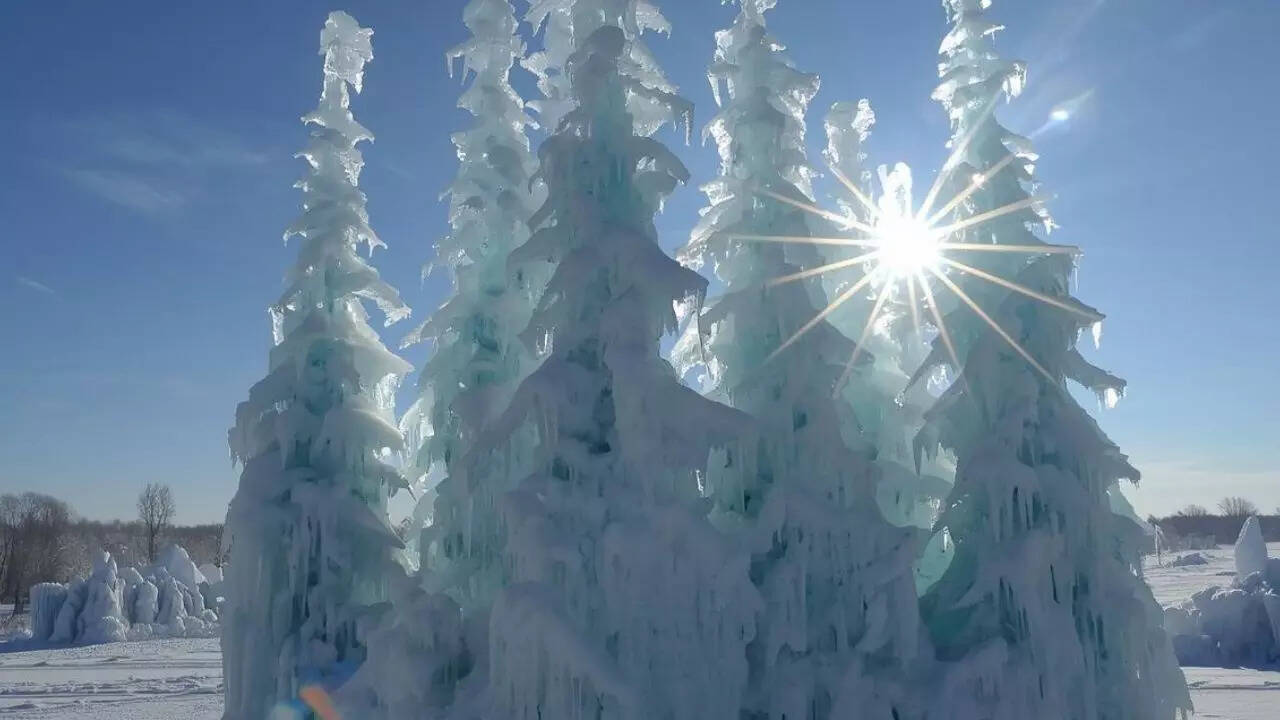
You’ve probably seen the photos. They look like a cross between a Studio Ghibli fever dream and a scene from a high-budget sci-fi flick. Towering, bulbous white figures standing like a frozen army across the slopes of Mount Zao. They call them juhyo, or "snow monsters." For a few weeks every February, these giants dominate the landscape in Yamagata Prefecture, turning a standard ski resort into something otherworldly.
But here’s the cold truth. These monsters are dying.
If you’re planning to see them, you don't have the luxury of "someday" anymore. Climate change isn't just a talking point here; it’s an active predator. Between rising temperatures and a microscopic beetle that’s eating the forest from the inside out, the window to witness this phenomenon is slamming shut. I’ve seen the data, and I’ve seen the slopes. If you want the full experience, you need to understand what you’re looking at and why it might not be there in a decade.
The science of a frozen transformation
Most people think these are just trees with a lot of snow on them. They aren’t. If you just dumped ten feet of powder on a pine tree, the branches would snap or the snow would slide off. The juhyo are a result of a very specific, very rare meteorological perfect storm.
It starts with the Abies mariesii, the Aomori setting-sun fir. These trees only grow at specific altitudes. Then you need the Siberian winds. These freezing gusts sweep across the Sea of Japan, picking up moisture and becoming "supercooled" droplets. These droplets are liquid, but they’re below freezing point. The moment they hit the needles of the fir trees, they flash-freeze into ice.
This creates "shrimp tails"—hard, jagged protrusions of rime ice that grow against the wind. Then the heavy snow falls. It gets trapped in the ice lattice. More ice forms. More snow falls. This cycle repeats until the tree is completely encased in a thick, bulbous shell of white armor. By the time February hits, you can’t see a single green needle. You just see a fifteen-foot-tall monster.
Why the monsters are getting smaller
I talked to locals who have lived in Yamagata for sixty years. They’ll tell you the same thing. The monsters aren't as big as they used to be. The season starts later and ends earlier. Scientists from Yamagata University have been tracking this, and the numbers are grim.
The average temperature on Mount Zao has climbed significantly over the last century. Just a couple of degrees makes a massive difference when you’re dealing with rime ice. If it’s too "warm"—even if it’s still technically freezing—the ice doesn't stick the same way. It becomes slushy. It falls off.
Then there’s the bark beetle. Because the winters are milder, these pests are surviving at higher altitudes where they used to freeze to death. They’re killing the Aomori firs. A dead tree doesn't have the structural integrity to hold hundreds of pounds of ice. It snaps. When the tree dies, the monster dies with it. It’s a systemic collapse of a unique ecosystem, and it’s happening in real-time.
Seeing Zao the right way
Don't just show up and hope for the best. You’ll be disappointed. Most tourists make the mistake of staying down in the city and taking a day trip. That’s a rookie move. To actually feel the scale of this place, you need to be on the mountain when the sun goes down.
The Zao Ropeway is your lifeline here. It’s a two-stage gondola system that takes you from the base to the Jizo Sancho Station at the summit. This is where the highest concentration of monsters lives.
- The Night Illumination: This is non-negotiable. At night, they hit the monsters with high-powered colored spotlights. It’s haunting. The shadows stretch out across the snow, and the figures look like they’re actually moving.
- The Nightcruiser: If you aren't a skier, book a seat on the Nightcruiser. It’s a massive snowcat with heated cabins that drives you right into the heart of the monster fields. It’s pricey, but it’s the only way to get deep into the formations without freezing your face off.
- The Jizo Statue: Near the summit station, there’s a large stone Jizo statue. In a good year, the snow is so deep that only the head of the statue sticks out. It’s a grim but effective yardstick for how much snow the mountain is actually getting.
Survival tips for the summit
It is cold. I mean, bone-chilling, wind-whipping cold. You’re standing on a peak exposed to Siberian winds. I’ve seen people show up in designer overcoats and leather boots. Don't be that person.
You need serious layers. Goggles are better than sunglasses because the wind will make your eyes water until they freeze shut. Wear thermal base layers, a fleece mid-layer, and a waterproof, windproof outer shell. If you’re walking, rent snowshoes. The snow is incredibly deep, and "post-holing"—where your leg sinks up to the hip—is a great way to ruin your day or twist an ankle.
Also, check the weather every hour. Zao is notorious for "whiteouts." One minute you’re looking at a forest of giants, and the next, you can’t see your own hand. If the ropeway staff says the weather is turning, listen to them. They aren't being cautious; they know the mountain.
Beyond the monsters
Yamagata isn't a one-trick pony. While the snow monsters are the main event, the town of Zao Onsen is one of the oldest hot spring resorts in Japan. The water here is highly acidic—it smells like sulfur (rotten eggs, basically)—but it’s incredible for your skin.
After a day of being blasted by freezing wind, soaking in an outdoor rotenburo while the snow falls around you is peak Japan. Look for the public bathhouses that cost a few hundred yen. They’re basic, but they’re authentic.
If you have an extra day, head over to Ginzan Onsen. It’s about a two-hour trip from Zao, but it looks like the setting of Spirited Away. It’s a narrow valley lined with Taisho-era wooden inns. It’s the perfect aesthetic bookend to the rugged, frozen chaos of the monsters.
How to get there before they’re gone
The peak season is remarkably short. You’re looking at late January through late February. By March, the "monsters" start to melt and look more like sad, decaying snowmen.
- Fly or Train: Take the Shinkansen from Tokyo to Yamagata Station (about 2.5 hours).
- The Bus: From Yamagata Station, there’s a direct bus to Zao Onsen. It takes about 40 minutes.
- Book Early: I cannot stress this enough. The hotels in Zao Onsen are small and fill up months in advance for the February peak.
Don't wait until 2030 to put this on your bucket list. The combination of the bark beetle infestation and the warming winters means we are likely the last few generations to see the juhyo in their full glory. Go now. Bring the warmest socks you own. Respect the wind.
Check the live mountain cams on the Zao Ropeway website before you head up to ensure visibility is clear enough to actually see the giants.