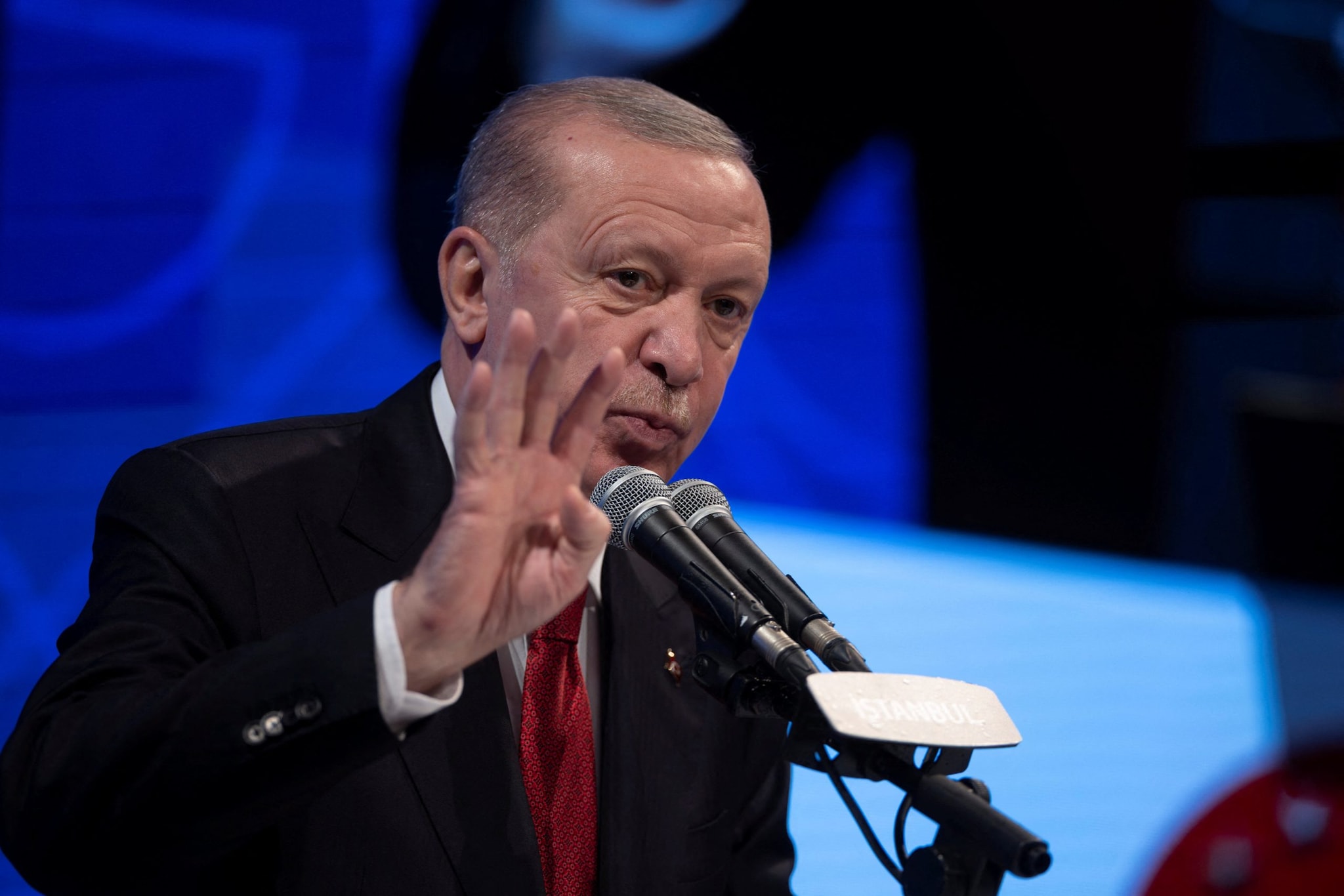
Turkish President Recep Tayyip Erdogan isn't just asking for a seat at the table anymore; he's trying to build a whole new table. For months, Erdogan has been pounding the lectern, calling on the "Islamic world" to stop waiting for Western permission and start leading the charge against regional instability. Whether it's the humanitarian catastrophe in Gaza, the spread of conflict into Lebanon, or the civil war in Sudan, his message is blunt: "As Muslims, we must resolve our own problems rather than seek help from others."
This isn't just typical political grandstanding. We're seeing a shift in Turkish foreign policy that moves away from merely criticizing the West to actively trying to bypass it. Erdogan's recent calls for a "solidarity front" involve a heavy-duty alliance of major players like Egypt, Syria, and Saudi Arabia. He’s essentially betting that if the Muslim world can act as a single economic and military bloc, it can force a change in the Middle East that decades of UN resolutions haven't touched.
Why Erdogan Is Pushing for a Unified Front Now
The timing isn't an accident. With the global order feeling more fractured than ever, Ankara sees a power vacuum. Erdogan has watched the United Nations struggle to implement any meaningful ceasefire in Gaza or Lebanon. He’s labeled the UN "paralyzed" and the current international system "crooked." By positioning Turkey as the loudest voice for a unified Islamic response, he’s trying to claim the moral and political leadership of the region.
It’s about more than just rhetoric. Turkey has already put its money where its mouth is, halting trade with Israel—a move that cost them roughly $9.5 billion. Erdogan is now calling on other Muslim-majority nations to do the same, urging them to use "coercive measures" and economic pressure to isolate the Netanyahu government. He isn't just asking for a protest; he’s asking for a total shift in how these countries handle their wallets and their borders.
The Big Three Pillars of the Proposed Alliance
If you look closely at Erdogan's recent speeches at the OIC and the Arab League, he isn’t just talking about war. He’s talking about a fundamental restructuring of how these nations interact. He’s focused on three specific areas:
1. Military and Defense Self-Sufficiency
Erdogan is a big believer in Turkish defense tech. He’s been telling other leaders that the only way to ignore Western arms embargoes is to stop needing Western arms. He’s offered to share Turkey’s drone tech and defense manufacturing capabilities with "brotherly" nations. The idea is simple: if the Islamic world has its own "deterrent defense industry," it doesn't have to worry about Washington or Brussels pulling the plug during a crisis.
2. Economic and Infrastructure Integration
In early 2026, Erdogan made a huge push for "transport integration." He’s talking about highways, railways, and ports that link Asia to Africa through the Middle East. Projects like the "Development Road"—a massive rail and road corridor from Iraq’s Basra to the Turkish coast—are designed to make these countries economically indispensable to each other. When countries are this tightly linked, a threat to one becomes a threat to the trade routes of all.
3. Diplomatic Sovereignty
This is where it gets tricky for the West. Erdogan is pushing for the Islamic world to have its own legal and diplomatic mechanisms. He’s a massive supporter of the genocide case against Israel at the International Court of Justice and wants OIC members to form their own security mechanisms to resolve conflicts in places like Sudan and Libya without outside intervention.
The Obstacles Erdogan Can't Ignore
Let's be real: this is an uphill battle. While Erdogan’s words resonate on the "street" across the Middle East, the halls of power are a different story. The "Islamic world" isn't a monolith. You’ve got deep-seated rivalries between Sunnis and Shias, varying levels of dependence on U.S. military aid, and different economic goals.
For example, countries like the UAE and Bahrain, which signed the Abraham Accords, have a very different view of Israel than Erdogan does. Then there's the Iran factor. While Erdogan has urged Iran to keep talking to the U.S. to prevent a wider war, many Arab nations still view Tehran’s influence as a bigger threat than anything else. Erdogan is trying to bridge these gaps, but some of these canyons are pretty wide.
What This Means for Global Stability
If Erdogan actually manages to get even a handful of these countries to act in unison, it changes the game. We’re talking about an alliance that would control some of the world’s most vital shipping lanes, a huge chunk of the global energy supply, and a massive, young population.
Washington is clearly nervous. Turkey is a NATO member, but Erdogan’s "Islamic Alliance" rhetoric sounds a lot like he's looking for the exit. He’s balancing a very thin line: staying in the Western security tent while trying to build a new one in his own backyard. He’s essentially telling the West, "If you won't fix the mess, we will—and we'll do it our way."
The real test will be Gaza’s reconstruction. Erdogan has already said it’s "essential" for Muslim nations to lead that effort. If Turkey, Qatar, and Egypt can successfully manage the security and rebuilding of Gaza without Western oversight, it’ll be the proof of concept Erdogan needs to show that his vision of an independent Islamic bloc isn't just a dream.
Keep an eye on the next OIC summit. That’s where the rubber usually meets the road on these grand proposals. You should look for concrete agreements on defense cooperation or joint investment funds—those are the real indicators that this alliance is moving past the "fiery speech" phase and into reality.


