Military analysts love to count warheads. They stare at satellite imagery of Iranian underground "missile cities" and salivate over the specific flight path of a Tomahawk. They treat the escalating friction between Israel and Iran as a high-stakes chess match played with multi-million dollar pieces.
They are looking at the wrong ledger.
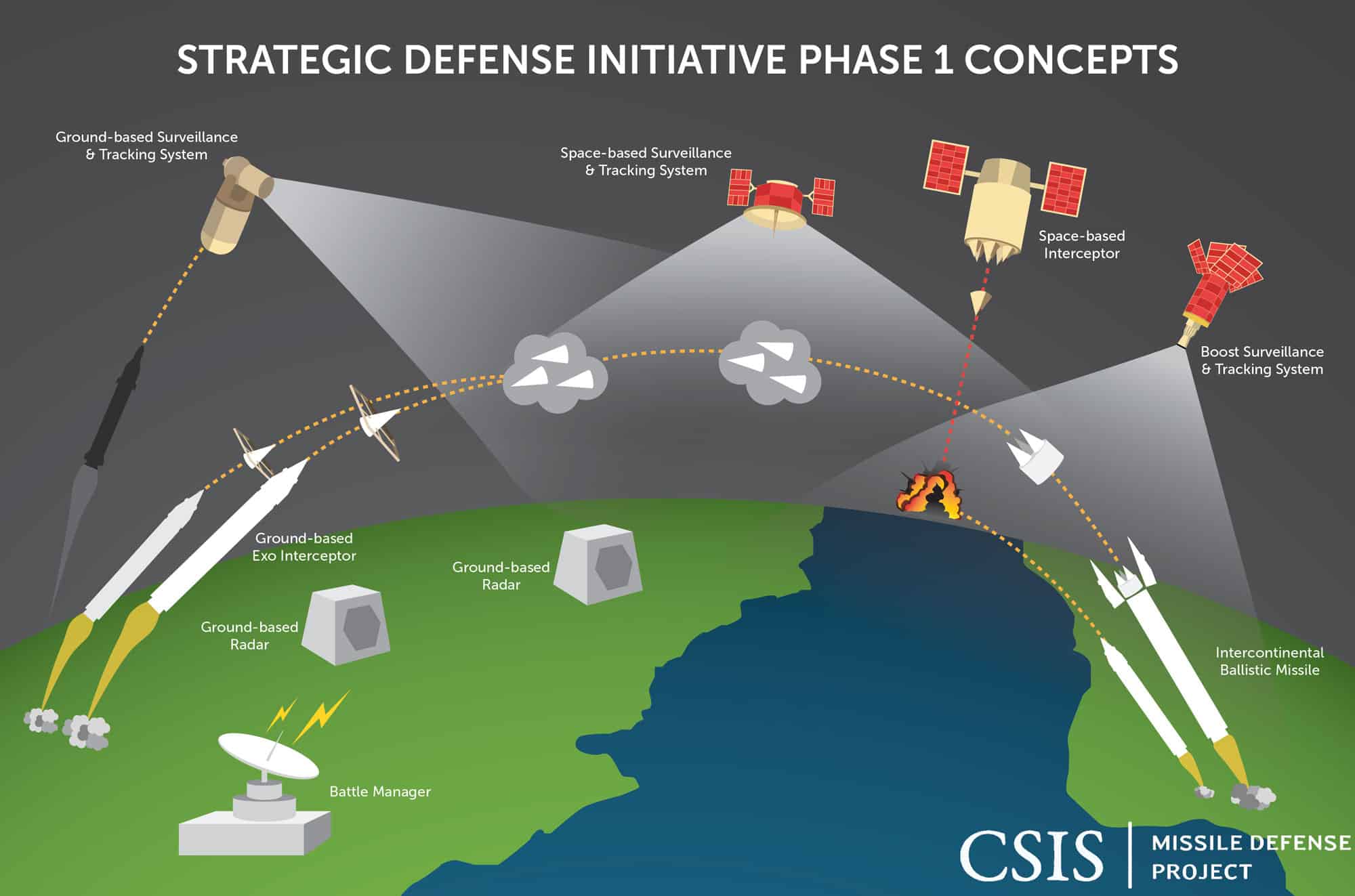
The obsession with "Bunker-Busters" and "Precision-Guided Munitions" ignores the brutal, boring reality of modern kinetic warfare: The cost-exchange ratio is currently upside down, and it is bankrupting the West's tactical superiority. We are watching a digital-age defense try to survive an analog-age volume problem. It isn't working.
The Mathematical Collapse of Air Defense
Standard media narratives frame the interception of a massive drone and missile swarm as a triumph of technology. When 99% of incoming threats are neutralized, the headlines scream "Success." In reality, that success is a fiscal catastrophe.
Imagine a scenario where an adversary launches a $20,000 Shahed-136 drone. To stop it, the defender fires a $2 million interceptor from a system like David’s Sling or the Patriot PAC-3.
Do the math. That is a 100-to-1 cost ratio in favor of the attacker. You don't need to win the battle if you can make the winner go broke. The "lazy consensus" suggests that better tech equals better security. In truth, the more "sophisticated" our response becomes, the more vulnerable we are to the "cheap and plenty" strategy.
- The Interceptor Shortage: You cannot "software update" your way out of a physical inventory crisis. The industrial base required to produce a single RIM-161 Standard Missile 3 (SM-3) takes years. A factory in Isfahan can pump out hundreds of loitering munitions in a month.
- The Saturation Point: Every battery has a limit. Whether it’s the Iron Dome or a ship-borne Aegis system, there is a finite number of targets the radar can track and a finite number of tubes ready to fire.
The belief that Israel or the U.S. can maintain a "hermetic seal" indefinitely is a dangerous fantasy. We are trading gold for lead, and the lead is winning.
The Bunker-Buster Myth and the Concrete Obsession
The competitor's focus on the GBU-72 and other "Bunker-Busters" misses the tactical shift in Iranian doctrine. Everyone talks about the "fortress" as if it’s a single point on a map that can be neutralized with one heavy drop.
I’ve analyzed the hardening of regional infrastructure for a decade. The Iranians aren't just digging deep; they are digging distributed.
The GBU-28 and its successors are engineering marvels designed to penetrate tens of feet of reinforced concrete. But they are also incredibly scarce and require specific delivery platforms—namely heavy bombers or modified fighters—that must operate in contested airspace.
The Counter-Intuitive Truth: Deeply buried targets are often more valuable as distractions than as objectives. By forcing an air force to commit dozens of sorties, tankers, and electronic warfare assets to crack a single "mountain base," the defender has already won the resource trade. While the IDF or USAF focuses on a single hardened node, the mobile launchers—the real threat—are moved via civilian-style transport on a highway three miles away.
Ballistic Missiles vs. The Speed of Diplomacy
The "Ballistic Missile" is often treated as a terror weapon. In the Iran-Israel context, it is actually a high-speed communication device.
When Iran launches the Fattah or the Kheibar Shekan, they aren't necessarily trying to level a city block. They are testing the latency of the Arrow-3 system and the political willpower of the coalition.
- Terminal Velocity Over Accuracy: High-end ballistic missiles like the Fattah-1 claim "hypersonic" maneuverability. Whether they actually maintain Mach 5+ through the terminal phase is secondary. The goal is to force the defender to burn their most expensive interceptors.
- The Intelligence Loop: Every time an interceptor is fired, the attacker gathers data on radar frequencies, engagement logic, and battery locations. We are essentially giving away our "Source Code" for the price of a few dozen 1970s-era liquid-fueled rockets.
The Tomahawk is a Relic of the Wrong War
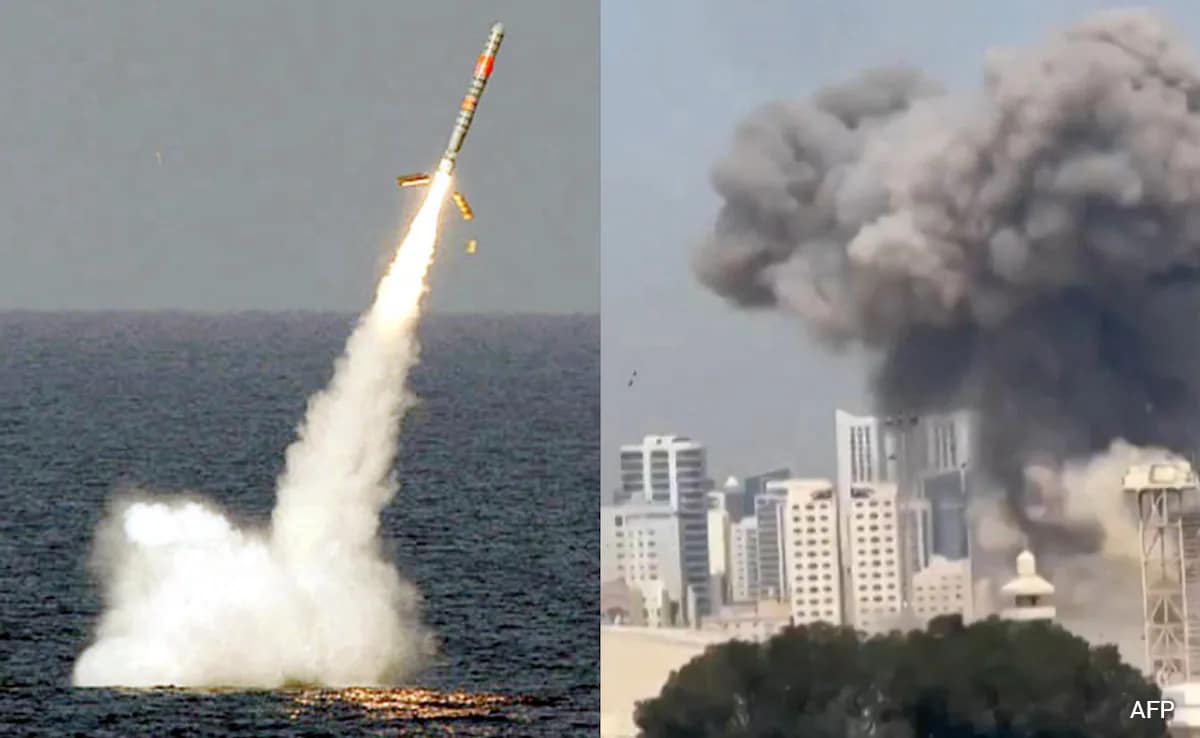
The Tomahawk Land Attack Missile (TLAM) is the darling of naval warfare. It’s reliable, it has range, and it has a "cool factor." It is also increasingly irrelevant in a conflict defined by rapid-cycle mobile targets.
A Tomahawk is a subsonic cruise missile. It’s a slow-moving jet engine with a warhead. Against a modern, integrated air defense system (IADS) equipped with high-end sensors, a subsonic cruise missile is a target-practice drone.
Using Tomahawks to "send a message" is an expensive way to say you don't have a real plan. If you want to disrupt an IRGC missile cell, you don't send a $2 million missile that takes two hours to arrive. You need loitering persistence. You need the very things the "sophisticated" side has been slow to adopt: cheap, disposable, massed autonomy.
Stop Asking "Who Has the Bigger Bomb?"
The "People Also Ask" section of your brain wants to know: "Who would win in a full-scale missile exchange?"
The question is flawed. "Winning" implies a return to a status quo. In this theater, there is no status quo to return to.
If Israel uses its superior F-35 fleet to decapitate Iranian command centers, Iran responds by activating its "Ring of Fire" proxies. The "Weaponry" isn't just the missiles; it's the geography.
| Weapon Class | Perceived Value | Actual Strategic Impact |
|---|---|---|
| Stealth Fighters (F-35) | Unstoppable Force | High-end "Sniper" (Limited by sortie rates and base vulnerability) |
| Ballistic Missiles | Strategic Deterrent | "Volume" Pressure (Designed to deplete enemy magazines) |
| Loitering Munitions | Annoyance | The King of the Hill (The only weapon with a positive cost-exchange ratio) |
| Bunker-Busters | War-Ender | Tactical Sunk Cost (High risk for localized gain) |
The Battle of the Industrial Base
We have spent forty years perfecting the "Silver Bullet" theory of war: that one perfect missile can solve one complex problem. Our competitors have spent forty years perfecting the "Swarm" theory: that 1,000 "good enough" missiles can solve any problem, including a Silver Bullet.
The U.S. and its allies are currently struggling to produce enough 155mm artillery shells for a land war in Europe. Do we honestly believe the production lines for the ultra-complex components of an SM-6 or a PAC-3 can keep up with a sustained, multi-front missile war?
The hard truth: Our technological edge has become a logistical noose. We have specialized ourselves into a corner where we cannot afford to fight the war we are currently in.
The next stage of this conflict won't be won by the side with the most "advanced" missile. It will be won by the side that can lose the most hardware without flinching. Right now, that isn't us.
Stop looking at the range and the payload. Start looking at the unit cost and the factory floor. If we don't fix the math, the missiles won't matter.
Build more, build cheaper, or prepare to watch the most expensive defense in history get bored and broke into submission.