The Western defense establishment loves a good bogeyman, and nothing feeds the 24-hour news cycle quite like grainy footage of Iranian "missile cities" buried deep under the Zagros Mountains. The narrative is always the same: a terrifying escalation, a shift in the regional power balance, and a direct threat to the Strait of Hormuz.
They are looking at the wrong map.
If you believe these tunnels are about starting a world war, you’ve fallen for the theater. These subterranean bunkers aren't the vanguard of a new empire; they are the ultimate expression of "fortress psychology" from a regime that knows its conventional air force is a flying museum of 1970s relics. We need to stop talking about these drones and missiles as "game-changers" and start recognizing them for what they actually are: high-tech life insurance policies for a government that cannot afford a real dogfight.
The Drone Delusion: Quantity is Not Quality
The recent display of the "Ababil" and "Mohajer" series in these underground facilities sent ripples through the Pentagon. But let’s dismantle the lazy consensus that sheer volume equals tactical superiority.
Western analysts often point to the swarm potential of Iranian UAVs as an existential threat to carrier strike groups. I’ve spent years analyzing regional procurement cycles, and I can tell you that a swarm is only as effective as its data link. Iran’s drones are frequently built using off-the-shelf components—literally parts you can find in a high-end RC plane shop or on Alibaba.
While this makes them cheap and replaceable, it also makes them incredibly vulnerable to electronic warfare (EW). The "Hormuz tension" narrative assumes these drones will fly unimpeded into the hulls of destroyers. In reality, a modern Aegis Combat System or a dedicated EW suite like the AN/SLQ-32(V)7 can turn these "deadly" swarms into expensive confetti before they even see their target.
The real genius of the drone program isn't its lethality. It’s the asymmetric cost ratio. If Iran spends $20,000 on a Shahed-style loitering munition and the U.S. Navy spends $2 million on an SM-2 interceptor to down it, Iran is winning the accounting war. The underground cities are designed to protect this inventory because, on the surface, they wouldn't last ten minutes against a coordinated SEAD (Suppression of Enemy Air Defenses) campaign.
The Geography of Desperation
Why go underground? The competitor articles will tell you it’s for "stealth and surprise." That’s a half-truth.
They are underground because Iran lacks "strategic depth" in the air. When you have no chance of winning a struggle for air superiority, you don't build better hangars; you dig holes. These missile cities are a physical manifestation of a "no-fly zone" that Iran has imposed on itself.
By burying their assets hundreds of meters beneath reinforced concrete and rock, they are acknowledging that the sky belongs to their adversaries. This isn't a position of strength. It’s a desperate attempt to ensure second-strike capability. If you can't stop the first wave of Tomahawks, you make sure your retaliation survives the blast.
The Logistics Nightmare Nobody Mentions
Everyone talks about the "missile city" as a launchpad. Nobody talks about the ventilation.
Imagine a scenario where you have hundreds of solid-fuel rockets stored in an enclosed, humid, subterranean environment. The chemical degradation of propellant is a nightmare. To keep these "cities" operational, Iran has to maintain massive, sophisticated environmental control systems. These systems have a massive thermal signature.
If you have enough satellite resolution—and the U.S. and Israel certainly do—you aren't looking for the door to the tunnel. You’re looking for the heat vent. These "hidden" cities are screaming their location to every infrared sensor in orbit. The "underground" aspect is a psychological shield for the Iranian public and a tactical speed bump for an aggressor, not an invisibility cloak.
Hormuz: The Chokepoint Charade
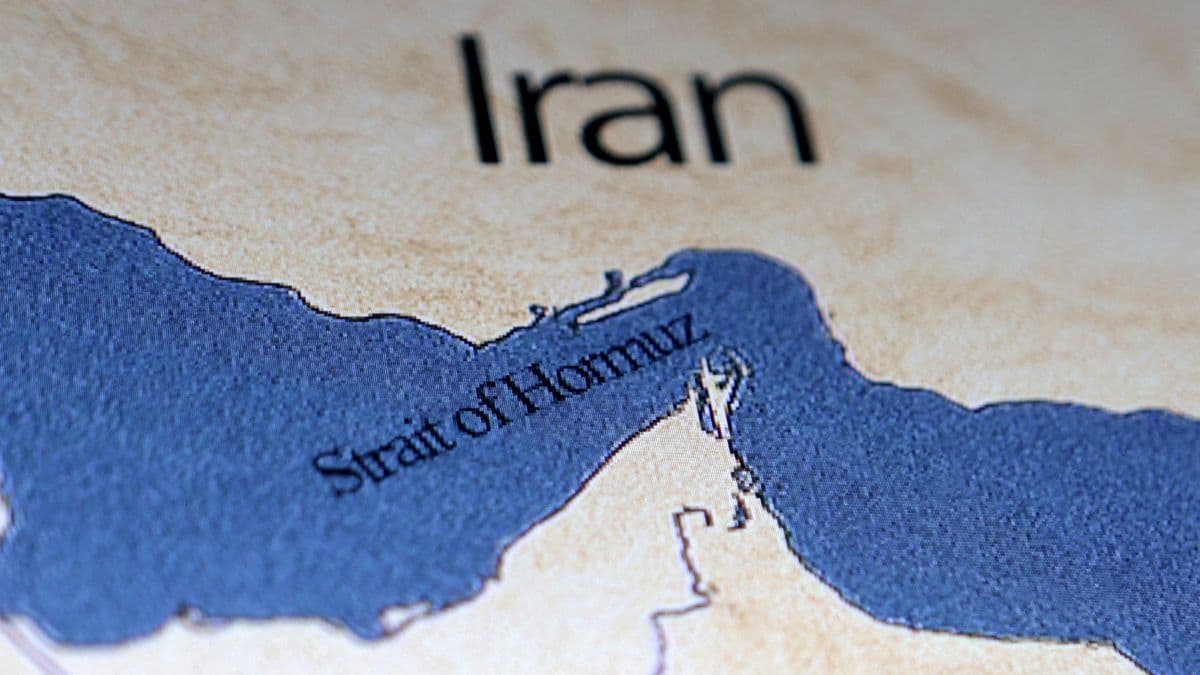
Every time tensions rise, the headlines scream about Iran closing the Strait of Hormuz. It’s the ultimate geopolitical cliché.
Here is the brutal truth: Closing the Strait of Hormuz would be an act of economic suicide for Tehran. China, Iran’s primary customer and only real diplomatic heavyweight in its corner, relies on that oil flow. If Iran chokes the Strait, they aren't just poking the Great Satan; they are biting the hand that feeds them.
The missile cities near the coast are theater. They are designed to create a "deterrence of doubt." Iran doesn't need to actually close the Strait; they just need the insurance industry to think they might. When Lloyd's of London raises shipping insurance premiums because of a drone video, Iran has achieved its goal without firing a single shot.
The "Indigenous Technology" Myth
The Iranian Ministry of Defense loves to use the word "indigenous" to describe their drones and missiles. It sounds impressive. It suggests a self-reliant superpower.
It’s mostly a branding exercise.
A significant portion of Iran's "advancements" are iterative improvements on 1980s North Korean designs or reverse-engineered Western tech (like the RQ-170 Sentinel they captured in 2011). When we treat these "new" reveals as leaps in physics, we validate their propaganda.
- The Fattah Hypersonic Claim: Last year, Iran claimed it developed a hypersonic missile. The physics of maintaining maneuverability at Mach 5+ while exiting and re-entering the atmosphere requires material science that Iran simply hasn't demonstrated. It’s likely a high-speed ballistic missile with a fancy paint job.
- The AI Integration: They claim "AI-driven" drone swarms. In the tech world, we call this "scripted waypoints." True autonomous swarm intelligence requires processing power that doesn't fit in a 150lb fiberglass tube powered by a lawnmower engine.
Stop Asking if They Can Hit Us
The question "Can Iran’s drones hit a U.S. carrier?" is the wrong question. It’s a binary trap.
The correct question is: "Can Iran afford the consequences of hitting a U.S. carrier?"
The answer is no, and they know it. Therefore, the underground cities serve a much more subtle purpose. They are bargaining chips. Every drone added to the subterranean gallery is another line of text in a future treaty. They are building a massive "Exit" sign for sanctions.
The danger isn't that Iran will use these weapons in a premeditated strike. The danger is miscalculation. In a high-tension environment, a single drone operator with an itchy trigger finger can trigger a kinetic feedback loop that neither side wants. The "city" makes this more likely by giving the Iranian leadership a false sense of invulnerability. They think they are safe in their tunnels, which might embolden them to take risks they can't actually manage.
The Real Threat is Proliferation, Not Possession
The biggest mistake the "Hormuz Tensions" articles make is focusing on the Strait. The real impact of these underground factories is found in the hands of non-state actors.
Iran has mastered the art of "Lego-kit" warfare. They don't ship full missiles anymore; they ship components that can be assembled in a basement in Yemen, Lebanon, or Iraq. This is the true disruption. By decentralizing their arsenal, they’ve made traditional arms control impossible.
The "missile city" is the showroom. The real business is happening in the shipping containers.
We are obsessed with the spectacle of the tunnels because it looks like a Bond movie. We should be obsessed with the supply chain. If you want to neutralize the threat, you don't bomb the mountain—you sanction the companies selling the dual-use carbon fiber and the microchips.
The Strategic Pivot You Aren't Seeing
While the world watches the drone videos, Iran is quietly pivoting toward a cyber-first doctrine. Why bother with a physical missile that can be shot down when you can achieve the same economic disruption by hitting the SCADA systems of a regional desalination plant or an oil refinery?
The drones are the distraction. The tunnels are the bait.
The Iranian military isn't stupid. They know their 19th-century-style fortifications won't stop a 21st-century bunker-buster like the GBU-57. They are using our obsession with "underground cities" to keep our eyes off the digital horizon.
Stop looking at the mountain. Start looking at the fiber-optic cables.
If you're still worried about a "swarm" in the Strait, you're fighting the last war. The next one won't be fought with fiberglass wings and solid-fuel boosters. It will be fought with a line of code that shuts down the cooling systems of those very tunnels, turning their "impregnable" cities into subterranean ovens.
The "underground missile city" isn't a symbol of a rising power. It’s a tomb for a military strategy that has no other place to go.
Check the thermal vents. The insurance policy is about to lapse.