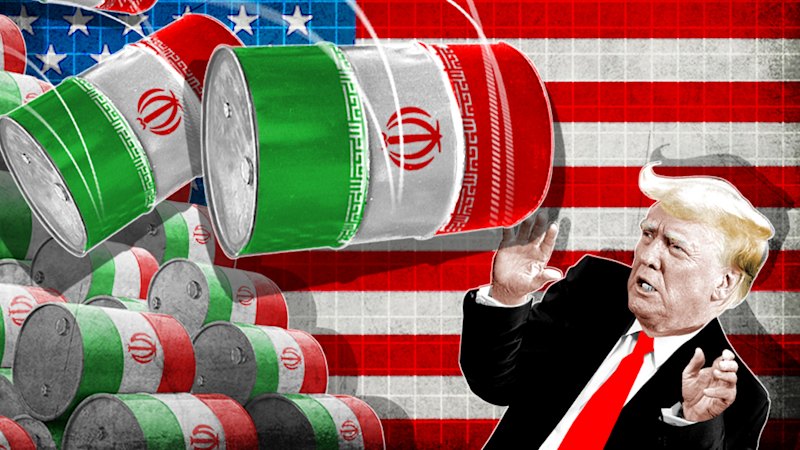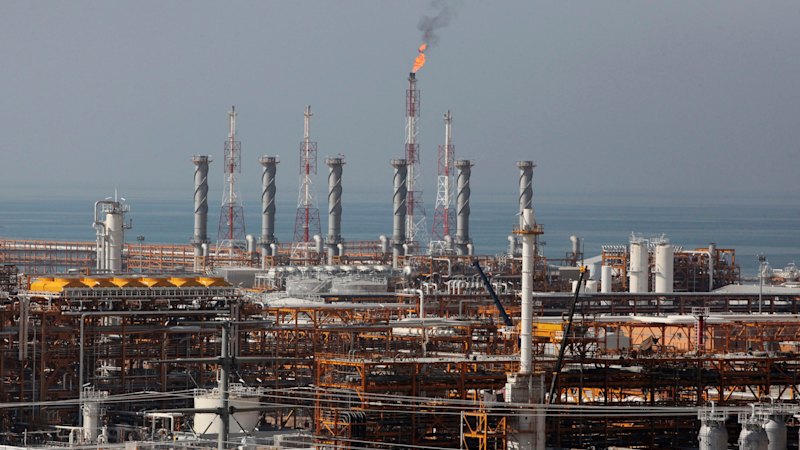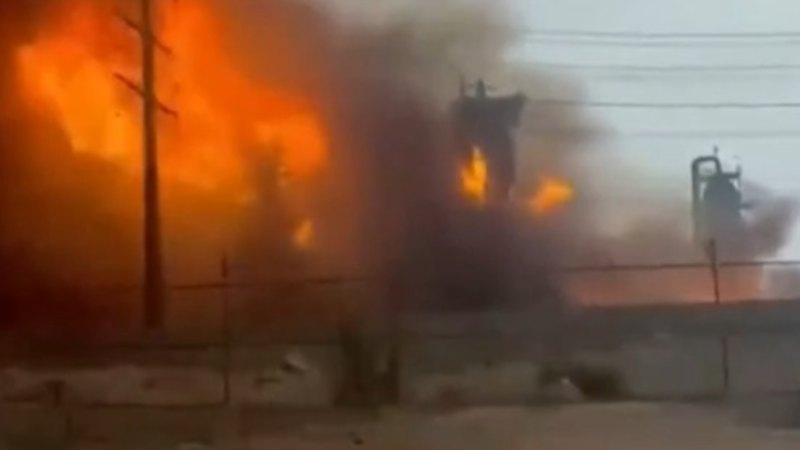
The cycle of violence between the United States, Israel, and Iran has shifted from a shadow war into a persistent, high-intensity conflict that threatens to rewrite the rules of global security. While headlines focus on the immediate flash of explosions in Isfahan or the wreckage of drones in the Syrian desert, the real story lies in the collapse of traditional deterrence. For decades, the "gray zone" allowed all parties to strike without triggering a regional consequence. That buffer is gone. We are now witnessing a live-fire experiment in how far a regional power can be pushed before the mechanics of modern warfare force a total collapse of the existing order.
The Failure of Calculated Proportionality
Western military doctrine has long relied on the idea of "proportional response." If a proxy group attacks a base, you hit a warehouse. If a missile enters your airspace, you strike a launch site. This mathematical approach to warfare assumes that the opponent shares your desire for an exit ramp. It is a fundamental miscalculation. In the current theater, Tehran sees every Western "proportional" strike not as a deterrent, but as a data point. They are measuring response times, testing the depletion rates of expensive interceptor missiles against cheap loitering munitions, and refining their internal command structures. For a more detailed analysis into this area, we suggest: this related article.
Israel, meanwhile, has moved past the concept of containment. The security establishment in Tel Aviv has concluded that the "octopus arms"—the network of proxies in Lebanon, Iraq, and Yemen—cannot be severed without striking the head. This shift from defensive posturing to offensive preemption means that the intervals between strikes are shrinking. We are no longer looking at isolated incidents but a continuous, rolling operation.
The Economic Engine of Permanent Conflict
War is expensive, but for some, it is a survival strategy. The Iranian defense industry has transformed into a critical pillar of its sanctioned economy. By exporting drone technology to Russia and various militia groups, Tehran has created a self-sustaining loop of combat testing and revenue generation. Every time a US or Israeli strike targets an Iranian facility, it provides the IRGC with a real-world assessment of their facility hardening and emergency protocols. For broader information on this topic, comprehensive analysis can be read on BBC News.
This is a stark contrast to the US position. Washington is burning through its stockpile of precision-guided munitions and naval interceptors at an alarming rate. A single SM-6 interceptor can cost millions of dollars, while the drone it destroys might cost less than a used sedan. This asymmetric drain on Western resources is a deliberate feature of the Iranian strategy. They are not trying to win a head-to-head naval battle; they are trying to make the cost of remaining in the region politically and financially unbearable for the United States.
The Intelligence Gap and the Proxy Problem
The reliance on proxies provides Iran with a layer of plausible deniability that is thinning but still functional. However, the intelligence landscape has changed. Israeli cyber capabilities and human intelligence networks have penetrated deep into the Iranian apparatus. This explains the surgical nature of recent strikes that target specific personnel or high-value components rather than broad infrastructure.
But intelligence is only as good as the policy it serves. If the goal is to stop the nuclear program or halt the shipment of missiles, the current strategy is objectively failing. The shipments continue. The centrifuges keep spinning. The strikes are a finger in a leaking dam, and the water is rising.
The Technological Front and Autonomous Warfare
We are seeing the first large-scale application of AI-driven target acquisition and automated defense systems. This isn't science fiction. It is the reason why a massive swarm of 300 drones and missiles can be largely neutralized in a single night. But the technology is a double-edged sword. As defense systems become more automated, the window for human intervention and diplomacy shrinks. Decisions that used to take hours now happen in milliseconds.
The danger is a "flash war"—a situation where automated retaliatory systems trigger a massive escalation before a single diplomat can pick up a phone. Both the US and Israel are leaning heavily into these systems to compensate for the sheer volume of incoming threats. This creates a feedback loop where the threshold for "opening fire" is lowered by the necessity of speed.
The Regional Players Caught in the Crossfire
Jordan, Saudi Arabia, and the UAE are no longer bystanders. They are active participants in a complex aerial ballet, often caught between their security ties to the West and the domestic pressure of the "Arab street." The quiet cooperation between some Arab states and Israel during recent escalations shows a shared fear of Iranian hegemony, but this cooperation is fragile. It cannot survive a protracted, visible war that results in high civilian casualties or the total destabilization of the Levant.
The Infrastructure of a Long War
The physical landscape of the region is being reshaped to accommodate permanent conflict. Underground missile cities, hardened hangars, and decentralized command centers are the new norm. This makes traditional "surgical" strikes less effective over time. To truly degrade the capabilities of a modern state-backed military, you need more than just a few sorties of F-35s. You need a sustained campaign that the current political climate in Washington simply will not support.
The US is stuck in a cycle of reactive engagement. It responds to threats rather than dictating the terms of the environment. This lack of a clear end-state—beyond "don't let the situation explode"—gives the initiative to Tehran. They decide when to turn the heat up and when to let it simmer. Until the Western coalition defines what victory looks like, they will continue to play a defensive game on an ever-expanding board.
The Erosion of International Norms
Every strike that goes unanswered or is dismissed as "standard" further erodes the international laws governing sovereignty. We are entering an era where the violation of borders is a daily occurrence, sanitized by the language of "counter-terrorism" or "preemptive defense." This normalization of cross-border strikes sets a precedent that will be used by other powers in other regions. If the US and Israel can strike targets in Iran and Syria with impunity, why can’t other regional powers do the same to their neighbors?
The legal and ethical frameworks designed after the 20th century's great wars are buckling. They were not built for a world of non-state actors, hyper-sonic missiles, and shadow wars. The absence of a new framework means that the only rule is capability. If you can strike and survive the retaliation, you have the right to do so.
The Nuclear Wildcard
Hovering over every tactical decision is the specter of Iran’s nuclear program. Every Israeli strike is calibrated to avoid pushing Tehran into a "breakout" scenario, where they feel they have nothing left to lose and finalize a weapon. Conversely, every Iranian provocation is designed to see exactly where that Israeli red line is. It is a high-stakes game of chicken played with the lives of millions.
The reality on the ground is that the "status quo" is a myth. The situation is not static; it is a slow-motion collision. The strikes will continue, the technology will evolve, and the costs will mount. The only question is which side will run out of resources, political will, or luck first.
Strategic patience is a luxury that neither side can afford much longer. The next phase of this conflict won't be fought with occasional missile volleys; it will be a systemic effort to dismantle the opponent's ability to function as a modern state. You can't bomb a country back to the stone age with a few drones, but you can certainly break the will of its people and the bank of its treasury. The map of the Middle East is being redrawn in real-time, not by diplomats with pens, but by technicians with targeting pods.
Would you like me to analyze the specific types of electronic warfare being deployed in these recent strikes to see how they are bypassing standard jamming protocols?