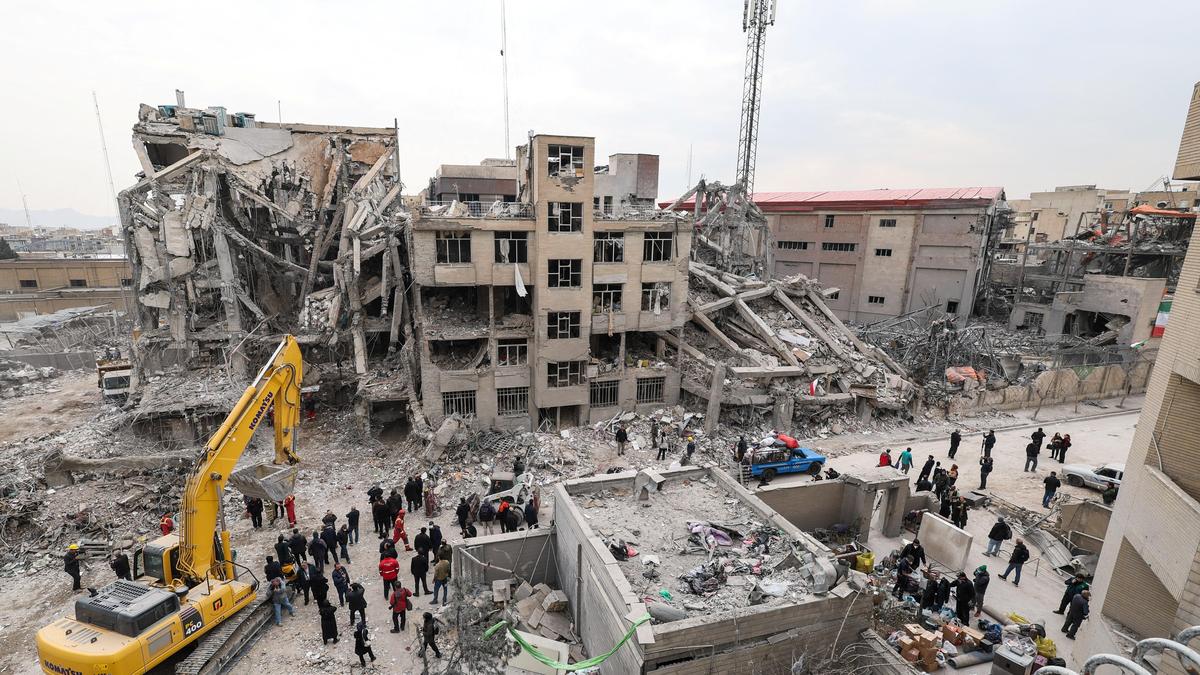
The International Energy Agency (IEA) wants you to be terrified of a dry pump. They’re ringing the alarm bells about the "largest-ever oil supply disruption" in history. It makes for a great headline, but it’s a fundamental misreading of how modern energy markets actually function. While the IEA obsesses over barrels lost to conflict, they are ignoring the single most important reality of the 2020s: the world has never been better at finding an alternative route.
Stop looking at the supply chart and start looking at the plumbing.
The "supply shock" narrative is a relic of 1973. Back then, a closed valve meant a dead engine. Today, global energy is a fluid, hyper-adaptive network that thrives on the very volatility the IEA fears. If you’re waiting for the end of the world because of a regional war, you’re missing the greatest arbitrage opportunity of the decade.
The Myth of the Finite Barrel
The IEA’s logic is built on a "point-to-point" fallacy. They assume that if Country A stops shipping to Country B, that oil is gone from the global math. It isn’t. We have seen this play out with every major sanction and conflict of the last five years. Oil doesn't disappear; it just changes its passport.
When Western powers attempted to choke off specific flows recently, the "shadow fleet" didn't just emerge—it dominated. Tankers were rebranded, ownership was obscured through shell companies in Dubai and Singapore, and the oil kept moving. The "disruption" wasn't a loss of volume; it was a localized price hike for those insisting on "clean" molecules. Everyone else just bought the "tainted" barrels at a 20% discount.
The IEA calls this a crisis. I call it a massive, undeclared stimulus package for emerging economies that don't care about the optics of their fuel source.
Why "Spare Capacity" is a Ghost
You’ll hear analysts moan about the lack of spare capacity in OPEC+ nations. They claim that if a major producer goes offline, there is no "buffer" to save us. This is a misunderstanding of how capital expenditure (CapEx) works in the fracking era.
In the old world, bringing new supply online took seven years and a $10 billion offshore platform. In the Permian Basin, a "DUC" (Drilled but Uncompleted well) can be brought to life in weeks. The world’s real spare capacity isn't sitting in a Saudi storage tank; it’s sitting in the balance sheets of mid-sized Texas explorers who can ramp up production the moment the price of WTI crosses a certain threshold.
We aren't running out of oil. We are running out of cheap, politically "easy" oil. Those are two very different problems.
The Logistics Paradox: Chaos Breeds Efficiency
The IEA’s report focuses on the danger of "choke points"—the Strait of Hormuz, the Suez Canal, the Bab el-Mandeb. Yes, these are narrow. Yes, they are vulnerable to drones and regional skirmishes. But the market’s response to these threats isn't collapse; it’s a radical acceleration of infrastructure.
Look at the surge in overland pipelines and the massive investment in rail-to-ship terminals. Every time a strait gets "choked," a new, more expensive, but more resilient trade route is born. We are currently witnessing the forced evolution of global logistics. It’s painful, it’s inflationary in the short term, but it’s making the energy grid impossible to kill.
If you want to understand the future of energy, stop reading IEA press releases and start tracking insurance premiums for VLCCs (Very Large Crude Carriers). The "disruption" is priced in before the first missile even hits the water.
The ESG Irony
Here is the truth no one at a major NGO wants to admit: The push for ESG (Environmental, Social, and Governance) standards has actually made the oil market more volatile and therefore more profitable for those who ignore the rules.
By starving public oil companies of capital, activists have handed the keys to National Oil Companies (NOCs) and private equity-backed wildcatters. These entities don't answer to a board of directors worried about their carbon footprint. They answer to the bottom line.
The IEA laments the supply disruption, yet their own policies have discouraged the very investment that would have provided a cushion. We are living in a supply-constrained world by choice, not by geological necessity.
People Also Ask: Won't high prices kill demand?
The short answer: No.
The longer, more brutal answer: High prices only kill demand in the middle class of developed nations. In the developing world, energy is a survival requirement. If oil hits $120, a commuter in London might take the train. A factory owner in Vietnam will simply pay the price and pass the cost down the line, or find a way to burn something dirtier.
Demand is far more "inelastic" than the IEA’s models suggest. We’ve seen $100+ oil before, and the world didn't stop spinning. It just got more expensive to buy a plastic toy.
People Also Ask: Is the "Green Transition" the solution to supply shocks?
The irony is that the "solution" creates its own, even more fragile supply chain. To build the batteries and turbines needed to replace oil, you need copper, lithium, and rare earth metals. These supply chains are even more concentrated in volatile or adversarial regions than oil ever was.
If you think a disruption in the Strait of Hormuz is bad, wait until you see a disruption in the processing plants of East Asia. We aren't "transitioning" away from supply shocks; we are diversifying the types of shocks we are vulnerable to.
The Playbook for the "Disrupted" World
If you’re managing a portfolio or a business, the IEA's "largest-ever disruption" is a signal to stop playing defense.
- Bet on Midstream, Not Just Upstream: The people who move the oil are making more than the people who pull it out of the ground. When routes change, the "miles per barrel" metric increases. That’s more profit for tanker fleets and pipeline operators.
- Ignore the "Peak Oil" Narratives: We have heard about peak oil since the 1970s. It’s a fairy tale told to justify subsidies. The "disruption" we face is political, not physical.
- Watch the Refining Spread: Crude is useless if you can't cook it. The real bottleneck isn't the war; it’s the fact that we haven't built a major new refinery in the US since the disco era. The money is in the "crack spread," not the wellhead.
The IEA is right about one thing: the old map is gone. But they are wrong about the result. This isn't the beginning of an energy dark age. It’s the beginning of the "Mercenary Era" of energy. Those who can navigate the gray markets, the new routes, and the political friction will see returns that the "buy and hold" crowd can’t imagine.
Stop fearing the disruption. Start charging for it.