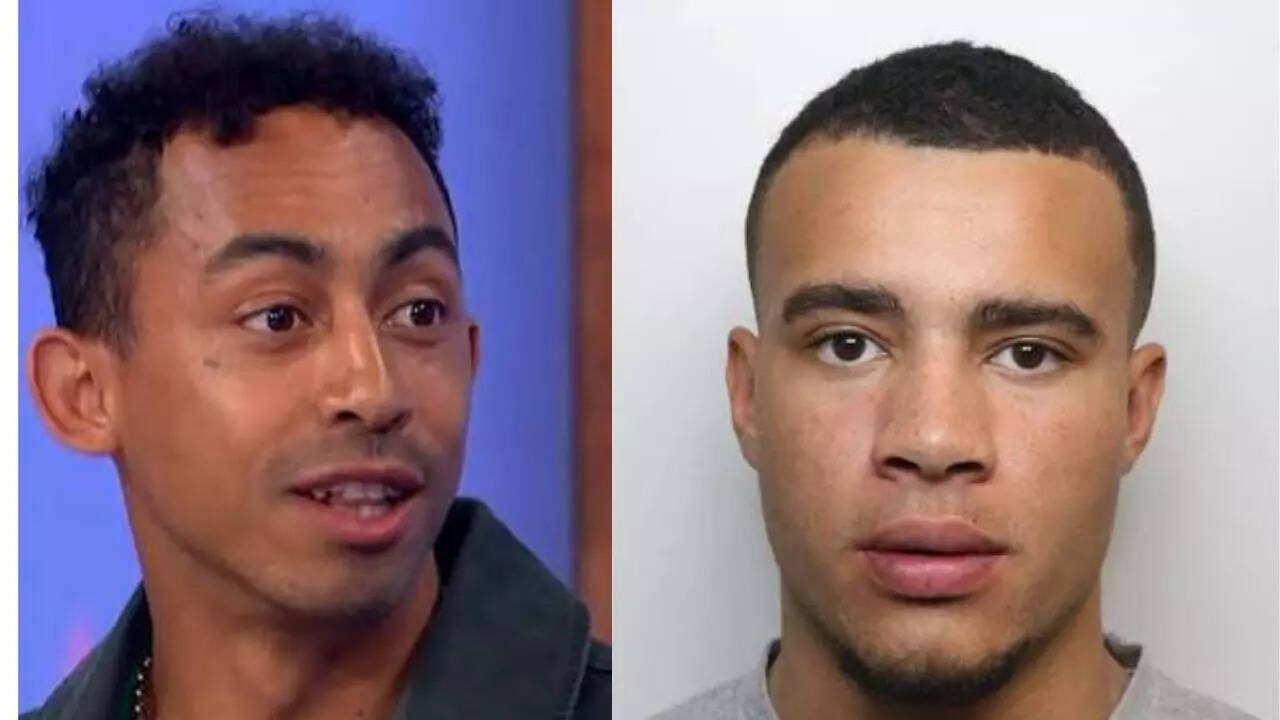
Piers Morgan didn't get "clowned." Harrison Sullivan, the gym-bro-turned-chaos-agent known as HSTikkyTokky, didn't "win." And Jordan Stephens isn't the moral compass the internet thinks he is.
The recent explosion of the Sullivan-Morgan interview is being treated as a cultural collision or a failure of "legacy media" to handle "new media" stars. That’s the lazy consensus. The reality is much bleaker. This wasn't a debate or even an interview; it was a symbiotic parasitic event. In related updates, we also covered: The Sound of a Breaking Promise.
Everyone involved got exactly what they wanted, and the audience—cheering in the comments about who "owned" whom—is the only party that actually lost.
The Myth of the Unprepared Interviewer
The prevailing narrative suggests Piers Morgan was out of his depth. Critics like Jordan Stephens argue that Morgan’s aggressive, confrontational style is outdated when facing a generation that thrives on "trolling" and "clout." Deadline has provided coverage on this fascinating topic in extensive detail.
This assumes Morgan wanted a high-level intellectual exchange. He didn't.
I have spent fifteen years watching producers orchestrate these "train wrecks." They aren't accidents. They are products. Morgan’s team knew exactly who Sullivan was. They didn't book him for his insights on fitness or digital entrepreneurship. They booked him because he is a human hand grenade.
When Sullivan started shouting about his "aura" and mocking Morgan’s age, the producers in the gallery weren't cringing. They were checking the real-time engagement metrics. Every second of "chaos" translates to millions of TikTok views, YouTube Shorts, and X (formerly Twitter) arguments.
Morgan isn't losing his grip on the medium; he is mastering the only metric that still pays the bills in legacy broadcasting: the hate-watch.
Jordan Stephens and the Fallacy of "Better Conversations"
Jordan Stephens stepped into the fray with a critique that sounds noble on the surface. He suggested that Morgan’s approach is "exhausting" and that we need a more nuanced, empathetic way to engage with these young, controversial figures.
Stephens is wrong.
He is applying a 2014 solution to a 2026 problem. You cannot "empathy" your way into a productive conversation with a creator whose entire business model is based on being unreachable and unshakeable. Sullivan isn't looking for a seat at the table; he’s looking to flip the table over and film the reaction.
The idea that a "gentler" interview would have yielded better results is a fantasy. If Morgan had been polite, Sullivan would have been bored. If the conversation had been intellectual, the clips would have died in the algorithm.
Stephens' critique ignores the fundamental incentive structure of the modern attention economy. We aren't in an era of "big ideas." We are in an era of "big reactions." By framing this as a failure of Morgan’s character, Stephens misses the systemic rot.
Harrison Sullivan is Not a Disruptor
The "Gen Z" fans are hailing Sullivan as a hero who exposed the dinosaur of mainstream media. They see his refusal to play by Morgan’s rules as a form of rebellion.
It’s not rebellion. It’s a different form of compliance.
Sullivan is a slave to the algorithm. His "unfiltered" persona is as tightly choreographed as a PR-managed Hollywood junket. He knows that if he stops being "chaos," his relevance vanishes. He has to maintain a state of perpetual agitation to keep the numbers up.
- The "Aura" Defense: When Sullivan talks about "aura" or "rizz," he isn't just using slang. He is using linguistic barriers to make the interviewer look obsolete.
- The Aggression Pivot: By being louder and more obnoxious than the host, he flips the power dynamic.
- The Monetary Flex: Constantly mentioning wealth is a shield. It tells the audience, "It doesn't matter if I'm wrong, because I'm richer than you."
This isn't disruption. It’s the same old power-flexing we saw in the 90s, just wrapped in a gym-shark vest and filtered through a smartphone lens.
The Death of the "Viral Moment"
We need to stop pretending these interviews "happen." They are manufactured.
The "chaos" in the Sullivan interview was the intended feature, not a bug. When a clip goes viral of a young influencer shouting over a veteran journalist, both parties see their stock rise. Morgan gets to play the "reasonable adult" to his core demographic of grumpy boomers. Sullivan gets to be the "uncancelable king" to his legion of teenage fans.
It is a closed loop of ego and revenue.
The real casualty is the truth. We learn nothing about the guest’s actual impact on his followers. We learn nothing about the host’s ability to hold power to account. We just get two people performing for their respective galleries.
Stop Asking "Who Won?"
The most common question in the wake of this interview is: "Who won the debate?"
This is the wrong question. It assumes a competition took place. In reality, it was a co-production.
If you want to understand the modern media landscape, you have to stop looking at the content and start looking at the mechanics.
- Engagement is the Only Currency: If a video makes you angry enough to comment, it has succeeded.
- Complexity is the Enemy: Any nuance in the Sullivan-Morgan exchange was edited out or shouted over because nuance doesn't "clip" well on TikTok.
- Conflict is Synthetic: Most of these "rivalries" are professional wrestling for people who think they are too smart for WWE.
How to Actually Fix the Media
If we want better discourse, we have to stop rewarding the "viral chaos" model.
Legacy media needs to stop chasing the "influencer of the week" for cheap clicks. If you can't interview someone without it descending into a screaming match, you shouldn't be interviewing them. It devalues your platform and turns your studio into a backdrop for someone else’s content.
On the other side, digital creators need to realize that being "out of control" is now a trope. It’s predictable. It’s the new status quo.
Imagine a scenario where a creator like Sullivan sat down and actually defended his philosophy without the theatrics. That would be truly disruptive. That would be the one thing the algorithm wouldn't know how to handle.
But that won't happen. Because as long as we keep clicking on the "chaos," they will keep feeding it to us.
Jordan Stephens wants us to be kinder. Piers Morgan wants us to be outraged. Harrison Sullivan wants us to be impressed.
Don't be any of those things. Be bored.
The only way to win this game is to stop playing. Stop sharing the clips. Stop debating who "clowned" whom. Recognize the theater for what it is: a desperate attempt by two different eras of fame to stay relevant by shouting into the same void.
The interview wasn't a cultural moment. It was a commercial for two brands that are terrified of being forgotten.
Turn it off.