The heavy oak door of the Oval Office doesn't just shut; it seals. It creates a vacuum where the screams of a distant geopolitical crisis become mere lines on a briefing paper, and the visceral smell of cordite is replaced by the faint, expensive scent of floor wax and history.
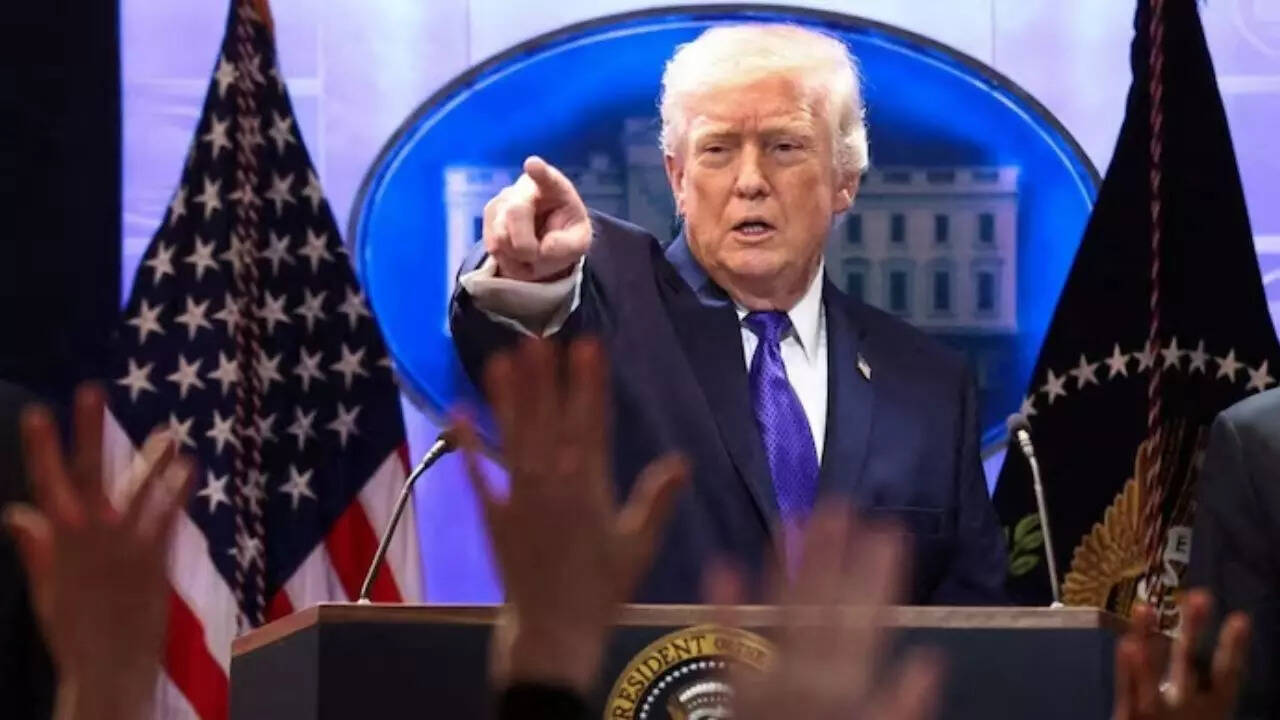
In the winter of his inauguration, the man behind the desk looked at the world through the lens of a ledger. He was the "Peace President," a title he wore like a bespoke suit. His campaign had been a rhythmic drumbeat against "forever wars," a promise to the mothers in Ohio and the fathers in Pennsylvania that their children would no longer be the currency spent in deserts they couldn't find on a map. He spoke of "America First" not as a battle cry, but as a sanctuary.
But there is a quiet, jagged irony in the way power works. The very hand that signs a peace treaty often finds itself trembling over a declaration of war forty-eight hours later.
The Ledger of Human Cost
To understand how a dove becomes a hawk, you have to look at the maps. Not the colorful ones in geography books, but the digital displays in the Situation Room where flickering red dots represent thousands of human lives.
Consider a hypothetical mid-level diplomat. Let’s call him Elias. Elias has spent twenty years in the State Department believing that a well-timed phone call can stop a tank. He is the embodiment of the "Diplomacy First" era. In the early days of this administration, Elias was the golden boy. He was sent to negotiate trade routes and maritime borders with the breezy confidence of a man who believed the new President would never greenlight a strike.
Then came the incident at the 38th parallel, or perhaps the Strait of Hormuz—the geography changes, but the tension remains identical.
Elias sat in a cold room in Geneva, facing a counterpart who knew exactly what the American President had promised his voters back home. The adversary didn't see a "Peace President." They saw a man whose hands were tied by his own rhetoric. They saw a vacuum.
This is the invisible tax of a non-interventionist policy. When you tell the world you will not fight, you inadvertently invite everyone else to see how much they can steal before you change your mind. Diplomacy is a language, but power is the grammar that makes it make sense. Without the credible threat of force, Elias wasn't negotiating; he was begging.
The Sound of a Broken Promise
The shift didn't happen with a bang. It happened with a slow, agonizing realization that "America First" required America to be everywhere.
The President’s advisors—men with gray hair and souls hardened by the Cold War—laid out the statistics. They didn't talk about glory. They talked about microchips. They talked about the 90% of advanced semiconductors that pass through a single, precarious shipping lane. They explained that if a rival power seized that lane, the "America First" economy would grind to a halt in weeks. No iPhones. No medical scanners. No cars.
The Peace President looked at the ledger. The cost of a war was high, but the cost of a collapse was total.
Suddenly, the rhetoric of the campaign trail felt like a ghost. It haunted the hallways. The President’s supporters felt a sting of betrayal that felt like a physical weight. They had voted for a retreat from the world's stage, only to see the curtain rise on a new, even more dangerous act.
It is a specific kind of agony to realize that the person you trusted to bring the troops home is the one ordering a fresh deployment. It feels like a breach of a sacred contract. But in the windowless rooms of the West Wing, they don't call it a betrayal. They call it "evolving reality."
The Machinery of Justification
How does a leader sleep after sending drones into a country they promised to respect? They use the language of the surgical strike.
In the 19th century, war was a blunt instrument—massed infantries and cannons. Today, it is marketed as a scalpel. The administration began to use words like "targeted," "proactive," and "stabilization." These are anesthetic words. They are designed to numb the public to the fact that "peace" had become a tactical pause rather than a permanent state.
The statistics are jarring. During the years of supposed "diplomacy first," the budget for special operations grew by double digits. We weren't at war in the traditional sense, but we were fighting in the shadows.
Imagine a small village on the edge of a contested border. To the President, it is a coordinate. To the people living there, the sound of a drone overhead is the sound of a "Peace President" failing. We often focus on the grand strategy, the chess moves between Washington and Beijing or Moscow, but the human element is found in the dirt. It’s found in the eyes of a soldier who was told he was going home, only to be redirected to a "temporary training mission" that involves live fire.
The Mirage of the Exit Strategy
We have a collective obsession with the "exit." We want to know when the mission is over. We want the parade.
The tragedy of the modern era is that there are no exits. There are only handoffs. The Peace President tried to pull back, to let regional powers settle their own scores. But nature abhors a vacuum, and so does geopolitics. When the US retreated, the shadows grew longer. Extremist groups filled the gaps. Rival empires moved the fences.
The President found himself in a paradoxical trap. To keep his promise of peace, he had to engage in "limited" conflicts to prevent "greater" wars. It’s a logic that feels like a snake eating its own tail.
Consider the psychological toll on the Commander in Chief. Every morning, he is handed the "The Book"—the President’s Daily Brief. It is a catalog of all the ways the world wants to burn. If you do nothing, you are responsible for the ashes. If you do something, you are a warmonger. There is no middle ground in the Oval Office. There is only the choice between different shades of bad.
The Weight of the Pen
The ink in a President's pen is heavier than it looks. It carries the weight of every life that will be altered by a signature.
As the administration entered its final years, the "America First" slogan remained on the posters, but the reality was a tangled web of alliances, drone corridors, and carrier strike groups. The diplomacy was still there, but it was the diplomacy of the desperate. It was the diplomacy of a man who realized too late that you cannot resign from being a superpower.
The world is not a collection of isolated islands. It is a nervous system. When you poke one part, the whole body flinches. The Peace President learned that his desire for a quiet life for his country was a luxury the world wouldn't allow.
The tragedy isn't that he lied during the campaign. The tragedy is that he might have actually believed himself. He might have truly thought he could turn the ship around by sheer force of will. But the ship of state has a massive turning radius, and the waters are filled with icebergs that don't care about campaign promises.
The light in the Oval Office stays on late into the night. Outside, the tourists take pictures of the fence, oblivious to the fact that inside, a man is deciding which "peaceful" action will require the least amount of blood. He is no longer the candidate of hope. He is the architect of the necessary.
The pen moves across the paper. The ink dries. Somewhere, five thousand miles away, a hangar door opens. The Peace President has gone to war, and the most frightening part is that he thinks he had no choice.
There is no such thing as a clean break from history. We are all tethered to the decisions of men who sat in that room fifty years ago, just as the children of fifty years from now will be tethered to the ink drying on the desk today. The silence of the office is the loudest thing in Washington. It is the sound of a world that refuses to be ignored, no matter how much we want to look away.
One signature. One coordinate. One more "last" mission. The ledger never balances. It only grows.