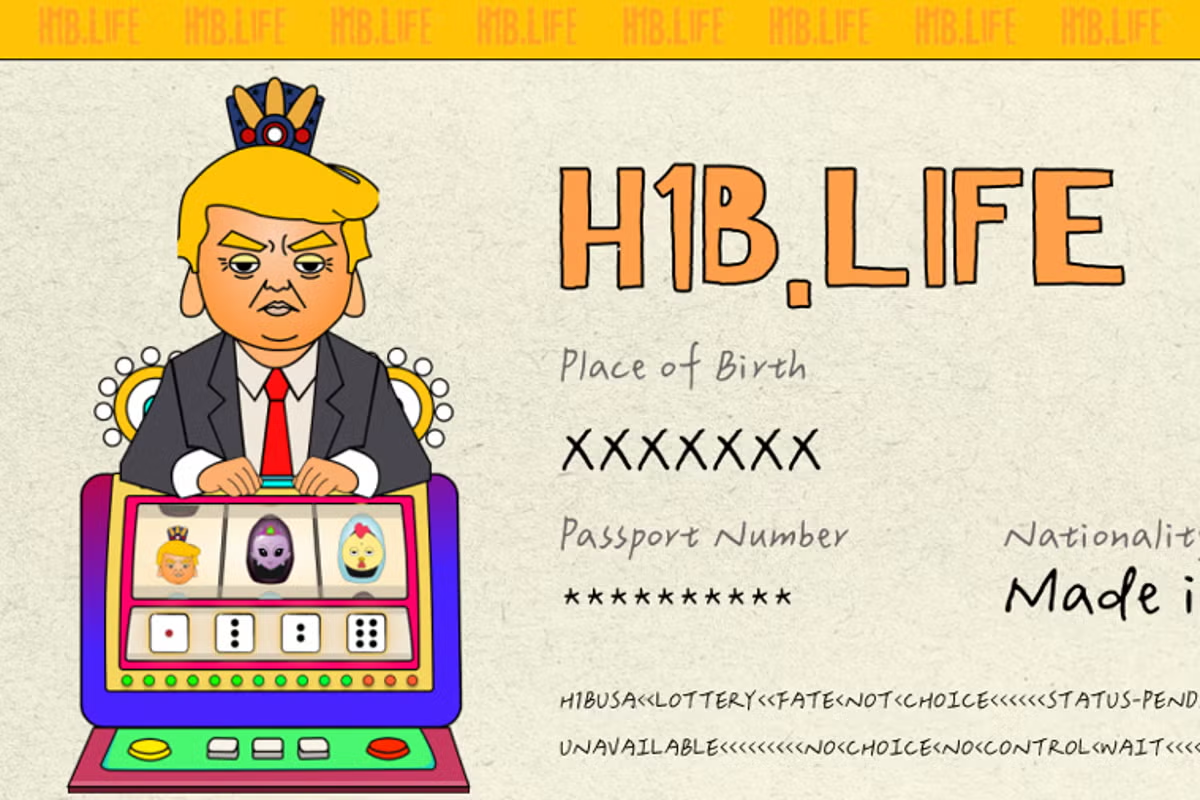
The latest indie darling to hit the gaming scene wants you to feel bad. It wants you to stare at a digital slot machine, watch your H-1B dreams vanish into a "denied" notification, and blame a vengeful orange god-figure for the cruelty of the American immigration system. It is a masterclass in emotional manipulation that misses the entire point of how labor markets actually function.
The narrative is lazy. It’s the "starving genius" trope repackaged for the SaaS era. We are told that the H-1B process is a "maddening" game of chance that destroys lives. But if you’ve spent a decade in the hiring trenches of Palo Alto or Austin, you know the truth: the lottery isn’t a tragedy. It’s a filter. And it’s a filter that the tech industry—despite its public whining—actually loves because it keeps the cost of mid-level engineering talent artificially suppressed while maintaining a permanent underclass of "hopeful" labor.
If we actually wanted a meritocracy, we’d kill the lottery tomorrow. But we don't. We want the slots.
The Myth of the Stolen Genius
The competitor's take centers on the idea that every person entering the H-1B lottery is a once-in-a-generation talent being blocked by a bureaucratic glitch. This is a statistical lie.
The vast majority of H-1B applications are not for the next Einstein. They are for "Computer Programmer, Level 1" or "Systems Analyst" roles at outsourcing giants. Data from U.S. Citizenship and Immigration Services (USCIS) consistently shows that a massive chunk of the 85,000 available visas are vacuumed up by firms like Infosys, Tata Consultancy Services, and Wipro. These aren't innovation hubs; they’re body shops.
When a game depicts the H-1B as a "jealous god" picking on individuals, it ignores the reality that the "god" is actually a corporate algorithm. These firms flood the system with multiple applications for the same individuals—a practice the government finally started cracking down on in 2024—to game the odds.
By framing this as a moral failing of a single politician or a "broken" system, we ignore the fact that the system is functioning exactly as designed: it provides a steady stream of tied labor that cannot easily job-hop, ensuring that "disruption" stays profitable for the C-suite, not the worker.
Luck is a Better Filter Than HR
Here is the contrarian truth that makes people uncomfortable: A random lottery is often more fair than a bureaucratic "points-based" system.
Critics argue for an O-1 "Extraordinary Ability" style filter for everyone. They want "merit." But who defines merit? A government clerk in a cubicle? A hiring manager at a company that still uses whiteboard coding interviews?
In a world of hyper-inflated resumes and AI-generated portfolios, "merit" is the easiest thing to fake. You can optimize for a points system. You can’t optimize for a dice roll. The randomness of the H-1B lottery is the only thing preventing the entire immigration system from being fully captured by the highest bidder. If we moved to a "highest salary wins" model—as many "sensible" reformers suggest—we would effectively ban every single founder of a pre-seed startup from ever getting a visa.
Imagine a scenario where a brilliant developer wants to build a new AI-driven energy grid. They have no funding yet. Under a "merit" system based on salary, they lose to a Senior Product Manager at Meta making $400k to optimize ad-click latency.
The "slot machine" that the gaming world is currently crying about is actually the only thing giving the underdog a puncher's chance. It's the ultimate equalizer in a world where capital usually buys access.
The Trump Boogeyman is a Distraction
The game in question uses Donald Trump as a "jealous god" figure. It’s an easy trope. It’s good for marketing. It’s also intellectually dishonest.
The H-1B cap of 65,000 (plus 20,000 for advanced degrees) was set by the Immigration Act of 1990. It has remained largely unchanged through Bush, Obama, Trump, and Biden. The "cruelty" is bipartisan. The "chaos" is structural.
By personifying the system as a single villain, we let the real culprits off the hook:
- The U.S. Congress: Which refuses to decouple green cards from employer sponsorship, creating a "indentured servitude" model.
- Big Tech Lobbyists: Who fight for more H-1Bs (cheap labor) but rarely fight for faster paths to permanent residency (which gives workers bargaining power).
- Higher Education: Which treats international students as high-interest loans with legs, selling them "Optional Practical Training" (OPT) as a bridge to a visa that they know has a 20% success rate.
If you’re mad at the "jealous god," you’re missing the titans standing behind him holding the strings.
Stop Asking How to "Fix" the Lottery
Most people ask: "How can we make the H-1B process more humane?"
That is the wrong question. It assumes the goal of the U.S. government is to be "humane" to foreign nationals. It isn't. The goal is—or should be—national interest.
If we wanted to actually disrupt this "maddening" cycle, we wouldn't tweak the lottery odds. We would implement a Market-Based Auction.
- The Mechanism: Companies bid for the right to hire a foreign worker.
- The Benefit: The true market value of the talent is revealed. No more underpaying "Level 1" programmers to replace American workers.
- The Twist: The proceeds from these auctions go directly into funding STEM scholarships for domestic students.
This is the "nuance" the game-makers and the tech journalists miss. They want a world where everyone gets a trophy. Real life is a resource-constrained environment. When you have 400,000 people fighting for 85,000 slots, someone has to lose.
The Psychological Trap of the "Relatable" Struggle
The competitor's article praises the game for making the "invisible" struggle visible. But what is it actually achieving?
It’s creating a culture of victimhood among the world's most privileged migrant class. Let’s be blunt: If you are an H-1B applicant, you are likely in the top 1% of global earners and education levels. You are not a refugee fleeing a war zone; you are a highly skilled professional seeking a specific tax jurisdiction.
When we gamify this struggle and add a "mean boss" or a "jealous god," we trivialize actual immigration crises. We turn the administrative friction of a high-end labor market into a melodrama.
I’ve seen founders lose their best engineers to the lottery. It sucks. It’s expensive. It derails roadmaps. But those engineers didn't disappear into a void—they went to Vancouver, London, or Berlin. The "maddening" nature of the U.S. system is actually the best thing that ever happened to the rest of the world’s tech hubs.
The H-1B "problem" is an American competitiveness problem, not a human rights violation.
The Actionable Truth
If you are a founder or a high-skill worker, stop playing the game. Stop waiting for the "god" to smile on you.
- Go Remote-First: The H-1B is a tether to a physical office. If you’re a company, hire the talent where they live. If you’re a worker, demand a contract that isn't tied to a zip code.
- The "O-1" or Bust: Don't settle for the lottery. If you are actually "extraordinary," prove it. Build an open-source library used by thousands. Speak at major conferences. Write a book. Force the government to give you a visa that isn't based on luck.
- Leave: The greatest protest against a "maddening" system is to stop participating in it. Canada’s "H-1B Holder" work permit program, which filled its 10,000-person quota in less than 48 hours, proved that the talent is mobile.
The "jealous god" only has power if you believe the U.S. is the only place where you can build the future. That hasn't been true for a decade.
The H-1B lottery isn't a glitch in the American Dream. It is the modern American Dream: a high-stakes, rigged-at-the-top, randomized scramble where the house always wins and the players are too busy crying about the UI to realize they’re in the wrong casino.
Stop looking for empathy in the code. Start looking for the exit.