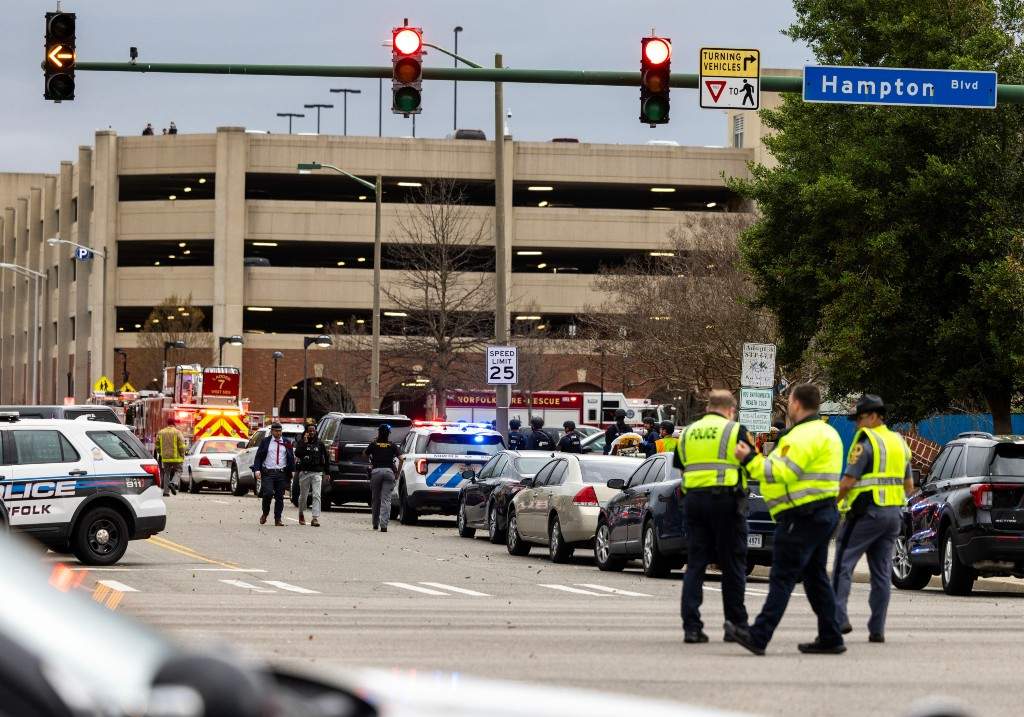
The Department of Justice is victory-lapping a felony charge against a man who sold a firearm used in the Old Dominion University shooting. They want you to believe this is "getting tough" on crime. It isn't. It’s a performative shell game.
The federal government is addicted to the narrative that if they can just cut off the "straw buyer" or the "illegal street dealer," the flow of violence stops. It’s a comforting lie that ignores the brutal reality of the American secondary market. Charging a guy for a paper trail violation after a tragedy is the legal equivalent of trying to stop a flood with a single brick.
The Paper Trail Illusion
The competitor headlines focus on the "illegal sale." This framing is intellectually dishonest. In the United States, the line between a legal private sale and an illegal "business" transaction is intentionally blurry. Under the current framework, if you sell guns to "earn a living," you need a Federal Firearms License (FFL). If you sell from your "personal collection," you don’t.
Prosecutors love this ambiguity because it allows them to cherry-pick who to destroy. In the ODU case, the DOJ is leaning on the fact that the seller wasn't licensed. But let's be blunt: the license isn't a magic talisman that prevents bullets from flying. It’s a tax and a ledger. By focusing on the seller's lack of a permit, the DOJ avoids the much harder conversation about why the "legal" system produces more than 400 million firearms that circulate with zero friction.
I’ve seen this play out in dozens of jurisdictions. The feds swoop in, grab a low-level dealer who failed to cross a 'T' or dot an 'I', and hold a press conference. Meanwhile, the underlying demand for illicit hardware remains untouched. We are treating a systemic hemorrhage with a localized Band-Aid.
The Myth of the "One Bad Apple" Dealer
The media likes to portray these sellers as shadowy villains in trench coats. Most of the time, they are just people navigating a hyper-saturated market where the "personal collection" loophole is wide enough to drive a tank through.
The DOJ’s strategy is built on deterrence theory, which suggests that if we hammer this one guy, others will stop. This is a fundamental misunderstanding of market economics. As long as there is a massive delta between who wants a gun and who can legally walk into a Bass Pro Shop, a secondary market will exist.
- Logic Check: If you remove one unlicensed seller, the demand doesn't vanish. It simply migrates to a seller who is better at hiding.
- The Nuance: By aggressively prosecuting these specific individuals only after a high-profile shooting, the DOJ admits their enforcement is reactive, not proactive. They aren't stopping shootings; they are cleaning up the PR mess.
Stop Asking if the Sale was Legal
People always ask: "How did he get the gun?"
That is the wrong question. The right question is: "Why do we pretend that a background check at the point of initial sale matters three years later?"
A firearm is a durable good. It lasts decades. A background check is a snapshot of a person’s criminal record at a single moment in time. The DOJ’s obsession with "straw purchasing" assumes that the initial transaction is the only point of failure. In reality, the failure is the existence of a permanent, untraceable secondary market that the government has no interest in actually regulating because it would be politically suicidal.
The Data the DOJ Ignores
The Bureau of Alcohol, Tobacco, Firearms and Explosives (ATF) tracks "time-to-crime" metrics. This is the duration between the first retail sale of a firearm and its recovery in a crime. When that window is short, they scream "straw purchase." When it's long, they ignore it.
But here’s the kicker: the vast majority of guns used in crimes aren't fresh off the shelf. They are cycled through multiple hands, legal and illegal, over years. Charging a man for a sale related to the ODU shooter is a statistical anomaly used to justify a massive, ineffective bureaucracy.
If we wanted to actually disrupt the flow of illegal guns, we would stop chasing individual sellers and start looking at the manufacturing volume. But the DOJ won't do that. It's easier to put a face on a "criminal" seller than it is to challenge the industrial-scale production of weapons that eventually, inevitably, find their way into the wrong hands.
The Technology Gap
We live in an era where you can 3D print a lower receiver in a garage. The DOJ is still playing a 20th-century game of paper logs and physical stings. While they spend months building a case against one guy in Virginia, thousands of "ghost guns" are being assembled without serial numbers.
The prosecution of the ODU seller is a dinosaur's last roar. It’s a signal to the public that "something is being done" while the technological reality of firearm production makes their entire regulatory framework obsolete.
The Actionable Truth
If you actually want to understand firearm policy, stop reading DOJ press releases. They are marketing documents designed to secure budget increases.
- Acknowledge the Market: Realize that every "legal" gun is potentially one Craigslist ad away from being an "illegal" gun.
- Demand Proactive Metrics: Ask the DOJ how many crimes were prevented by these prosecutions. They won't have an answer, because you can't measure a non-event.
- Watch the Ghost Guns: The focus on "sellers" is a distraction from the rise of decentralized manufacturing.
The ODU prosecution isn't a victory for public safety. It’s a victory for a narrative that says the system works as long as we find someone to blame after the bodies are cold.
The system doesn't work. It functions exactly as intended: as a high-volume churn of hardware where the occasional prosecution serves as the necessary "cost of doing business" to keep the public from looking too closely at the machinery.
Stop falling for the perp walk. It’s theater, and the script is written in blood.