The light on Vali-e-Asr Avenue turns red. It is a mundane, rhythmic pause in the life of a city that never truly sleeps, yet always feels watched. A delivery driver on a battered motorbike wipes sweat from his brow. A family in a sagging Peugeot adjusts the radio. Above them, perched on a rusted metal pole, a traffic camera stares down with a glass eye that never blinks.
Most people see a tool for revenue—a digital finger wagging at those who break the speed limit or ignore the lane lines. But for the elite units of Israel’s Unit 8200, these cameras are not looking for speeders. They are looking for a ghost.
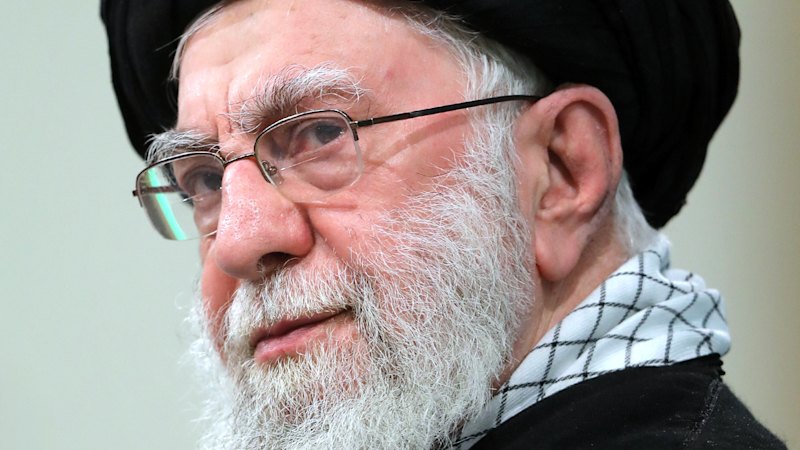
The ghost is Ayatollah Ali Khamenei. His movements are the most guarded secret in the Islamic Republic. When the Supreme Leader travels, the world usually only finds out after he has arrived, shielded by a phalanx of security, signal jammers, and decoy motorcades. Yet, in a silent coup of digital espionage, that shroud of secrecy was recently pierced. Not by a mole in the inner circle or a high-altitude drone, but by the very infrastructure Tehran built to manage its morning commute.
The Invisible Passenger
Modern warfare has moved from the trenches to the motherboard. To understand how a traffic camera becomes a spy, you have to stop thinking of it as a camera and start thinking of it as a node. Tehran, like any sprawling megacity, relies on a massive, interconnected web of sensors to keep its arteries from clogging. These systems are often bought from third-party vendors, installed by contractors, and managed via software that—while functional—is rarely built to withstand a state-level cyber assault.
Israel’s intelligence apparatus didn’t just "hack" a camera. They mapped an entire city's nervous system.
Imagine a technician in a windowless room in Tel Aviv. On his screen, he isn't looking at a grainy feed of a highway. He is looking at a logic gate. By exploiting vulnerabilities in the municipal servers, Israeli operatives gained the ability to hop from one camera to the next. They turned a tool of civil order into a sophisticated tracking array.
When a black convoy moves through the city, the cameras don't just record it. Through facial recognition and license plate scanning, the software can filter out the noise of eight million citizens and focus on the signal. They can see the specific make of a bulletproof Mercedes. They can identify the lead security detail. They can predict, based on the timing of green lights and the clearing of intersections, exactly where the most powerful man in Iran is headed before he even gets there.
The Paranoia of the Seen
There is a psychological weight to this kind of breach that far outweighs the tactical advantage. For the Iranian leadership, the realization that their own "Smart City" initiatives were being weaponized against them is a special kind of nightmare. It creates an environment where the very pavement feels treacherous.
Suppose you are a high-ranking official. You know the Americans have satellites. You know the Israelis have assassins. But you always assumed that once you were deep within the concrete labyrinth of your own capital, you were safe. Now, you look at the sensor over the tunnel entrance and wonder: Who is watching this frame right now?
This isn't a hypothetical fear. The breach allowed Israeli intelligence to build a "pattern of life" profile for Khamenei and his inner circle. In the world of intelligence, a pattern is a death sentence. If you know a target always takes the same bridge on Tuesday at 9:00 AM, or that they switch cars at a specific underpass, you don't need an army to stop them. You just need a moment.
The Vulnerability of Progress
The irony is thick enough to choke on. Iran has spent decades trying to modernize, to prove it can stand as a technological peer to the West. They blanketed Tehran in high-tech surveillance to control their population, to catch protesters, and to enforce social codes. They built a digital panopticon to keep their people in check.
But every wire they ran and every IP address they assigned became a backdoor for their greatest rival.
The technical reality is that most "Internet of Things" (IoT) devices—the category these cameras fall into—are notoriously insecure. They are built for efficiency and cost-effectiveness, not for hardening against a military-grade cyber offensive. Once an intruder is inside the network, moving laterally is often as simple as walking through an open door. The protocols used to send traffic data to a central hub are often unencrypted or use default passwords that were never changed after installation.
Israel didn't have to pick a lock; they found the spare key hidden under the mat.
A War Without Sirens
There were no explosions when this hack occurred. No sirens wailed across the Alborz Mountains. The residents of Tehran went about their day, buying bread, arguing in traffic, and heading to work, completely unaware that their city had become a transparent playground for foreign spies.
This is the new face of the shadow war between Jerusalem and Tehran. It is a conflict of whispers and code. It is the Stuxnet virus that melted nuclear centrifuges, and now it is the traffic light that watches the Supreme Leader.
The stakes are existential. If Israel can see the Ayatollah’s motorcade in real-time, they possess the ultimate leverage. It is a "check" in a global game of chess that has been going on for forty years. It tells the Iranian leadership: You are never alone. Not even in your own streets.
Think of that delivery driver again, idling at the red light. He looks up at the camera, perhaps worried about a ticket he can’t afford. He doesn't know that through that same lens, a thousand miles away, an analyst is zooming in on the car behind him, checking the pulse of a regime.
The camera remains silent. It swivels slightly, catching the glint of the afternoon sun. The light turns green. The motorcade moves on, unaware that its shadow has already been captured, digitized, and filed away in an enemy’s database. In the modern age, the most dangerous weapon isn't the one that fires a bullet; it's the one that simply watches you live.
The city continues to breathe, oblivious to the fact that its heartbeat is being monitored by the very eyes it bought to keep itself safe.

.png?format=1500w)