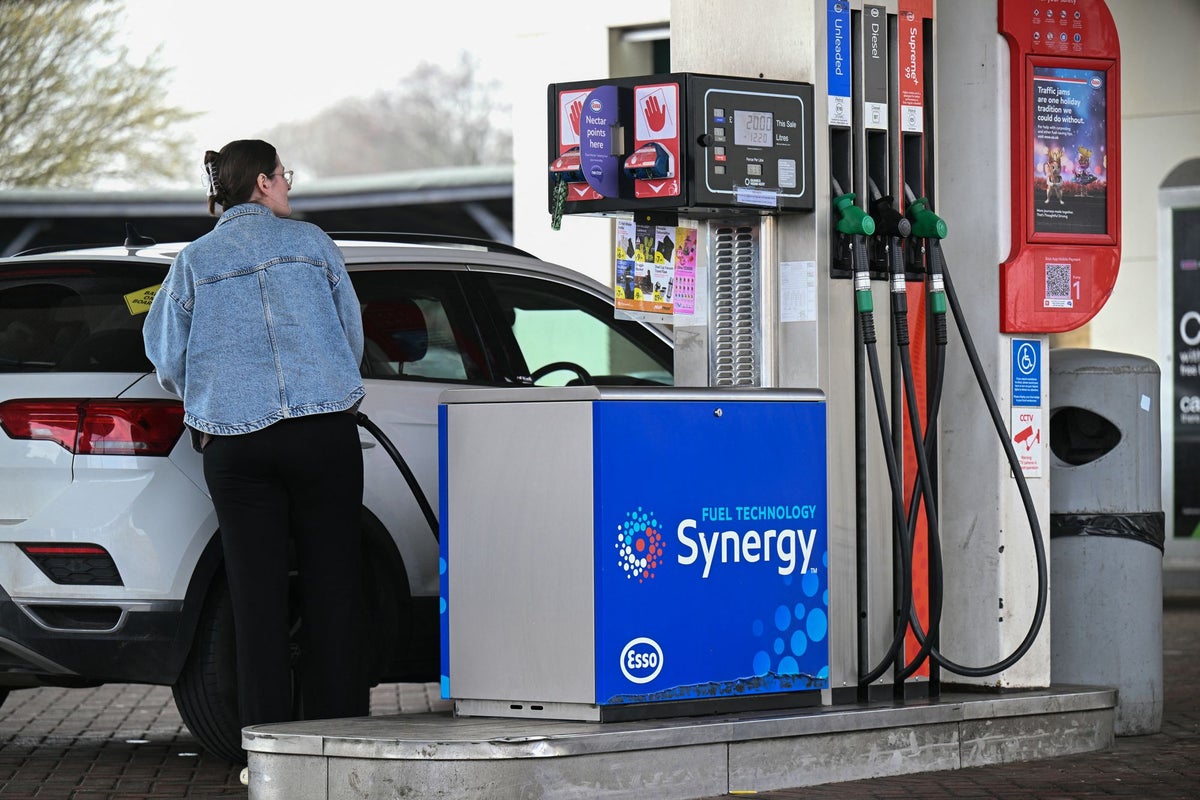
Politicians love a crisis because it justifies a performance. Right now, as tensions with Iran rattle energy markets and sending crude prices north of $100 a barrel, state governors are reaching for their favorite shiny object: the gas tax holiday. They frame it as "relief for working families." It sounds compassionate. It looks great on a campaign flyer. It is also an absolute scam that treats the average voter like someone who can’t handle basic arithmetic.
Suspending the fuel tax doesn't lower the cost of living. It subsidizes oil companies, drains the infrastructure funds we actually need, and ignores the cold reality of supply and demand. If you think a 30-cent reduction in a state levy is going to save your bank account while global supply chains are being choked in the Strait of Hormuz, you aren’t paying attention. You’re being bought with your own money.
The Incidence Fallacy: Who Actually Gets the Money?
The biggest lie in retail politics is that a tax cut at the pump translates 1:1 to a price drop for the consumer. It doesn't. In economics, we talk about tax incidence—the study of who actually bears the burden of a tax, and conversely, who benefits when it’s removed.
When a state suspends a 35-cent gas tax, the price at the pump doesn't magically drop by 35 cents and stay there. Why? Because the supply of gasoline is currently inelastic. We are in the middle of a geopolitical conflict involving a major oil producer. Supply is tight. When you lower the tax, you are effectively increasing the consumer's "willingness to pay."
Retailers and refineries aren't charities. They see that extra room in your budget and, facing high demand and limited supply, they often swallow a significant portion of that tax "savings" through price creep. I have spent years analyzing energy market data, and the pattern is consistent: within weeks of a tax holiday, the "relief" evaporates into the margins of the midstream providers. You are not getting a discount; you are giving a back-door stimulus package to Exxon and Shell under the guise of populism.
Cannibalizing the Roads to Pay for the Commute
The math behind these "holidays" is suicidal. Most state gas taxes are "user fees" dedicated to the Highway Trust Fund or its local equivalents. This money pays for the bridges that aren't supposed to collapse and the asphalt that shouldn't have three-foot potholes.
When a state suspends this revenue, they don't stop the decay of the infrastructure. They just stop paying for the maintenance.
- The Budget Shell Game: States often "backfill" the lost revenue using general funds or one-time surpluses. This is fiscal malpractice. You are taking money meant for schools, emergency services, or long-term debt reduction to give a temporary, pennies-on-the-dollar subsidy to drivers.
- Increased Long-term Costs: Deferring road maintenance is exponentially more expensive than doing it on schedule. A dollar not spent on a crack seal today becomes ten dollars spent on a total road reconstruction in three years.
- The Hidden Tax of Bad Infrastructure: If you "save" $100 a year on gas taxes but blow a tire in a pothole that costs $400 to replace because the repair fund was gutted, you didn't save money. You lost $300 and a Saturday afternoon.
The Iran Conflict is the Wrong Boogeyman
The competitor article screams about the "Iran war" as the catalyst for these high prices. It’s a convenient narrative. It’s also lazy. While the threat of a closed Strait of Hormuz adds a "fear premium" to Brent crude, the underlying issue is a decade of underinvestment in traditional energy and a refining bottleneck that no state-level tax holiday can touch.
We are currently operating with a refining capacity that hasn't kept pace with global demand. Even if crude was $20 a barrel, your gasoline would still be expensive because we don't have enough "kitchens" to cook the "raw ingredients." A state governor suspending a tax has zero impact on the global refining margin (the 3-2-1 crack spread).
The 3-2-1 crack spread is a simplified calculation for the profit margin of turning three barrels of crude oil into two barrels of gasoline and one barrel of distillate (like diesel).
$$\text{Crack Spread} = \frac{(2 \times \text{Gas Price} + 1 \times \text{Diesel Price}) - (3 \times \text{Crude Price})}{3}$$
When this spread is high, the problem isn't the tax; it's the lack of refinery throughput. Giving people a "holiday" on taxes actually increases demand for a product that is already in short supply.
The Cruel Irony of Stimulating Demand
Basic economics: when the price of a commodity goes down, demand usually goes up.
If a tax holiday actually succeeds in lowering the price of gas, it encourages people to drive more. In a market where supply is already constricted by a war in the Middle East, increasing demand is the absolute last thing you want to do. It’s like trying to put out a fire with a squirt gun full of kerosene.
By artificially lowering the price, politicians prevent the market from doing its job: rationing a scarce resource. High prices are the signal that we need to consume less. By masking that signal, the government ensures that the eventual price spike—when the holiday ends or the supply tightens further—will be even more painful.
The "People Also Ask" Reality Check
Does a gas tax holiday actually help the poor?
Rarely. Research from organizations like the Penn Wharton Budget Model shows that while the intent is progressive, the execution is regressive. Lower-income individuals often drive older, less fuel-efficient vehicles, but they also drive fewer total miles than the suburban middle class with long commutes. The biggest beneficiaries of a gas tax holiday are people driving 5,000-pound SUVs 40 miles a day from the suburbs to the city. If you want to help the poor, give them a direct cash transfer or fund public transit. Don't subsidize the combustion of fossil fuels for everyone.
Why don't we just cap the price of gas?
Because you like having gas. Price caps lead to shortages, long lines, and black markets. We tried this in the 1970s. It was a disaster. If a gas station can't sell fuel for more than it costs to buy it, they simply won't buy it. You’ll have a "cheap" price on a sign above an empty tank.
Is there a better way to lower prices?
Yes, but it's not "quick" and it doesn't fit on a bumper sticker. It involves increasing refining capacity, streamlining permitting for domestic production, and actually diversifying the energy mix so we aren't held hostage by every skirmish in the Persian Gulf.
The Addiction to the Quick Fix
The gas tax holiday is the "fast food" of public policy. It feels good for five minutes, but it leaves you bloated and broke. It is a cynical ploy to buy votes using the very funds required to keep the country’s arteries from hardening.
Governors who implement these holidays are betting that you are too distracted by the number on the pump to notice the crumbling bridge you're driving over or the inflation they're fueling by pumping more "demand" into a supply-starved market.
Stop asking for "relief" that costs you more in the long run. Demand a functional energy policy and an infrastructure plan that doesn't rely on accounting gimmicks. Until then, you aren't a "consumer getting a break"—you're just the mark in a political long con.
If you really want to save money at the pump, sell the truck and buy a smaller car. That’s a market signal. A tax holiday is just a hallucination.
.png?width=1200&auto=webp&trim=0%2C0%2C0%2C0)