The headlines are screaming about a "crisis" in the Gulf. Smoke over Fujairah, tankers idling, and the usual gaggle of desk-bound analysts at Bloomberg and Reuters frantically updating their "Geopolitical Risk" spreadsheets. They see a drone hit a terminal and start typing the obituary for regional energy security.
They are wrong. They are looking at the smoke and missing the furnace.
If you believe a temporary suspension of loadings at a UAE oil hub is a sign of systemic fragility, you don’t understand how the global energy machine actually functions. In fact, these kinetic interruptions—while visually dramatic—are the ultimate stress test that the market passes every single time with flying colors. The real story isn't the fire; it's the fact that the fire doesn't matter.
The Fragility Fallacy
The "lazy consensus" dictates that global oil markets are a house of cards. One well-placed Houthi drone or a "suspicious" explosion in a bunkering port, and the whole world is supposed to grind to a halt. This narrative sells newspapers and drives short-term volatility that benefits high-frequency traders, but it bears zero resemblance to the physics of supply chains.
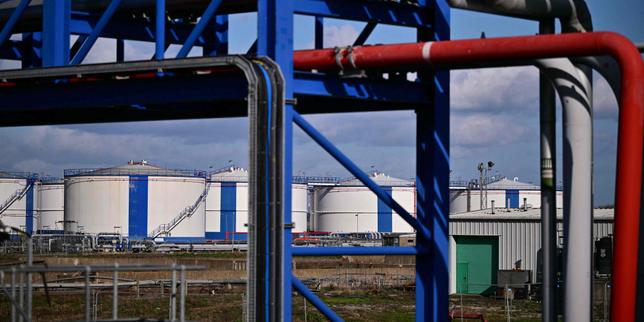
Fujairah is the world’s third-largest bunkering hub. It is a massive, sprawling complex of concrete, steel, and deep-water berths. To "suspend" loading for 48 hours is not a catastrophe; it is a standard operational procedure. It’s the equivalent of a software company taking a server offline for a security patch.
The market treats these events as "Black Swans." They aren't. They are "Grey Rhinos"—highly probable, frequently occurring events that the industry has already priced in. When a terminal goes dark, the oil doesn't vanish. It stays in the ground, or it stays in the tank. The delay is a logistical hiccup, not a supply destruction.
Why the "Risk Premium" is a Scam
Every time a drone makes contact with a storage tank, Wall Street adds a $5 "risk premium" to the price of Brent. This is a ghost tax.
I have sat in rooms where traders justify these spikes based on "potential escalation." But look at the data from the last decade. From the Abqaiq–Khurais attack in 2019 to the various skirmishes in the Strait of Hormuz, the "disruption" to actual delivered barrels has been negligible.
Abqaiq—the crown jewel of Saudi processing—was hit by a massive coordinated strike that supposedly knocked out 5% of global supply. The media predicted $100 oil for a year. What happened? The Saudis tapped into their inventories, utilized their massive spare capacity, and the market settled within weeks.
The UAE is even more resilient. They have invested billions in the Habshan-Fujairah pipeline, specifically designed to bypass the Strait of Hormuz. The infrastructure is built for war. To suggest that a drone strike on a loading arm "threatens" the hub is like saying a scratched bumper totals a tank.
The Physics of Modern Storage
To understand why the alarmism is misplaced, you have to understand the math of the tank farm.
$$P_s = \frac{S_{total} - D_{current}}{R_{output}}$$
In this simplified model for supply pressure ($P_s$), the total storage ($S_{total}$) across global hubs like Fujairah, Singapore, and Rotterdam acts as a massive dampener. Even if $R_{output}$ (output rate) at one terminal drops to zero, the global $S_{total}$ remains massive.
Modern storage tanks aren't just buckets of fuel. They are sophisticated, compartmentalized systems with automated fire suppression and redundant valving. You can burn one, but you aren't taking down the farm. The "disruption" is almost always a choice made by insurers and safety officers, not a physical impossibility of moving oil.
The Counter-Intuitive Truth: Aggression Proves Irrelevance
Here is the take that will get me banned from the Davos cocktail circuit: These attacks actually prove how little leverage regional bad actors have left.
If a drone strike on a primary energy artery can’t move the needle on long-term pricing or break the back of UAE's export capacity, what's left? The "oil weapon" is a rusted relic. We are living in an era of shale abundance and diversified logistics.
The attackers are aiming for the headlines, not the hardware. They know they can’t actually stop the flow of oil, so they settle for the image of stopping the flow of oil. When Bloomberg covers the "suspension" with breathless urgency, they are doing the attackers' PR work for them.
The Consultant’s Trap: Stop Looking at the Map
Consultants love to show you maps of "choke points." They circle the Bab el-Mandeb and the Strait of Hormuz in red and talk about "strategic vulnerability."
I’ve seen firms waste millions on "supply chain resilience" audits based on these maps. It’s a waste of money. The resilience isn't in the geography; it's in the redundancy.
The UAE doesn't just have one way to move oil. They have multiple berths, offshore loading buoys (SBMs), and a pipeline network that is increasingly interconnected. If Fujairah 1 is down, you move to Fujairah 2. If the coast is too hot, you wait three days and use the strategic reserves held in Korea or Japan.
The Real Risk Nobody Talks About
While the media chases drones, they are ignoring the actual threat to the UAE's dominance: Regulatory Obsolescence.
The danger to Fujairah isn't a Houthi missile; it’s the global shift in bunkering standards. As the shipping industry moves toward ammonia, methanol, and LNG, the massive heavy fuel oil (HFO) infrastructure at Fujairah risks becoming a multi-billion dollar museum.
That is the disruption that should keep CEOs awake at night. A fire can be put out in six hours. A shift in global carbon policy takes decades to reverse and leaves you with stranded assets that no amount of "geopolitical risk hedging" can save.
How to Trade the Noise
If you are an investor or a procurement lead, the playbook is simple:
- Ignore the first 48 hours. The initial price spike is always emotional. It is driven by algorithms reacting to keywords like "explosion" and "suspension."
- Check the SBMs. If the offshore loading buoys are still active, the port isn't closed. It’s just "curtailed."
- Bet on the rebound. Historically, the UAE and Saudi Arabia over-deliver on recovery timelines to prove their reliability. They will move heaven and earth to get a tanker loaded just to spite the narrative of instability.
The "suspension" at Fujairah is a non-event wrapped in a scary headline. It is a testament to the UAE's operational discipline that they can pause, assess, and resume while the rest of the world hyperventilates.
Stop asking when the loading will resume. Start asking why you were scared it wouldn't. The system is designed to absorb this. The smoke will clear, the tankers will fill, and the only people who lost out are the ones who sold the dip because they believed a 24-hour news cycle over the reality of industrial engineering.
The fire isn't the story. The fire is the proof that the house is fireproof.
Go back to work.