Europe isn't safe anymore. For decades, the continent slept under a blanket of American protection, assuming the "Pax Americana" would last forever. But the world shifted. Between shifting political winds in Washington and a hot war on the eastern border, the old certainties have evaporated. Now, everyone's looking at Paris. France is the only European Union power with a nuclear arsenal, and Emmanuel Macron knows it's the biggest bargaining chip he has. It isn't just about protecting French soil anymore. It's about whether French nukes can actually keep the rest of the continent from falling apart.
France's nuclear strategy, known as dissuasion, used to be a very private affair. The doctrine was simple: if you touch French "vital interests," you get hit with a force that makes any potential gain worthless. But lately, those "vital interests" have started to look a lot more European.
The end of the American guarantee
For a long time, the U.S. tactical nukes stationed in places like Germany, Italy, and Belgium were the ultimate backstop. You didn't mess with NATO because you didn't want to mess with the White House. But look at the polling. Look at the rhetoric coming out of the U.S. political machine. There's a growing sense that America is tired of being Europe's security guard.
If the U.S. pulls back, Europe is left with a massive power vacuum. The UK has nukes, sure, but their system is deeply tied to American technology. If Washington cuts them off, London struggles. That leaves France. The French "Force de Frappe" is entirely independent. They build their own subs, their own missiles, and their own warheads. They don't need a green light from anyone else to launch. That independence is suddenly the most valuable asset in the EU.
How the French doctrine actually works
Most people think nuclear deterrence is just about having the biggest boom. It's more subtle than that. France operates on a "strict sufficiency" model. They don't try to match the thousands of warheads held by Russia or the U.S. Instead, they maintain about 290 warheads. It’s enough.
The logic is simple. If an aggressor knows that attacking France—or potentially its allies—will result in the total destruction of their own major cities and economic hubs, they won't do it. The cost is too high. France uses a mix of four Triomphant-class ballistic missile submarines and Rafale fighter jets carrying ASMPA cruise missiles.
One submarine is always at sea. Always. It’s a ghost in the Atlantic, ready to respond. This "second-strike capability" means even if France were hit first, the retaliation would be certain. That certainty is what keeps the peace.
Can France really protect Germany and Poland
This is where things get messy. Macron has been inviting European partners to a "strategic dialogue" about the role of the French nuclear deterrent. He isn't offering to hand over the keys to the nukes. No way. But he’s suggesting that French security is inseparable from European security.
Think about it this way. If a hostile power invades Poland or the Baltics, does that affect France's "vital interests"? In the past, the answer was "maybe." Today, with the European economy so tightly integrated, the answer is almost certainly "yes." If the rest of Europe falls, France can't survive as a sovereign, prosperous state.
However, there’s a massive trust gap. Leaders in Berlin and Warsaw are nervous. They wonder if a French president would really risk Paris to save Tallinn or Bucharest. It’s the same question they used to ask about the Americans, but now it’s closer to home.
The problem with a European nuke
Some talk about a "European nuclear weapon," but that’s a pipe dream. Who would hold the button? A committee in Brussels? Imagine 27 countries trying to vote on whether to launch a nuclear strike during a crisis that unfolds in minutes. It’s a recipe for disaster.
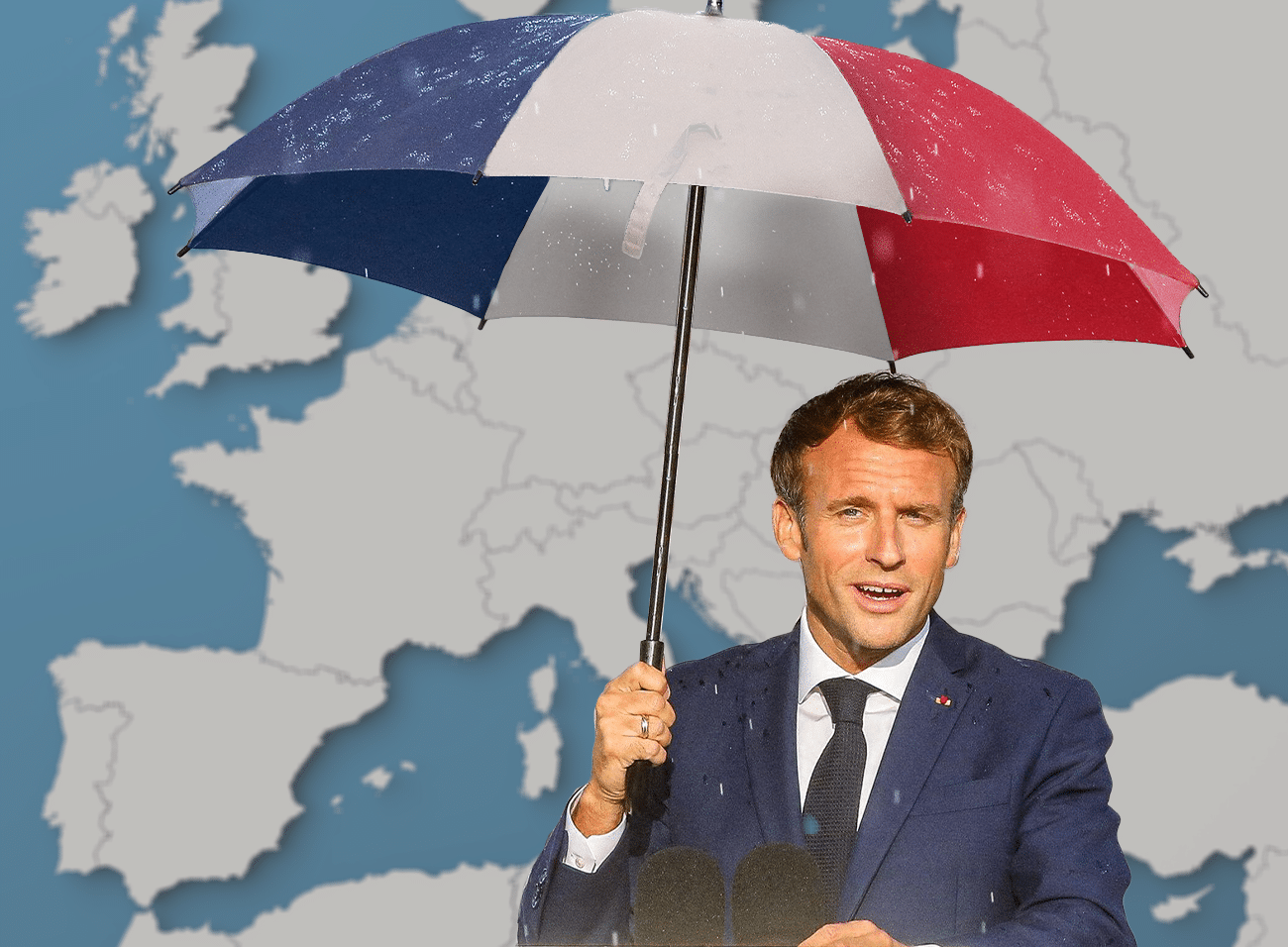
France knows this. That's why they aren't proposing a shared weapon. They're proposing a shared umbrella. They want Europe to coordinate its conventional forces while relying on the French nuclear backstop as the ultimate insurance policy.
Why conventional forces still matter
Nukes don't solve everything. You can't use a nuclear missile to stop a cyberattack or a small-scale border incursion. This is "grey zone" warfare, and it's where Europe is most vulnerable right now.
If Europe leans too hard on the French deterrent, they might neglect their tanks, drones, and artillery. You need a ladder of escalation. If the only options are "do nothing" or "start World War III," you've already lost. France is pushing for a "Strategic Compass" that forces EU members to beef up their own military spending. They want a continent that can fight a conventional war so that the nukes never have to be used.
The Russian factor
Let's be blunt. Russia has spent the last decade modernizing its nuclear triad. They've developed hypersonic missiles that are incredibly hard to intercept. They've used nuclear signaling as a tool of intimidation throughout the war in Ukraine.
When Putin rattles the saber, he's trying to paralyze European decision-making. He wants the West to be too afraid to send tanks or long-range missiles. France’s role is to be the counter-weight. By maintaining a credible, modern, and independent force, Paris signals that nuclear blackmail goes both ways.
France's unique position in the 2026 security landscape
As we look at the current state of play, France is doubling down. They are investing billions in the third generation of their nuclear-powered ballistic missile submarines (SNLE 3G). These ships will be quieter and stay underwater longer than anything else in the European theater.
They are also upgrading the ASMPA missiles for the Air Force. This isn't just a vanity project. It's a clear message to the world: France is prepared to go it alone if it has to, but it would rather lead a united Europe.
The cost of sovereignty
Security isn't cheap. France spends about 13% of its entire defense budget on the nuclear deterrent. That’s a massive chunk of change that could be spent on hospitals or schools. But the French public generally supports it. There is a deep-seated belief in "Grandeur"—the idea that France must be a top-tier power to have a say in its own destiny.
Other European countries are starting to realize that they might have to help foot the bill. Not by buying French nukes, but by investing in the infrastructure and conventional forces that make the French umbrella viable.
What happens next for European defense
Stop waiting for a miracle from across the Atlantic. The "strategic autonomy" Macron keeps talking about isn't just a French buzzword anymore; it's a survival strategy.
If you're tracking European security, watch the joint military exercises. Watch the procurement of the Future Combat Air System (FCAS). These are the real-world indicators of whether Europe is actually ready to stand on its own two feet.
The next step for European leaders is clear. They need to stop treating the French nuclear offer as a threat to NATO and start seeing it as a necessary backup. That means integrating command structures and being honest about what "vital interests" really mean in 2026. Europe has the wealth and the technology to defend itself. It just needs the political will to admit that the old world is gone.
Start by pressuring your local representatives to support a unified European defense budget that prioritizes domestic production over American imports. It's time to build a continent that doesn't just hope for peace but enforces it.