The headlines are shouting about a "return to reason" while the United Arab Emirates issues stern warnings to Tehran. It is the standard geopolitical script: an attack occurs, a regional power flexes its rhetorical muscles, and the world waits for the inevitable escalation or the hollowed-out "de-escalation" that solves nothing. But this narrative is built on a fundamental misunderstanding of how power actually functions in the Persian Gulf.
If you think the UAE is operating from a position of military or diplomatic strength when it "warns" Iran, you are reading the map upside down.
The reality is far more uncomfortable. The UAE isn’t warning Iran because it’s ready for a fight. It’s warning Iran because it is the most vulnerable high-value target on the planet. For a nation that has spent decades branding itself as a frictionless, futuristic hub of global capital, even a single drone strike isn't just a security breach—it is an existential threat to its business model.
The Glass House Fallacy
Security analysts love to talk about "deterrence" as if it’s a simple math equation involving F-35s and missile defense batteries. This is the first mistake. In the Gulf, deterrence is a myth.
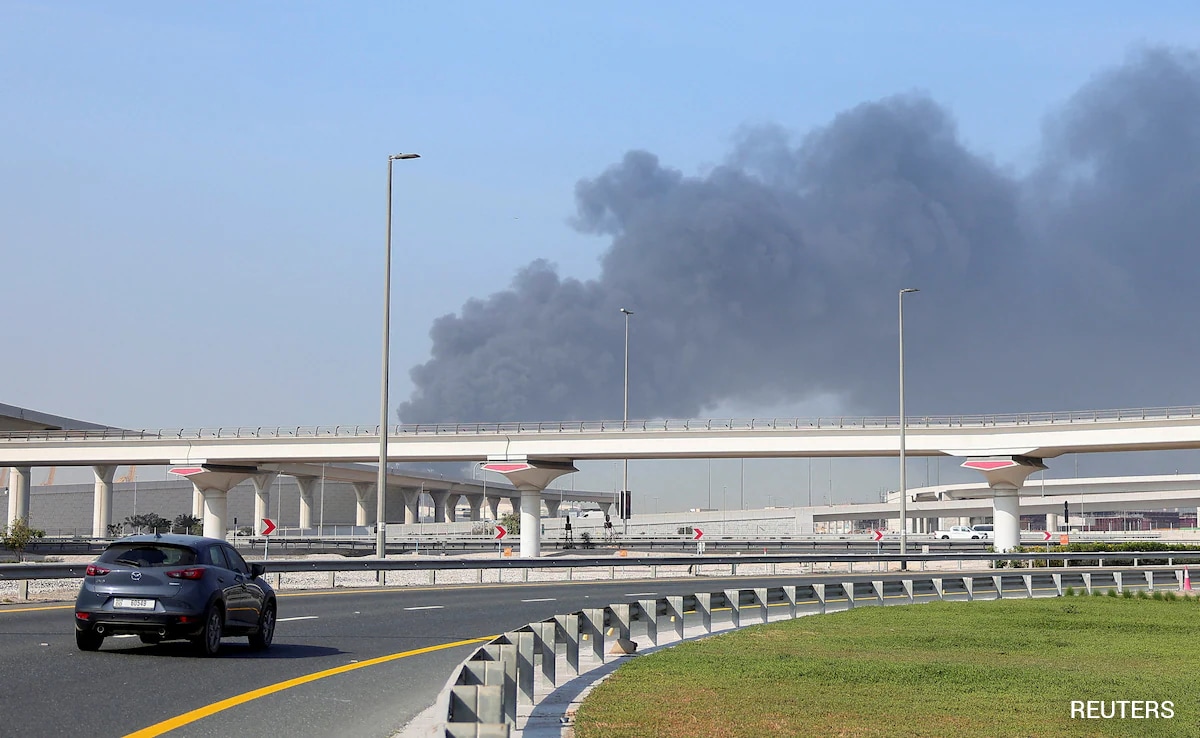
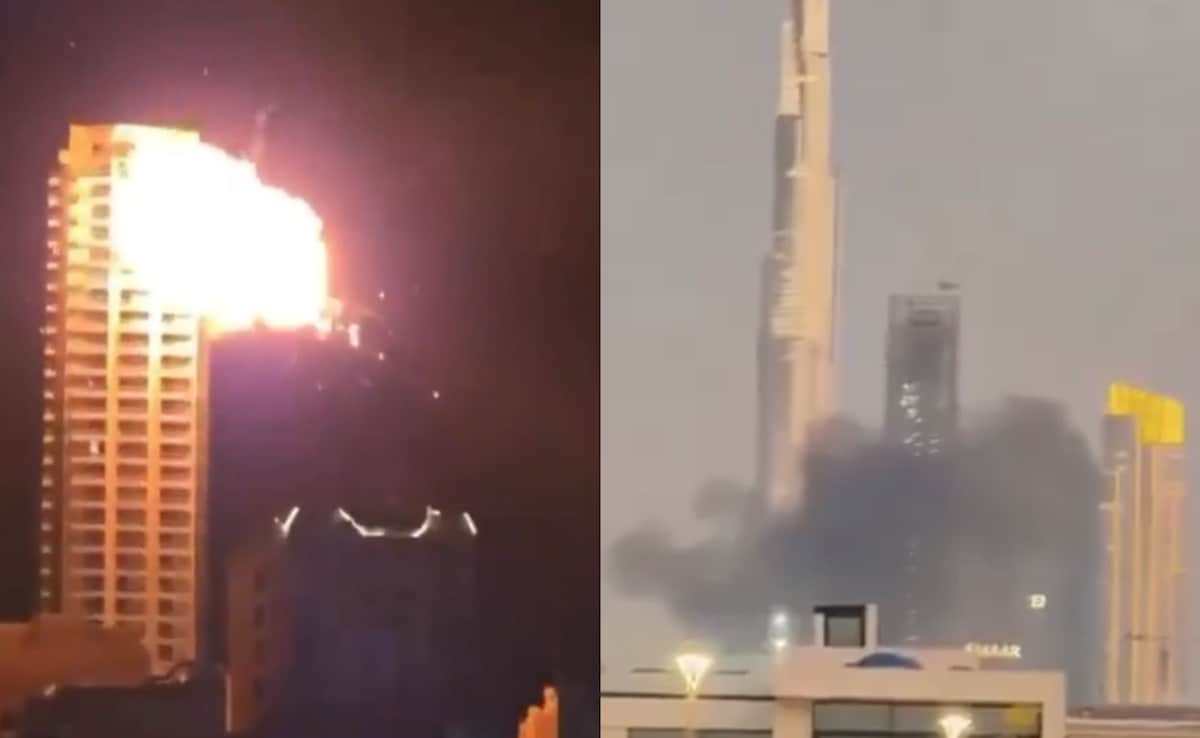
The UAE has built a world-class infrastructure on a foundation of absolute stability. Dubai and Abu Dhabi are not just cities; they are physical manifestations of global confidence. When Houthi rebels or Iranian proxies launch projectiles toward the Burj Khalifa or the ADNOC refineries, they aren't just aiming for steel and glass. They are aiming at the insurance premiums of every shipping vessel in the Jebel Ali port. They are aiming at the flight schedules of Emirates and Etihad.
I have sat in boardrooms where the mere mention of regional "friction" causes a 15% drop in projected foreign direct investment. You cannot be both the world’s playground and a frontline combatant. The "Return to Reason" rhetoric isn't a show of force; it’s a desperate plea for the status quo.
The UAE knows that in a total kinetic conflict, Iran has much less to lose. Iran's economy is already a scarred, sanctioned, and largely insular machine. The UAE’s economy is a delicate, interconnected web. If Iran loses a refinery, it's a setback. If the UAE loses its reputation for safety, the capital flight would be faster than a hypersonic missile.
The Myth of the American Shield
The lazy consensus in Western media is that the UAE can afford to be bold because the United States stands behind it. This is 20th-century thinking applied to a 21st-century mess.
The U.S. "security guarantee" is currently a series of broken promises and shifting priorities. Washington is pivoted so hard toward the Pacific that it has developed a permanent crick in its neck. The UAE saw the lukewarm response to the 2019 Abqaiq–Khurais attack in Saudi Arabia. They saw the chaotic withdrawal from Afghanistan. They know that a "warning" backed by American steel is only as strong as the current administration’s polling numbers.
Relying on a foreign superpower for your primary defense is like renting a sprinkler system for a house made of dry hay. You don't own the switch, and the landlord might decide your neighborhood isn't worth the water.
Asymmetric Math is Not in Your Favor
Let’s look at the actual physics of the threat. The cost-to-kill ratio is catastrophically skewed against the UAE.
A single "suicide" drone, built with off-the-shelf components and crude GPS guidance, might cost $20,000. To shoot it down, the UAE utilizes a THAAD or Patriot missile interceptor that costs between $2 million and $4 million per shot.
$$Cost Ratio = \frac{Interceptor Cost}{Threat Cost}$$
In this case:
$$\frac{3,000,000}{20,000} = 150:1$$
You don't need to be a hedge fund manager to see that this is a losing trade. Iran and its proxies can afford to lose 149 drones if the 150th hits a desalination plant. The UAE cannot afford to fire its way out of a sustained swarm. Military hardware is a sedative, not a cure. It gives the illusion of safety while the underlying vulnerability remains unaddressed.
The Economic Suicide of Escalation
The "tough talk" coming out of Abu Dhabi ignores the fact that Iran is a primary trading partner. This is the paradox that most "experts" ignore because it doesn't fit into a neat "Good vs. Evil" box.
Despite the political vitriol, thousands of Iranian-owned businesses operate in Dubai. The UAE serves as a vital lung for an Iranian economy suffocated by sanctions. This is not a bug; it’s a feature. The UAE’s real power has always been its ability to be the middleman for everyone, even its enemies.
When the UAE "warns" Iran, it is effectively threatening to punch its own customer in the face. If the UAE actually followed through with a hardline stance—total border closures, seizure of assets, active military participation—it would trigger a self-inflicted economic wound that no amount of oil wealth could bandage.
The Sovereignty Trap
People often ask: "Why doesn't the UAE just build a more robust domestic military?"
They have. The UAE military is pound-for-pound the most capable in the Arab world. They didn't earn the nickname "Little Sparta" by accident. But "Little Sparta" is still "Little."
A country with a small citizen population cannot sustain a long-term war of attrition against a neighbor with 85 million people and a deep-seated culture of "resistance" (Muqawama). The UAE’s military relies heavily on foreign contractors and Western technology. In a real, sustained conflict, the supply lines for parts and the "mercenary" logistics would be the first things to crumble.
Sovereignty in the modern age isn't about who has the biggest gun; it's about who controls the most vital nodes of the network. By engaging in the rhetoric of threats, the UAE is playing Iran's game—a game where the loudest voice wins, and the most fragile actor loses.
Stop Asking if the UAE Can Win
The question isn't whether the UAE can defeat Iran in a dogfight. The question is: Can the UAE survive the process of trying to win?
The answer is a resounding no.
The conventional wisdom says that "reason" must prevail. I argue that "reason" has nothing to do with it. What we are seeing is the friction between an 18th-century territorial power (Iran) and a 21st-century corporate state (the UAE).
The corporate state cannot win a traditional war because war is bad for the quarterly earnings report. Iran knows this. They don't need to occupy Abu Dhabi. They just need to make it look "dangerous" for six months. If the expats leave and the tankers stop coming, the UAE as we know it ceases to exist.
The Pivot to Pragmatism
The only way out for the UAE isn't more "warnings" or more Patriot batteries. It is a ruthless, cold-blooded pragmatism that the West often mistakes for weakness.
The UAE has already begun this shift, despite the occasional flare-up in rhetoric. They are talking to Tehran. They are hedging their bets with China. they are diversifying their security portfolio because they know the "Return to Reason" is actually a "Return to Reality."
The reality is that you cannot threat-manage your way out of a geography problem. You either find a way to live with a predator neighbor, or you accept that your glass towers are just very expensive targets.
The UAE's biggest threat isn't an Iranian missile. It's the belief that they can behave like a traditional military power without destroying the very thing that made them relevant in the first place.
Don't buy the "tough talk." It's the sound of a very wealthy man trying to convince a desperate man that he isn't afraid of a fire.
If the fire starts, the wealthy man loses everything. The desperate man just gets warm.
Stop looking at the missiles and start looking at the insurance charts. That’s where the real war is being lost.