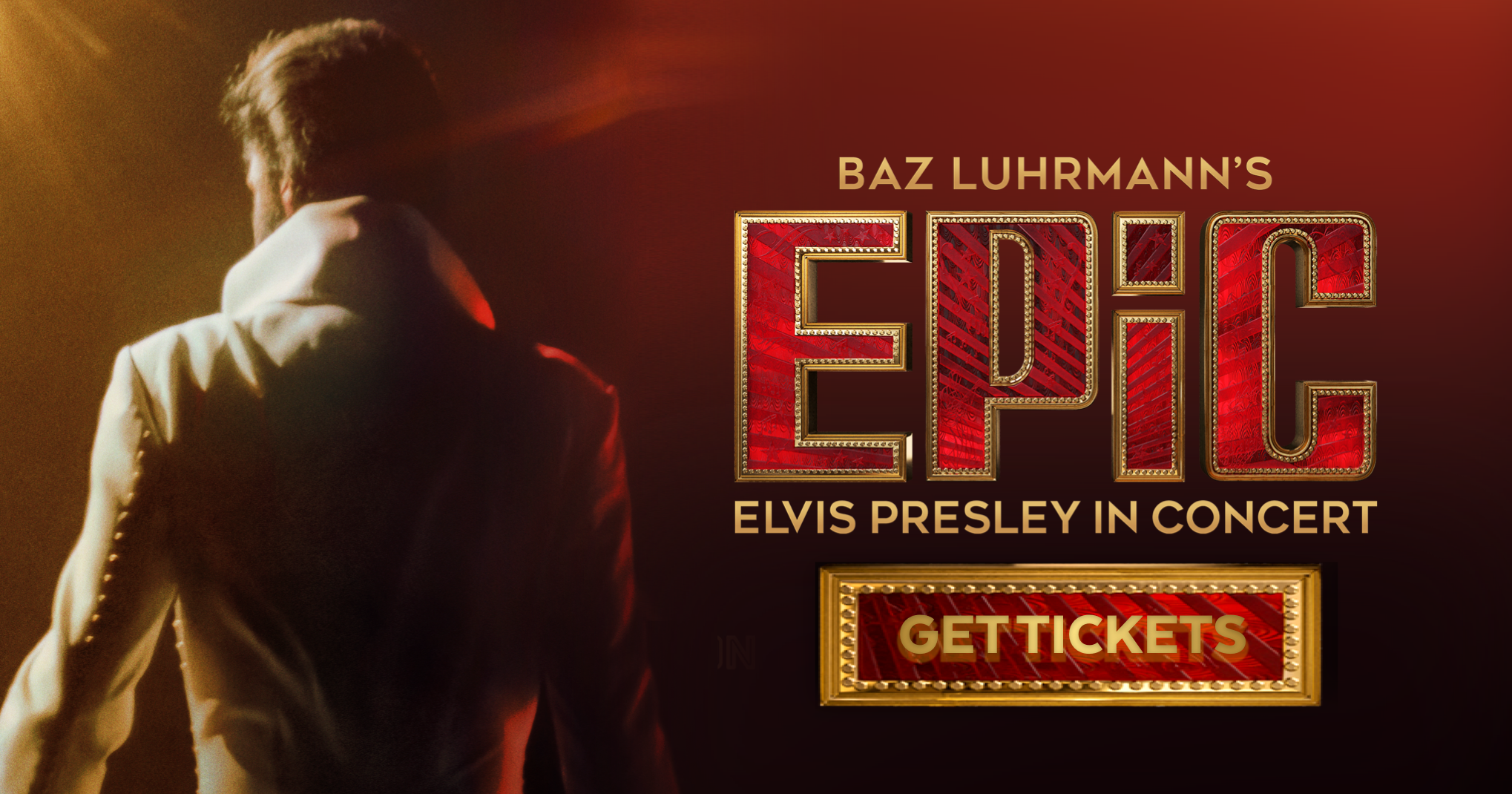
Fourteen million dollars. In the era of billion-dollar superhero fatigue and $200 million streaming "events" that vanish from the cultural consciousness in forty-eight hours, the industry press is treating the opening weekend of EPiC like a coronation. They see a "win" for the music documentary. They see a "resurgent" King of Rock and Roll.
They are wrong.
What we actually witnessed wasn’t the birth of a new era for music cinema; it was a desperate, well-funded autopsy. If you think a $14 million haul for a film about a man who has been dead since 1977 is a sign of a healthy genre, you aren’t looking at the balance sheet. You’re looking at a ghost.
The Mirage of the Mid-Budget Miracle
The "lazy consensus" among entertainment analysts is that EPiC represents a sustainable path forward for non-fiction storytelling. The logic goes like this: spend moderately on archival footage, lean on a legacy IP (Intellectual Property), and watch the Boomers flock to the theater with their nostalgic wallets open.
But let’s talk about the cost of "free" footage. Having spent a decade navigating the shark-infested waters of music licensing, I can tell you that "archival" is often shorthand for "prohibitively expensive." To get the rights to the Presley catalog—especially for a high-profile theatrical release—the production likely bled more in legal fees and sync rights than most indie films spend on their entire production.
When a film like EPiC pulls in $14 million, it isn't "winning." It is barely clearing the hurdle of its own marketing spend. To call this a victory for documentaries is like calling a lottery win a successful retirement strategy. It’s an outlier fueled by a singular, unrepeatable brand.
Why the Music Doc is Actually Flatlining
The modern music documentary has become a glorified EPK (Electronic Press Kit). We have moved away from the gritty, revelatory truth of Gimme Shelter or The Last Waltz and into the era of "Authorized" hagiography.
Look at the credits of any major music doc from the last five years. You will find the artist, their manager, or their estate listed as Executive Producers. This isn't journalism. This isn't even art. It’s brand management disguised as soul-searching.
EPiC succeeds because it is safe. It offers the illusion of depth while strictly adhering to the estate-approved narrative. The industry calls this "access." I call it a hostage situation. When the subject owns the lens, the truth is the first casualty.
- The "Vulnerability" Script: Every modern doc follows the same beat. The star cries about the "loneliness of fame" in Act II to earn the right to sell you a concert ticket in Act III.
- The Archival Crutch: Filmmakers are using grainy 16mm footage to mask a lack of actual insight. If the story is weak, just throw in a never-before-seen clip of the subject eating a sandwich in 1972.
- The Absence of Friction: Where are the antagonists? In the current landscape, every person interviewed is a cheerleader. Without conflict, you don't have a movie; you have a LinkedIn testimonial with a better soundtrack.
The $14 Million Ceiling
The obsession with the $14 million figure ignores the terrifying reality of the "ceiling." For a legacy act with 100% global brand recognition, $14 million is shockingly low. It suggests that even the biggest names in history can no longer draw a mass audience to a theater for anything less than a $200 million scripted biopic.
Consider the mechanics of the theatrical window. After the exhibitors take their 50% cut, and the P&A (Prints and Advertising) costs are recouped, that $14 million evaporates. The film isn't making money; it's serving as a loss-leader for the Presley estate’s streaming royalties and merchandise sales.
If you are a filmmaker trying to pitch a documentary about a rising artist—someone who actually has something new to say—this "win" for EPiC is actually your death warrant. Executives will now point to this and say, "If Elvis only did $14 million, why would we fund your project on a contemporary artist for $2 million?"
The Counter-Intuitive Truth: We Need Less Access, Not More
The "People Also Ask" sections of search engines are filled with queries like "How much of EPiC is real footage?" or "Did the Presley family approve EPiC?" These questions prove the audience is suspicious. They know they are being sold a curated version of reality.
The path to saving the genre isn't more "unseen footage." It’s less cooperation.
The best music documentaries are the ones the estates hated. Think about Dig!, which captured the self-destructive rivalry between The Dandy Warhols and The Brian Jonestown Massacre. It worked because the filmmaker wasn't on the payroll.
If we want to see a real "win" for the box office, we need to stop making movies with stars and start making movies about them. We need the "Unauthorised" back. We need the friction. We need the mess.
The Nostalgia Trap
The industry is currently addicted to the "Nostalgia Loop." We are cannibalizing the past because we are too terrified to invest in the present. EPiC is a symptom of a culture that would rather watch a dead man sing songs they already know than discover a living artist who might challenge them.
This isn't just an entertainment problem; it's a business failure. By focusing on the "safe" $14 million from a dying demographic, studios are failing to build the icons of tomorrow.
Imagine a scenario where that same $14 million marketing budget was spent on a docuseries following a radical new movement in the underground scene. It wouldn't hit $14 million in week one. But it might create a cultural shift that lasts a decade. Instead, we got another two hours of the King.
Stop Calling it a Documentary
Let’s be precise. EPiC is a "Legacy Asset Activation."
The term "documentary" implies a search for truth ($$truth = \text{fact} - \text{bias}$$). When the bias is the primary investor, the equation breaks. We are seeing the rise of "Industrial Cinema"—films produced by the very industries they claim to examine.
- Tech docs funded by VC firms.
- Sports docs produced by the leagues.
- Music docs owned by the labels.
If you want to understand the music industry, don't watch EPiC. Watch the stock price of the holding companies that own the publishing rights. That’s where the real story is.
The Actionable Order for the Audience
Stop rewarding the safe choice.
If you want the "music doc" to survive, you have to stop paying for the sanitized versions. Search out the independent features that don't have a "legacy" logo at the start. Support the filmmakers who are currently being sued by estates for trying to tell the truth.
The $14 million "win" for EPiC isn't a sign of life. It’s the sound of a lid closing on a very expensive coffin.
If you’re satisfied with a $14 million tribute act, then the King really is dead, and we’re just the ones paying for the flowers.
Go find something that hasn't been approved by a legal department.