The morning air in Peshawar usually smells of diesel exhaust and frying paratha, a heavy, predictable scent that grounds the city. But on this particular Tuesday, the air tasted of copper and scorched rubber. It was the scent of a city holding its breath.
Less than a mile from the high, fortified walls of the United States consulate, the friction of global politics met the heat of the pavement. For those watching from a distance, it was a headline. For those standing in the middle of the intersection, it was a sensory overload of screaming, sirens, and the rhythmic thud of tear gas canisters hitting the dirt. If you liked this piece, you might want to check out: this related article.
By sunset, six people were dead.
The Geography of a Flashpoint
The American consulate in Peshawar is not just a building. It is a symbol wrapped in concrete and concertina wire, sitting in a city that has long served as the gateway between the rugged tribal lands and the rest of Pakistan. When a spark ignited—this time fueled by a controversial film produced thousands of miles away—the consulate became the gravity well for every ounce of local frustration. For another look on this event, check out the latest coverage from Associated Press.
A protest starts as a murmur. It is a collection of men on motorbikes, a few banners, and a megaphone crackling with static. But crowds in Peshawar possess a fluid, frightening physics. They grow exponentially. Within hours, the murmur became a roar of thousands. They weren't just protesting a movie; they were reacting to years of drone strikes, shifting alliances, and a sense that their sovereignty was as thin as the paper their visas were printed on.
Consider a shopkeeper we will call Javid. He does not exist in the police reports, but he represents the thousands who watched from behind half-closed metal shutters. Javid does not care about international cinema. He cares about the glass in his storefront and the fact that his youngest son had to walk home from school through a cloud of chemical smoke. From his perspective, the "clash" isn't a political event. It is a disaster of logistics and shattered peace.
The Anatomy of the Escalation
The thin line between a demonstration and a riot is often drawn by a single stone.
As the crowd surged toward the "Red Zone"—the highly protected area housing diplomatic missions—the Pakistani police found themselves in an impossible vice. To their backs was the consulate, an international territory they were treaty-bound to protect. In front of them were their own countrymen, neighbors, and cousins.
- The Perimeter: Police initially used shipping containers to block the main arteries. These rusted steel boxes are the modern battlements of Pakistani urban warfare.
- The Escalation: When the first wave of protesters climbed the containers, the police responded with tear gas. The wind, fickle and cruel, swirled the sting back into the eyes of the officers as much as the crowd.
- The Breaking Point: Stones flew. Then, the distinct, sharp pop of small arms fire echoed through the corridor.
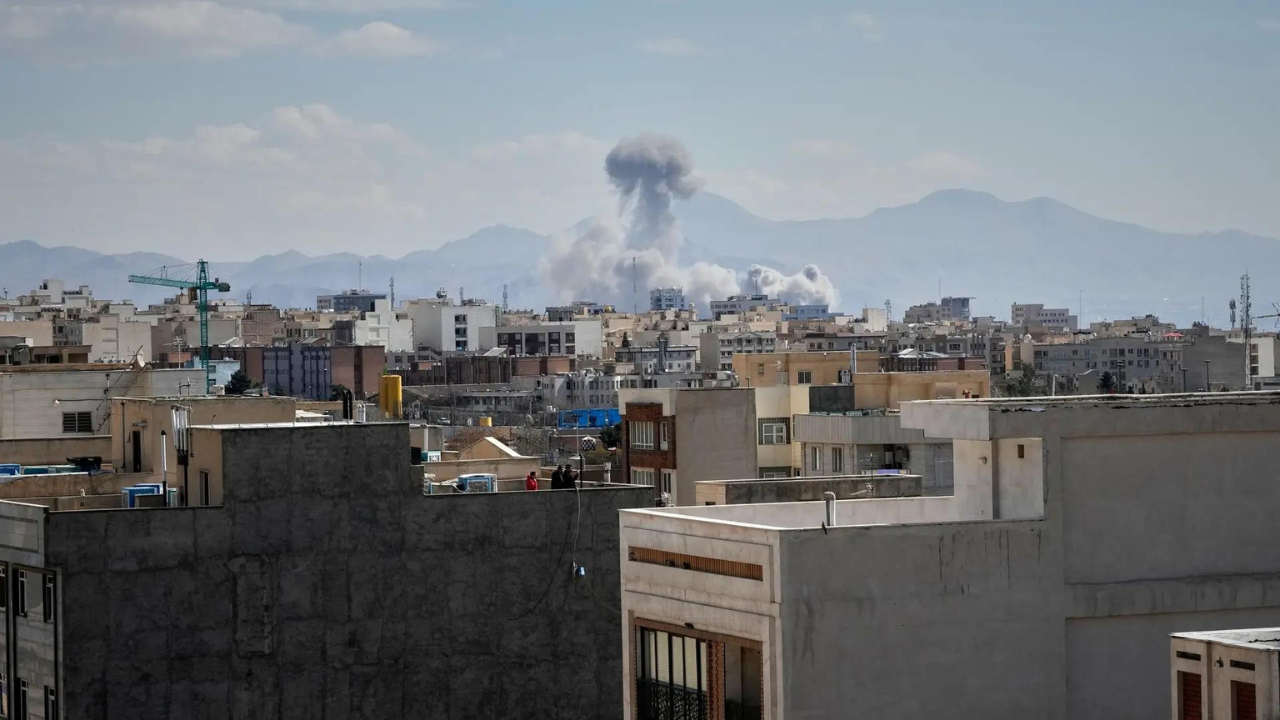
The chaos that followed was a blur of kinetic energy. Demonstrators set fire to a nearby police post. Thick, oily black smoke rose into the white-hot sky, visible from the hills of the Khyber Pass. It wasn't just a protest anymore. It was a siege.
The Human Toll Behind the Numbers
We often consume the number "six" with a detached sense of tragedy. It is a statistic small enough to be manageable but large enough to be "news." But those six lives were not uniform.
Among the dead was a police officer, a man who likely woke up that morning, kissed his children, and complained about the heat. He died defending a wall for a country he would likely never visit. Two of the protesters were teenagers, swept up in the adrenaline of the moment, their lives ending before they had ever truly begun to understand the complexities of the slogans they were shouting.
The violence didn't stay confined to the consulate gates. It bled into the Khyber Road, into the residential pockets where families huddled in internal rooms, away from the windows. The sound of a mob is unlike any other noise on earth. It is a low-frequency vibration that you feel in your teeth. It is the sound of collective identity erasing individual morality.
The Invisible Stakes
Why does a clash in a frontier city in Pakistan matter to someone sitting in a coffee shop in London or an office in D.C.?
Because these walls are becoming thinner. The digital world ensures that a provocation in California can trigger a funeral in Peshawar in less than twenty-four hours. We live in an era of "hyper-proximity," where the emotional fallout of an event travels faster than the facts.
The consulate stands as a fortress of high-level diplomacy, but its safety relies entirely on the local police force—men paid a fraction of a diplomat’s salary to stand in the way of a mob. When that bridge collapses, the cost is measured in blood.
The tragedy of the Peshawar clash lies in its repetition. It is a script written in the 1970s, refined in the 90s, and played out in high definition today. The underlying grievances—poverty, a perceived lack of respect, and the friction of foreign intervention—remain unaddressed, simmering just below the surface like a peat fire.
The Silence of the Aftermath
By evening, the army had been called in. The heavy tread of boots replaced the frantic scuffle of sandals. The protesters dispersed into the labyrinthine alleys of the old city, leaving behind a graveyard of debris.
The consulate remained standing. The walls were charred, and the "Red Zone" was littered with the remnants of the day: thousands of spent casings, thousands of stones, and the heavy, lingering smell of the gas.
The families of the six will now begin the long, agonizing process of mourning in a city that has seen too much of it. There will be no grand monuments for them. Their names will fade from the news cycle within forty-eight hours, replaced by the next geopolitical tremor.
The stones have been cleared. The shipping containers have been moved. The diesel and paratha smell has returned to the air. But under the fingernails of the city, the grit of that afternoon remains, a reminder that peace is not the absence of conflict, but merely the time it takes to reload.
The sun sets over the Hindu Kush, casting long, jagged shadows across the valley. In the quiet, you can almost forget the screaming. But the scorched patches on the pavement do not wash away with the rain. They stay, dark and permanent, marking the spot where the world's grandest arguments met their smallest, most violent conclusions.
What do you think happens to the seventh person in that crowd—the one who threw a stone but survived? Is he more or less angry today?