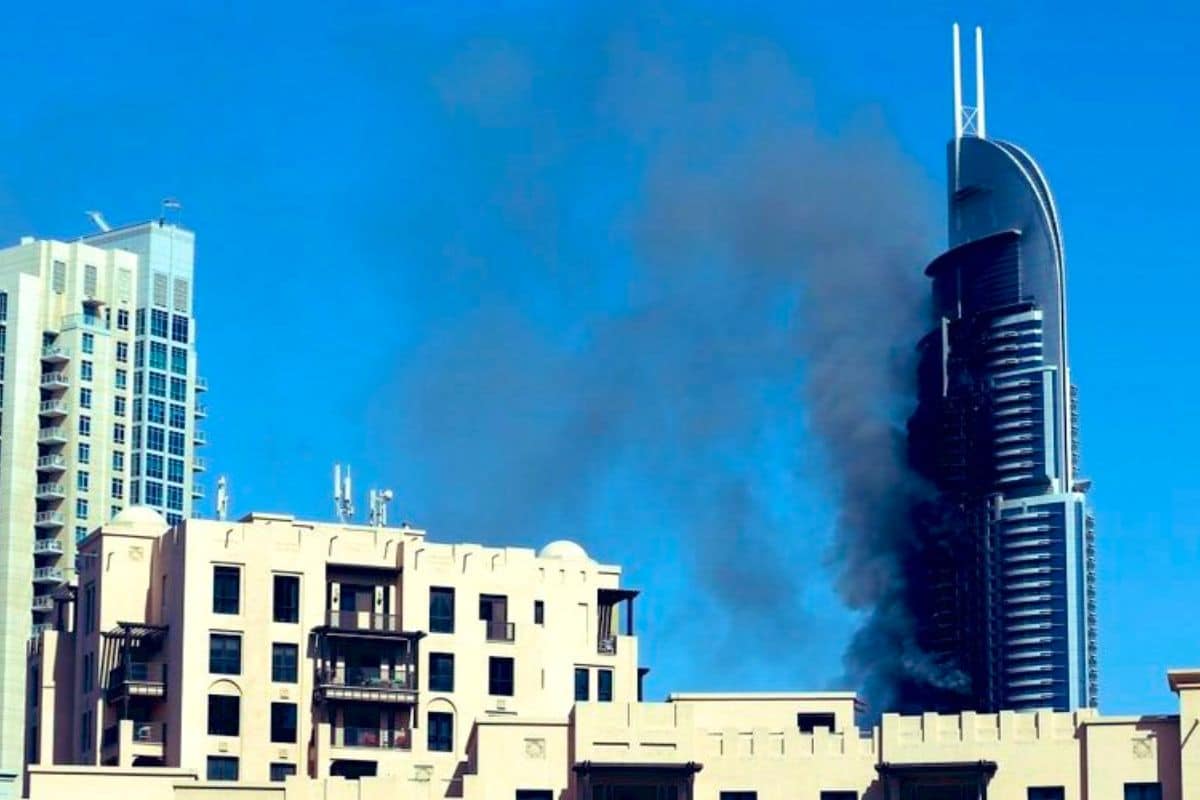
Dubai is currently grappling with a dual-front crisis that exposes the structural vulnerabilities of a city built on the promise of invincibility. While the UAE’s defense systems successfully neutralized a coordinated strike of seven missiles and 16 drones today, the victory is overshadowed by an impending meteorological disaster. Heavy rainfall is projected to paralyze the region within hours, a threat that historically causes more internal chaos in the Emirates than foreign munitions ever could. This convergence of geopolitical aggression and infrastructure failure reveals a truth the Gulf’s marketing machines rarely acknowledge. The world’s most advanced "smart city" remains remarkably fragile when the sky turns hostile.
The Iron Dome of the Desert
Intercepting 23 separate aerial threats in a single day is a feat of engineering that few nations can replicate. The UAE has spent decades and billions of dollars curating a multi-layered defense shield, primarily relying on the Terminal High Altitude Area Defense (THAAD) and the Patriot systems. These aren't just military assets; they are the insurance policies for a trillion-dollar real estate market. Learn more on a related topic: this related article.
The "war-like situation" currently described by local reports isn't just about the physical impact of shrapnel falling over the desert. It is about the psychological impact on global capital. When a drone is downed over a logistical hub like Jebel Ali or a residential icon like the Marina, the primary casualty is the narrative of Dubai as a "safe haven." Modern warfare in the Middle East has shifted from ground incursions to this type of persistent, low-cost harassment. It costs an adversary a few thousand dollars to launch a suicide drone; it costs the UAE millions to shoot it down.
This economic asymmetry is the real "how" behind the current tension. The aggressors aren't necessarily looking to level a skyscraper. They are looking to raise the cost of business until the investors flee. More reporting by The Washington Post highlights comparable perspectives on the subject.
Why Rain is More Dangerous than Missiles
While the military can track a missile with nanosecond precision, the city’s civil engineering remains bafflingly ill-equipped for water. In Dubai, a heavy rainstorm is not a weather event. It is a systemic collapse.
The city was designed with a "dry-use" philosophy. Because rainfall was historically rare, the massive investment required for deep-bore storm drains and subterranean runoff channels was deemed unnecessary during the rapid expansion of the 1990s and 2000s. Instead, the city relies on a surface-level strategy. When the water hits the asphalt, it has nowhere to go.
The consequences are immediate:
- Logistical Paralysis: The arterial highways, including Sheikh Zayed Road, become impassable, cutting off the supply chain between the ports and the city center.
- Structural Erosion: The rapid accumulation of water undermines the foundations of older "luxury" developments that were built during the construction boom without adequate waterproofing.
- Electrical Hazards: Massive power surges and outages occur as water infiltrates the high-density electrical grids that power the city's cooling systems.
The "war-like situation" is amplified because the emergency services are forced to split their focus. While the military monitors the skies for the next wave of drones, the municipal teams are scrambling to deploy every available vacuum truck in the country to literally suck the water off the streets. It is a manual solution for a high-tech city.
The Cloud Seeding Complication
There is a whispered factor that many analysts avoid. The UAE’s aggressive National Center of Meteorology (NCM) cloud-seeding program. For years, the Emirates has flown salt-flaring planes into passing clouds to squeeze every drop of moisture from the atmosphere. It is a triumph of human will over nature.
However, when a massive natural storm front approaches—like the one currently hitting the coast—the impact of previous seeding operations can lead to "extreme accumulation." While the government often denies that seeding contributes to floods, the timing is often too close for comfort. You cannot engineer the atmosphere for years and then claim total innocence when the atmosphere reacts violently. The push for water security through technology may be inadvertently lowering the city’s defense against flash floods.
The Fragility of the Hyper-Connected Hub
Dubai operates on a "just-in-time" model. From food imports to tourism flows, everything is calibrated for a world where the weather is sunny and the borders are secure. Today’s events have shattered both assumptions simultaneously.
When the airport—the world’s busiest for international travel—is threatened by drones, the ripple effect hits London, New York, and Singapore within the hour. When the runways then flood because the drainage can’t handle a three-inch downpour, the global aviation network experiences a heart attack.
We are seeing the limits of the "Bling and Bolt" architecture. The city has the world's tallest building, but it doesn't have a sewer system that can handle a week of European-style weather. It has state-of-the-art interceptors, but it cannot stop a $500 drone from scaring away a thousand potential residents.
The Economic Aftermath
Real estate developers in the UAE are currently in a state of quiet panic. The selling point of the "Golden Visa" and the move to Dubai was peace and predictability. If the "war-like situation" becomes a recurring seasonal headline, the premium on Dubai property will start to evaporate.
Insurance companies are already recalculating. Force majeure clauses are being scrutinized. If a drone is intercepted but the debris destroys a penthouse, who pays? If a flood ruins a fleet of supercars parked in a basement garage that lacked a pump system, who is liable? These are the gritty, unglamorous questions that define the current crisis.
The UAE’s leadership is known for its ability to pivot. They will likely use this week’s chaos as a catalyst for a massive new infrastructure spend. Expect to see "The Great Drain" or some other multi-billion dollar project announced soon. But for today, the residents are left watching the sky for two very different types of threats.
One threat glows on a radar screen. The other is a dark cloud that no missile can stop.
Check the seals on your ground-floor entrances and ensure your digital backups are off-site before the power grids take their first hit tonight.