The myth of the untouchable Middle Eastern transit hub died at roughly 1:00 a.m. local time when the first Iranian-made drone debris sliced through the terminal glass at Zayed International Airport. One Asian national is dead, and at least seven others are wounded following the interception of a suicide drone over Abu Dhabi's primary gateway. For decades, the glittering terminals of the UAE and Qatar operated under an unwritten rule of geopolitical immunity, serving as the neutral, air-conditioned lungs of global commerce. That era is over.
While the competitor press focuses on the singular tragedy of a casualty at the gate, they miss the systemic collapse occurring behind the scenes. This isn't just a story about a "conflict continuing"—it is a post-mortem of the global "hub-and-spoke" model that has defined air travel for thirty years.
The Mirage of Neutral Airspace
For the first time since the 1990s, the world's most vital air corridors are effectively severed. The death at Zayed International was not a direct hit by a ballistic missile, but the lethal byproduct of a Patriot interceptor doing its job. When air defenses meet incoming suicide drones over a civilian tarmac, the resulting rain of shrapnel ignores the "safe" zones designated by travel apps.
The sheer volume of the Iranian retaliation—reportedly 137 missiles and over 200 drones—has overwhelmed the "Iron Dome" style protections the Gulf states relied upon. In Dubai, smoke from the DXB concourse wasn't just a localized fire; it was a signal to every major carrier from British Airways to Lufthansa that the region’s insurance premiums were about to go vertical.
- Dubai (DXB): Sustained structural damage to a concourse; four staff members injured.
- Abu Dhabi (AUH): One confirmed fatality due to falling debris; flight operations suspended indefinitely.
- Kuwait International: Targeted by drones, resulting in significant runway damage.
The strategy here is transparently brutal. Iran is not trying to occupy the UAE; it is trying to de-platform it. By turning these ultra-modern airports into kinetic war zones, Tehran is forcing the hand of global aviation. If you cannot guarantee the safety of a 400-seat A380 on the tarmac, you don't have a hub. You have an expensive liability.
The Logistics of a Sudden Shutdown
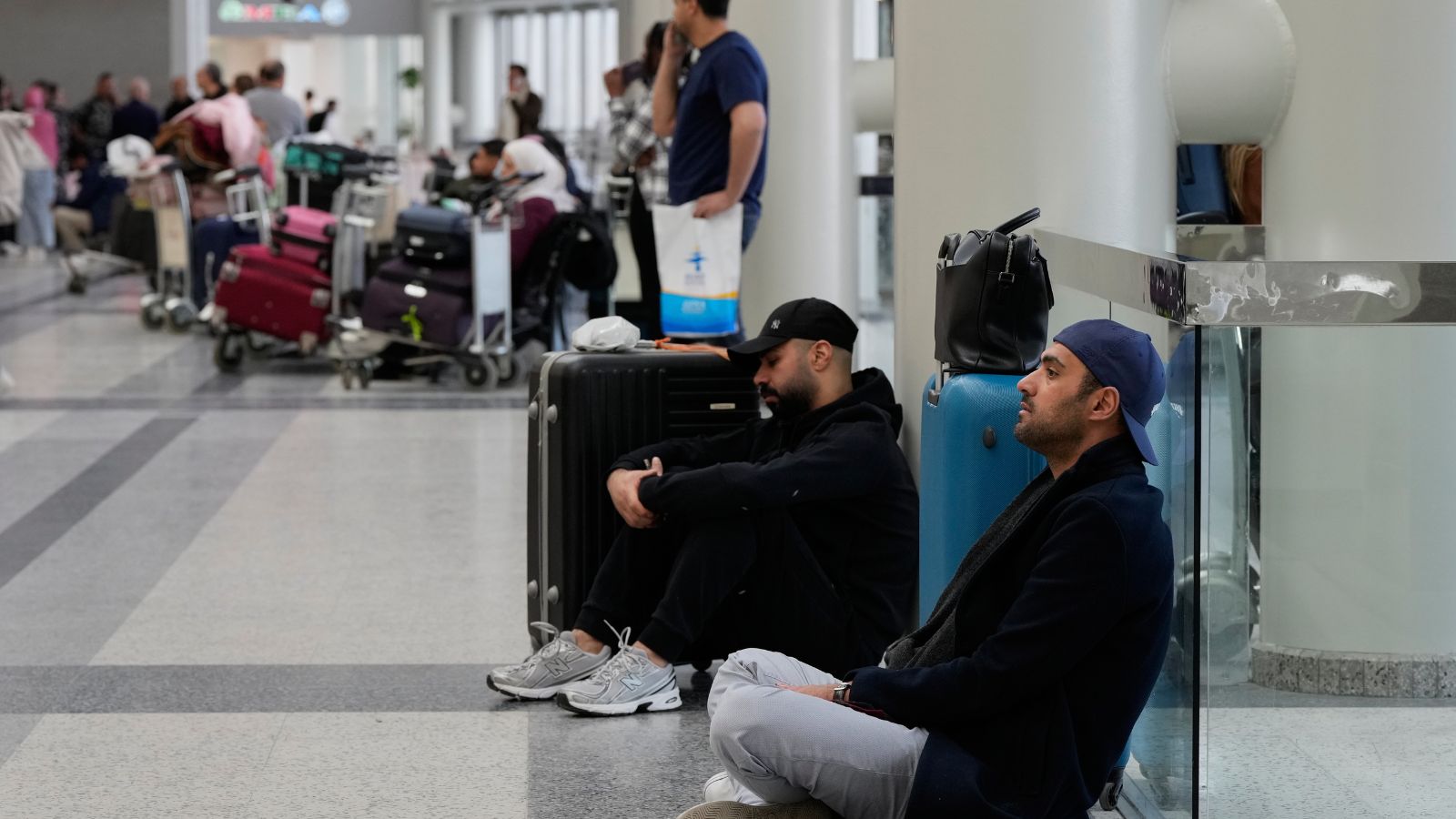
The human cost is visible on the terminal floors of Sydney, London, and Singapore. Because roughly one in nine international flights from Australia routes through the Gulf, the immediate closure of UAE, Qatari, and Kuwaiti airspace has left a quarter-million people in a legal and logistical limbo.
Carriers like Etihad and Emirates are not just dealing with "delays." They are facing a total evaporation of their business model. When a pilot over the Arabian Sea hears "airspace closed," the secondary options are grim. Rerouting around the conflict zone means adding four to six hours of fuel burn, crossing over central Africa or the northern stretches of the Russian-Mongolian border. Many aircraft simply don't have the range or the overflight permits ready to make that pivot mid-air.
The insurance industry’s reaction has been even swifter than the military response. Most retail travel policies explicitly exclude "acts of war." This leaves the stranded traveler—currently sleeping on a yoga mat in a Sydney terminal—to foot the bill for five-star hotel rates during a peak travel season. It is a harsh reminder that the "seamless" nature of modern travel is a fragile illusion maintained by the absence of high-altitude explosives.
The Collapse of the Tech-Enabled Transit
We were told that technology would make these disruptions manageable. Instead, we see the failure of automated rebooking systems. When 3,400 flights are cancelled in a 24-hour window, the algorithms choke. Travelers are finding that "real-time" status alerts are lagging behind the actual kinetic events on the ground. By the time an app tells a passenger their flight is "delayed," the runway has often already been cratered.
The true "investigative" angle here is the failure of regional deterrence. The Gulf monarchies spent hundreds of billions on Western defense systems specifically to prevent this scenario. Yet, a relatively low-cost swarm of Iranian drones managed to shut down the world’s busiest international airport. The cost-to-kill ratio is heavily skewed in favor of the aggressor. A drone costing $20,000 can effectively neutralize a multi-billion dollar aviation infrastructure by simply existing in its flight path.
Why the Hub May Never Recover
Even if a ceasefire were signed tomorrow, the psychological damage to the "Gulf Connection" is profound. For twenty years, travelers chose Dubai or Doha because they were the most efficient paths between East and West. They were the "safe" middle ground.
Now, that middle ground is a front line. The death at Abu Dhabi's airport proves that the "business as usual" approach in the Middle East was predicated on a stability that no longer exists. Frequent fliers are already looking toward the "Silk Road" routes through Istanbul or the long-haul "Project Sunrise" style direct flights that bypass the region entirely.
The aviation industry is built on the gold standard of "safety." Once you introduce the variable of falling missile debris into a terminal lobby, that standard is not just lowered—it is erased. The tragedy at Zayed International is not the end of the conflict, but the beginning of a massive, permanent realignment of how we move across the planet.
Western governments are already preparing "air bridges" through Turkey and Greece, but these are emergency measures, not long-term solutions. The reality is that the central nervous system of global flight has been hit, and the tremors are being felt in every airport from Heathrow to Changi. The "incident" at the airport wasn't an accident; it was a demonstration of a new reality where no terminal is truly out of reach.
The question for the traveler is no longer "Which airline has the best lounge?" but "Which route avoids the reach of a drone swarm?"
Aviation hasn't faced a crisis of this magnitude since 1945. The era of the invincible hub is over, replaced by a map where the shortest distance between two points is now the most dangerous.