The United States Department of State’s offer of a reward up to $3 million for information leading to the arrest or conviction of those financing Haitian gangs marks a shift from kinetic containment to financial decapitation. While traditional security interventions in Haiti have focused on boots-on-the-ground stabilization, this bounty targets the logistical backbone of criminal enterprises: the movement of capital that facilitates the illegal arms trade and sustains territorial control. To understand the efficacy of this strategy, one must analyze the gang structure as a decentralized corporate entity with specific revenue streams, overhead costs, and vulnerabilities to external liquidity shocks.
The Economic Architecture of Haitian Criminal Hegemony
Haitian gangs, specifically the Viv Ansanm coalition, do not operate as mere ideological insurgents; they function as extractive monopolies. Their survival depends on a continuous inflow of liquidity to pay foot soldiers and procure high-caliber weaponry, primarily sourced from the United States. The financial ecosystem of these groups rests on three primary pillars:
- Territorial Taxation (Extortion): Gangs control critical infrastructure, including the Port-au-Prince harbor and main arterial roads (National Roads 1 and 2). By imposing "tolls" on commercial transit, they capture a percentage of the national GDP at the source.
- Kidnap-for-Profit Modalities: Kidnapping serves as a high-margin revenue stream with low capital expenditure. The proceeds are often laundered through local businesses or converted into assets that are difficult to trace.
- Transnational Patronage: This is the specific target of the $3 million bounty. It involves the "grand financiers"—political and business elites who use gangs as private security or political enforcers in exchange for protection and a share of illicit profits.
The $3 million incentive is designed to increase the risk-to-reward ratio for these financiers. By putting a price on information, the U.S. government aims to induce "defection" within the inner circles of the Haitian elite, creating a "Prisoner’s Dilemma" where the first to provide actionable intelligence secures their own financial or legal future at the expense of the collective.
The Arms-Capital Feedback Loop
The fundamental mechanism driving Haitian instability is the feedback loop between illicit capital and firearm procurement. Gangs do not manufacture weapons; they import them. This requires access to the U.S. financial system or informal value transfer systems (IVTS) like hawala to move funds to straw purchasers in Florida and other states.
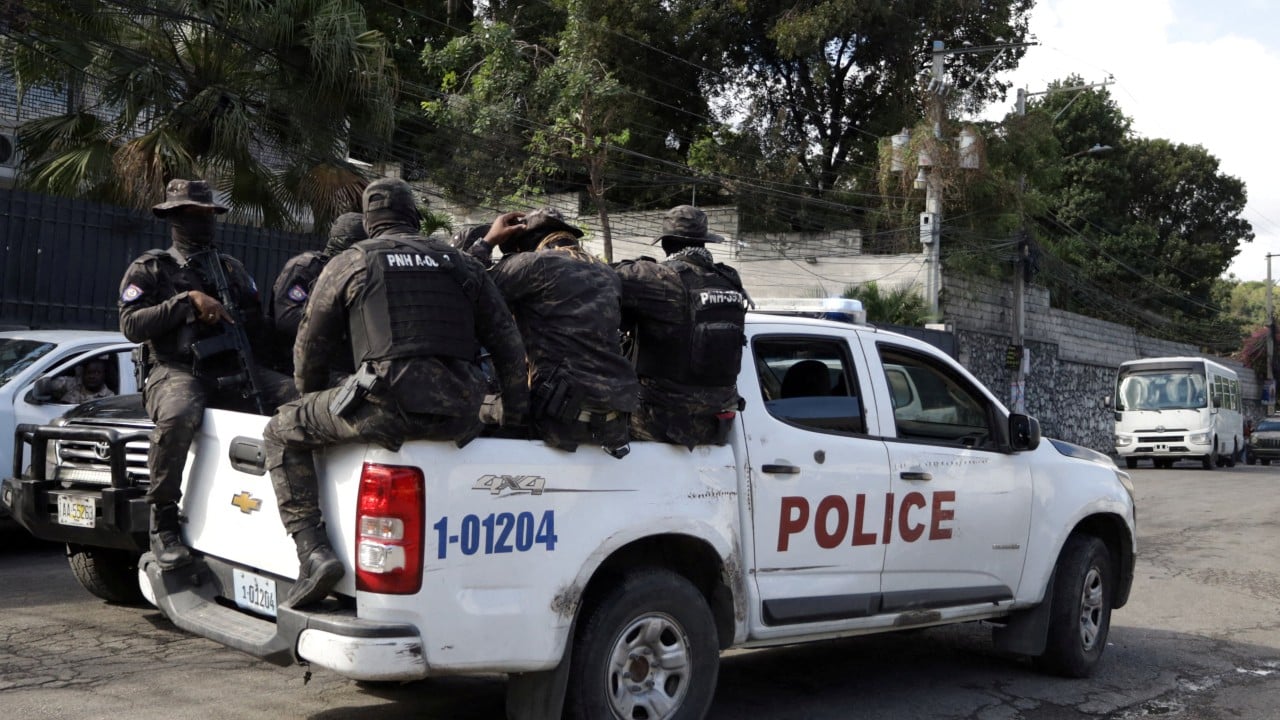
The State Department's bounty focuses on the nexus of the transaction. Identifying the individuals who sign the checks or authorize the wire transfers is more impactful than seizing a single shipment of rifles. If the financial conduit is severed, the "cost of doing business" for gangs rises exponentially. They are forced to rely on more expensive, less efficient methods of money movement, which reduces their purchasing power and, by extension, their tactical advantage over the Haitian National Police (PNH).
The Fragility of Informal Financial Networks
Most gang-related transactions occur outside the formal banking sector to avoid AML (Anti-Money Laundering) triggers. However, these informal networks rely entirely on interpersonal trust.
- Information Asymmetry: Financiers know the identities of the gang leaders, but the lower-level operatives often do not know the source of their funding.
- The Snitch Premium: $3 million represents a life-changing sum in the Haitian context, where the annual GNI per capita is significantly lower. This creates a powerful economic incentive for subordinates or jilted business partners to provide the specific data points required for U.S. sanctions or Department of Justice indictments.
Strategic Bottlenecks in the Bounty Program
The primary limitation of the bounty strategy is not the amount of money offered, but the intelligence-to-action pipeline. For a bounty to be effective, the information provided must meet a high evidentiary standard for U.S. courts or the Treasury Department’s Office of Foreign Assets Control (OFAC).
The second limitation is the physical security of informants. In an environment where gangs control the territory, providing information is a high-risk activity. Unless the U.S. provides a credible path to extraction or witness protection, the "utility" of the $3 million is negated by the high probability of immediate retaliation. Therefore, the success of this financial offensive is intrinsically linked to the operational success of the Multinational Security Support (MSS) mission. Without a safe harbor for informants, the bounty remains a theoretical deterrent rather than a functional intelligence tool.
Quantifying the Impact of Sanctions and Indictments
When the U.S. identifies a financier through this bounty program, the subsequent action is usually a combination of Global Magnitsky Act sanctions and criminal indictments. These tools work through asset immobilization.
- Direct Seizure: Freezing bank accounts and seizing real estate held in the U.S. or by U.S.-aligned financial institutions.
- Reputational Contagion: Once an individual is sanctioned, no legitimate global bank will process their transactions for fear of "secondary sanctions." This effectively excommunicates the financier from the global economy.
- Operational Paralysis: Without a clear financier, gang leaders lose the ability to pay their "soldiers." In a mercenary environment, unpaid soldiers either defect, form splinter groups, or turn on their leaders, leading to internal kinetic friction.
This strategy assumes that the Haitian gangs are not self-sustaining. While they generate local revenue through kidnapping, the sophistication of their operations—specifically the acquisition of 5.56mm and 7.62mm ammunition in bulk—requires a level of foreign exchange and logistical coordination that only high-level financiers can provide.
The Geopolitical Cost of Informational Warfare
The U.S. is essentially engaging in "informational warfare" by outsourcing the investigative process to the Haitian public and the diaspora. This approach minimizes the need for U.S. intelligence assets on the ground, which carries high political and physical risk. Instead, it leverages the economic desperation of the environment to gather data.
However, this creates a secondary market for "noise." The U.S. must filter through thousands of low-quality or intentionally misleading tips aimed at settling local scores. The administrative overhead of verifying this information is significant, and the delay in verification can allow targets to liquidate assets or flee to non-extradition jurisdictions.
Structural Requirements for Success
For the $3 million bounty to move from a headline to a strategic victory, it must be integrated into a broader integrated coercive framework:
- Enhanced Maritime Interdiction: Stopping the flow of goods purchased with the money that hasn't been frozen yet.
- Judicial Reform in Haiti: Ensuring that if a financier is caught within Haiti, the local legal system can hold them without the risk of a "jailbreak" or judicial bribery.
- Digital Traceability: Increasing oversight of remittances, which, while vital for the Haitian economy, are occasionally co-opted for small-scale gang funding.
The core objective is to make the "Haitian Gang Project" an unprofitable venture. Criminal organizations are, at their heart, businesses. When the costs of operation (risk of arrest, loss of assets, cost of logistics) exceed the revenues (extortion, kidnapping proceeds), the organization must downsize or collapse.
The strategic play here is to target the "C-suite" of the Haitian crisis. By focusing on the money, the U.S. is not just fighting the fire; it is attempting to remove the oxygen. The bounty is a signal to the Haitian elite that the era of "plausible deniability" regarding their links to armed groups has ended. The focus now shifts to whether the U.S. can effectively process the resulting intelligence and execute the legal maneuvers necessary to lock the frozen assets permanently.
Governments and international observers should monitor the volatility of the Haitian Gourde and the frequency of high-profile kidnappings as leading indicators of whether gang liquidity is actually being squeezed. If gang leaders begin to lose territorial control not to police, but to internal mutinies, the financial interdiction strategy will have proven its lethality.