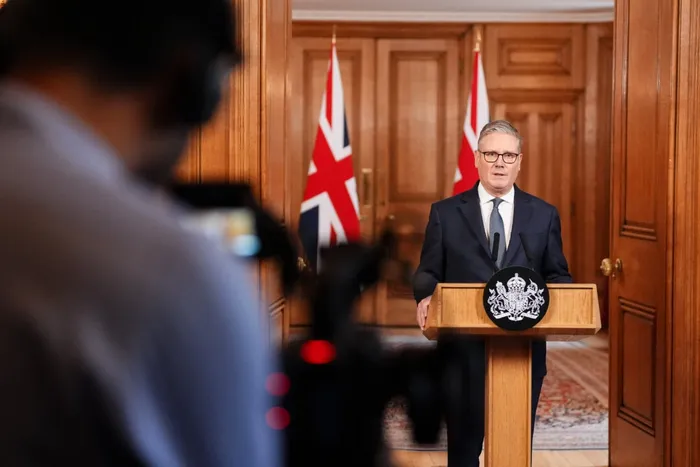
Donald Trump’s recent broadside against Keir Starmer’s government signals a fundamental shift in how Washington views its oldest ally. This is not merely a clash of personalities or a momentary spat over campaign interference. It is a structural realignment where the "Special Relationship" is no longer a historical given but a conditional transaction. For Starmer, the challenge is navigating a White House that views traditional diplomatic norms as liabilities rather than assets. If London cannot find a way to align its security needs with a more isolationist, "America First" trade policy, the UK risks becoming a secondary player in a world dominated by three-way friction between the US, China, and the EU.
The Infrastructure of a Falling Out
The friction began with legal complaints and ended with rhetoric about systemic decline. When the Trump campaign filed a Federal Election Commission complaint against the Labour Party for sending volunteers to help the Harris-Walz campaign, it was a calculated warning. It wasn't about the actual impact of a few dozen activists; it was about establishing a narrative of foreign meddling that could be used to squeeze the UK on trade and defense later. Meanwhile, you can find other stories here: The Cold Truth About Russias Crumbling Power Grid.
London underestimated the personal nature of modern American populism. While Starmer’s team views their interactions with US Democrats as standard sister-party cooperation, the Trump inner circle views it as a betrayal of sovereignty. This ideological gap is widened by the looming shadow of the UK’s stance on Chagos Islands and its cautious approach to Middle Eastern policy. To a potential Trump administration, these are signs of a Britain that is shrinking its global footprint precisely when Washington wants its partners to provide more muscle and less nuance.
Economic Sovereignty vs. Global Cooperation
The economic stakes are staggering. The UK remains one of the largest foreign investors in the US, and vice versa. Yet, Trump’s promise of universal baseline tariffs—potentially 10% or higher on all imports—would hit British manufacturers with a blunt force that traditional diplomacy is ill-equipped to handle. To understand the complete picture, check out the recent report by NPR.
Under the current Labour strategy, the UK is attempting to stay close to European regulatory standards while maintaining a unique bridge to the US. This "dual-track" approach is increasingly fragile. Trump’s advisors have been vocal about their disdain for "managed trade." They want bilateral deals that favor American industry, often at the expense of environmental or food safety standards that the UK public considers non-negotiable. If the UK is forced to choose between alignment with the European Single Market and a free trade agreement with a protectionist US, there is no middle ground left to occupy.
The Defense Dilemma
A cornerstone of the relationship has always been intelligence and nuclear cooperation. However, Trump’s skepticism toward NATO creates a terrifying vacuum for British defense planners. If the US reduces its commitment to European security, the UK’s defense budget, already stretched thin, will face an impossible burden.
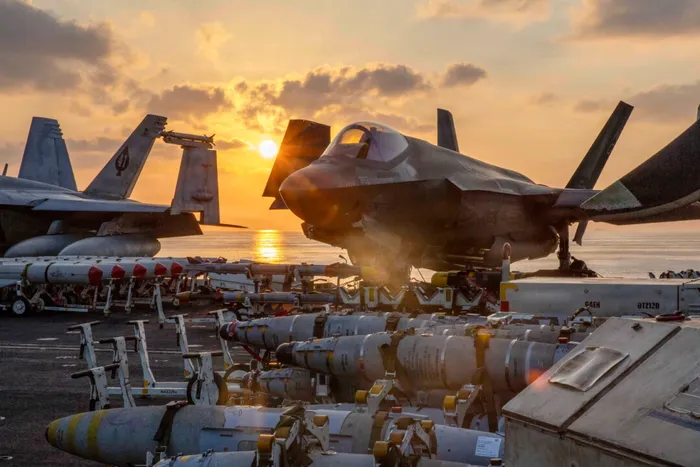
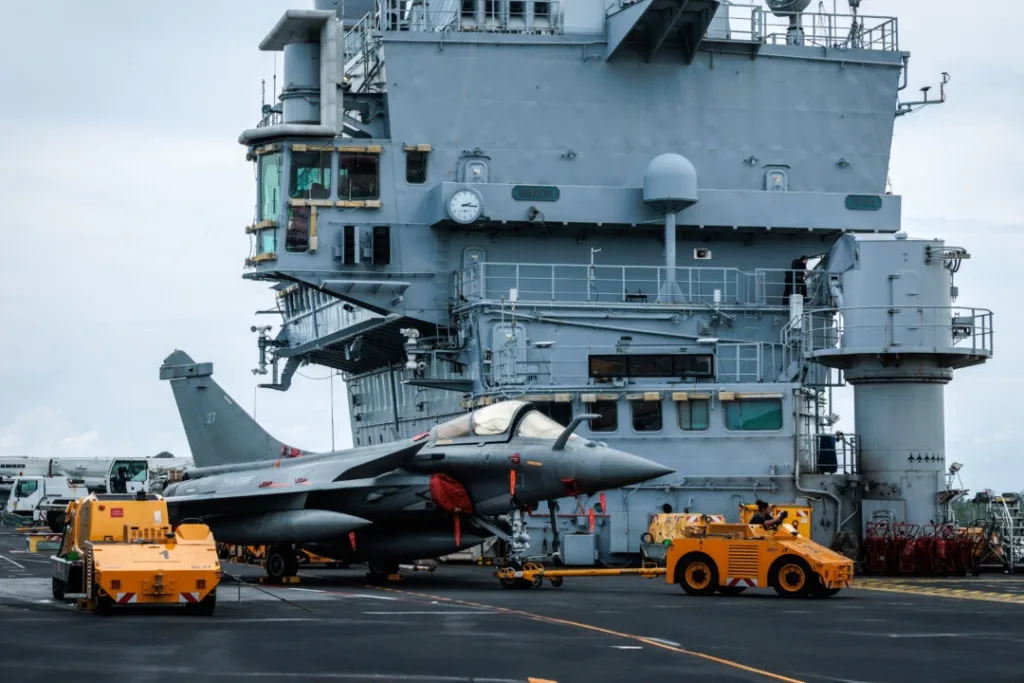
Britain currently acts as the primary military link between the US and the rest of Europe. If Trump bypasses London to deal directly with Moscow or Beijing, the UK’s strategic value as a "bridge" evaporates. We are looking at a scenario where the UK might have to choose between its security reliance on the US and its geographical reality as a European nation. This isn't just theory; it’s a hardware problem. The UK’s nuclear deterrent and high-end conventional capabilities are deeply integrated with American technology. A cooling of relations isn't just a political snub; it's a threat to the operational readiness of the British military.
Disruption as Diplomacy
The core of the problem is that Starmer speaks the language of the "rules-based international order," while Trump views that order as a cage designed to hold America back. This is an irreconcilable difference in worldview.
When Trump criticizes Starmer, he is signaling to the British right—specifically figures like Nigel Farage—that he prefers a different kind of partner. This creates a domestic headache for Number 10. Every time the US President-elect or President attacks the British Prime Minister, it emboldens the domestic opposition and weakens Starmer’s hand in Parliament. It is a form of "externalized politics" where the White House uses its platform to influence the internal dynamics of its allies.
The UK's response has been one of quiet outreach and damage control. David Lammy, the Foreign Secretary, has spent months trying to build bridges with MAGA-aligned think tanks and politicians. But these efforts are often undermined by past comments and the inherent volatility of the Trump movement. You cannot "manage" a relationship with an entity that prides itself on being unmanageable.
The Cost of the Chagos Deal
One of the most specific points of contention is the British decision to hand over the Chagos Islands to Mauritius. To the Trump camp, this was a display of weakness and a gift to Chinese influence in the Indian Ocean. Despite assurances that the US military base on Diego Garcia is secure, the optics were disastrous.
In the eyes of American hawks, the UK prioritizes international law over hard power. This is a recurring theme. Whether it is the regulation of Big Tech or the approach to climate change, London and a Trump-led Washington are on diverging paths. The "Special Relationship" was forged in the fire of shared existential threats, but today, the two nations don't even agree on what the threats are.
Strategic Autonomy or Total Alignment
The UK now faces a brutal choice. It can double down on its "Global Britain" aspirations, which requires a deep, almost subservient alignment with US foreign policy to secure trade concessions. Or, it can pivot back toward a "softer" alignment with Europe, accepting that the US is no longer a reliable guarantor of the status quo.
The first path requires Starmer to potentially abandon key Labour values on labor rights and environmental protections to appease a Trump trade team. The second path leaves the UK isolated from its most powerful military partner. Neither option is palatable, yet the luxury of indecision is disappearing.
Rebuilding the Foundation
To fix this, the UK must stop treating the US relationship as a sentimental heirloom. It must be treated as a cold, hard business arrangement. This means identifying exactly what the US wants that only the UK can provide.
It isn't just about "values" anymore. It's about tech cooperation, intelligence sharing in the Indo-Pacific, and acting as a rational voice in a chaotic European landscape. If Starmer cannot demonstrate that a strong UK is essential to Trump’s own goals, the relationship will continue to wither. The rhetoric coming from Mar-a-Lago suggests that the grace period for traditional allies is over.
The shift is permanent. Even if a different administration takes over in four years, the underlying American fatigue with global leadership will remain. Britain must prepare for a world where the US is a competitor as often as it is a partner. This requires a level of national resilience and strategic clarity that hasn't been seen in Whitehall for decades.
Stop looking for the old "Special Relationship" in the history books. It isn't there anymore. The new reality is a transactional, high-stakes negotiation where the UK's relevance is constantly on trial. If London cannot adapt to this more aggressive American posture, it will find itself increasingly sidelined in the global conversation. The era of diplomatic politeness is dead, replaced by a raw competition for influence and economic survival.
Map out your contingency plans for a 10% US tariff across all UK export sectors immediately.