The myth of the Middle Eastern "safe haven" vanished at approximately 7:15 am on Sunday. As sirens wailed across Dubai, Doha, and Manama, the kinetic reality of a regional war finally caught up with the glossy brochures of the Gulf Cooperation Council. Iranian missiles and "Shahed" loitering munitions, launched in a desperate, wide-spectrum retaliation against U.S. and Israeli "Epic Fury" strikes, did more than just dent the terminal at Dubai International Airport. They shattered the unspoken agreement that the world’s most ambitious playground could remain a bystander while its neighbors burned.
For decades, the United Arab Emirates and Qatar have operated on a specific brand of exceptionalism. They built glass forests and global transit hubs under the assumption that their soil was a sanctuary. That illusion is now a casualty of war. With the reported death of Supreme Leader Ali Khamenei and the decimation of the Iranian leadership in Tehran, the Islamic Republic has pivoted to a "scorched-earth" regional strategy. If the regime falls, it intends to take the neighborhood's prosperity with it. Expanding on this topic, you can find more in: Why the Green Party Victory in Manchester is a Disaster for Keir Starmer.
The Cost of Interception
Official reports from the UAE Ministry of Defense claim a high success rate for their air defense systems, citing over 500 drones and 150 missiles neutralized. However, a "neutralized" missile does not simply disappear. It becomes high-velocity scrap metal.
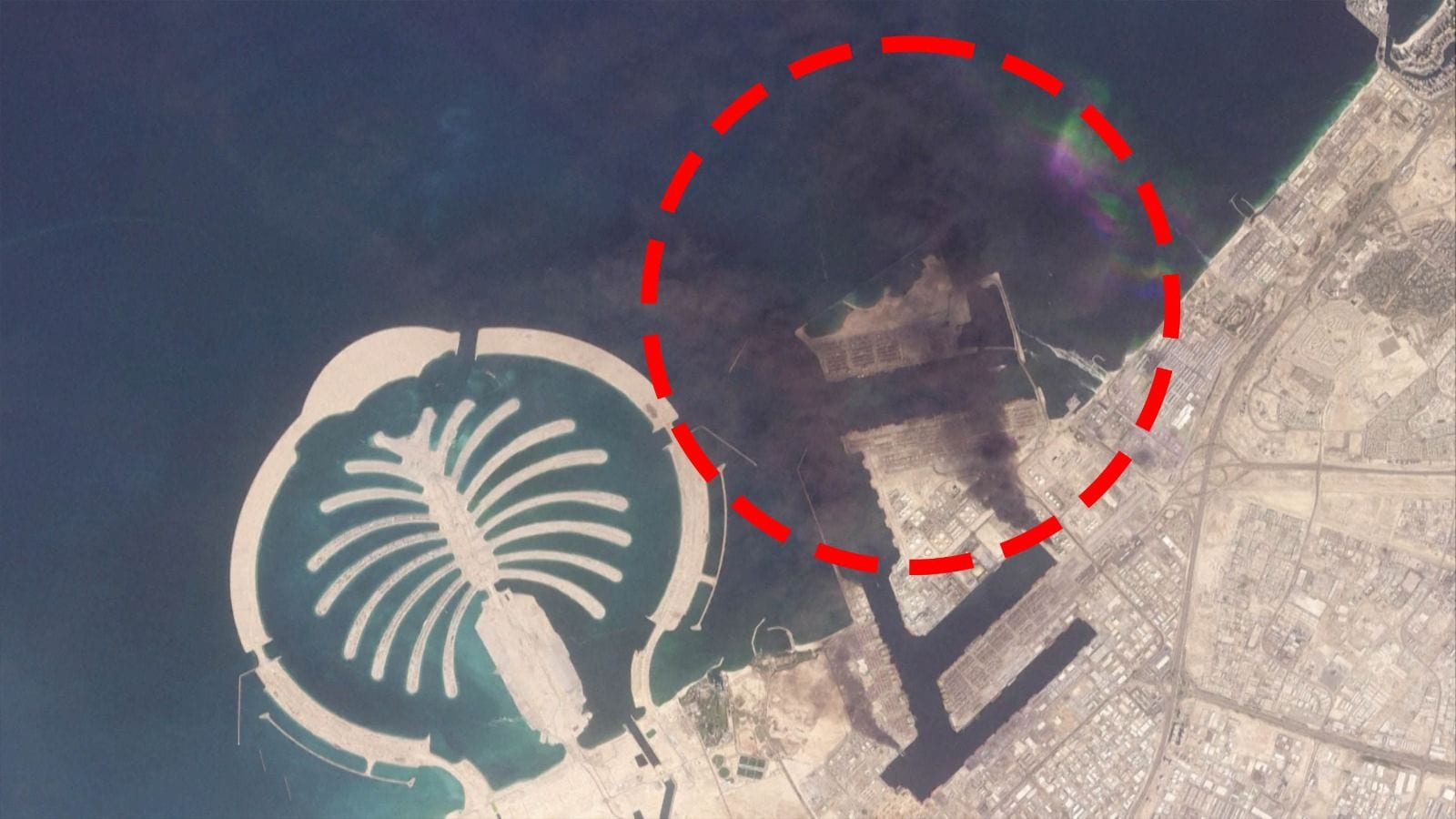
In Dubai, the Fairmont The Palm and the iconic Burj Al Arab both suffered fires caused by falling debris and direct impacts. At Jebel Ali Port, a pillar of global trade, thick black smoke rose from a berth hit during the Sunday morning barrage. These are not merely architectural tragedies; they are systemic shocks. When a missile hits the Palm Jumeirah, it isn't just hitting a hotel. It is hitting the sovereign credit rating of the entire region. Experts at The New York Times have shared their thoughts on this situation.
A Sky Without Flights
For the first time in modern history, the "Big Three" Gulf hubs—Dubai, Doha, and Abu Dhabi—are effectively dark. Emirates, Etihad, and Qatar Airways, the connective tissue of the global economy, have grounded fleets indefinitely.
The scale of the disruption is staggering. Over 1,800 flights have been scrubbed from the boards across the Middle East. Hundreds of thousands of travelers, including a high volume of Western expatriates and high-net-worth business travelers, find themselves trapped in five-star "shelters."
- Dubai International (DXB): Reported damage to a terminal hall; all operations suspended.
- Zayed International (AUH): At least one fatality and seven injuries reported from a missile strike.
- Hamad International (DOH): 65 missiles and 12 drones targeted the Qatari capital, with eight reported injuries.
This is not a temporary logistical hiccup. It is a fundamental collapse of the Gulf’s primary economic engine: its status as the world’s most reliable transit corridor.
The Fifth Fleet and the Bahrain Front
Bahrain, the smallest of the GCC states and host to the U.S. Navy’s Fifth Fleet, has perhaps felt the "how" of this escalation most acutely. In Manama, witnesses reported an Iranian Shahed drone slamming directly into an apartment building. This wasn't debris; it was a targeted, low-altitude strike designed to bypass high-altitude missile defense systems.
The U.S. Fifth Fleet headquarters in Bahrain confirmed it had been targeted. While American officials have remained tight-lipped about the extent of the damage, the psychological impact on the Kingdom is irreversible. The "security guarantor" model that the U.S. has provided for the Gulf since 1945 is being tested to its absolute limit.
The Economic Shrapnel
Oil markets have yet to fully react due to the weekend timing of the strikes, but the closure of the Strait of Hormuz by Tehran is no longer a rhetorical threat. Shipping firms like Maersk are already suspending transits.
The strategic "Strait of Hormuz" corridor facilitates one-fifth of the world’s oil. With Iranian military vessels reportedly ablaze in Chabahar and Konarak following U.S.-Israeli strikes, and the IRGC declaring the Gulf closed to "American warships," the maritime industry is entering a period of unprecedented volatility.
The Shift in GCC Strategy
For years, Saudi Arabia and the UAE have attempted a delicate dance of de-escalation with Tehran. They hoped that by hosting U.S. bases but refraining from offensive action, they could stay out of the crossfire.
That period of détente is over. In an emergency virtual meeting on Sunday, the GCC declared their security "indivisible," affirming their right to self-defense under Article 51 of the UN Charter. Saudi Arabia’s condemnation of "blatant Iranian aggression" signals a hardening of the regional bloc. The Gulf states are being forced to choose a side, and for the first time, they are doing so with their own infrastructure under fire.
The Fragility of Global Hubs
The real story here isn't just the missiles. It’s the vulnerability of a globalized economy that relies on a handful of "super-hubs" in a volatile geography.
The Gulf’s rise was built on the premise that you could have a Manhattan in the desert, provided the regional wars stayed local. That premise was a lie. When Tehran is hit with "decapitation strikes," it doesn't just fold; it lashes out at the most vulnerable and visible symbols of the Western-aligned order.
Dubai’s skyline, once a monument to 21st-century progress, is now a target-rich environment for 20th-century geopolitical grudges. The sirens in Manama and the fires on the Palm Jumeirah have rewritten the rules of the region overnight. Neutrality is no longer a luxury that can be purchased with oil revenue. It is a casualty of the first day of the Great Middle Eastern War.
If you are a foreign national currently in the Gulf, your priority should be contacting your embassy immediately and securing a position away from high-value infrastructure like airports and military bases. The airspace is likely to remain closed for the foreseeable future.