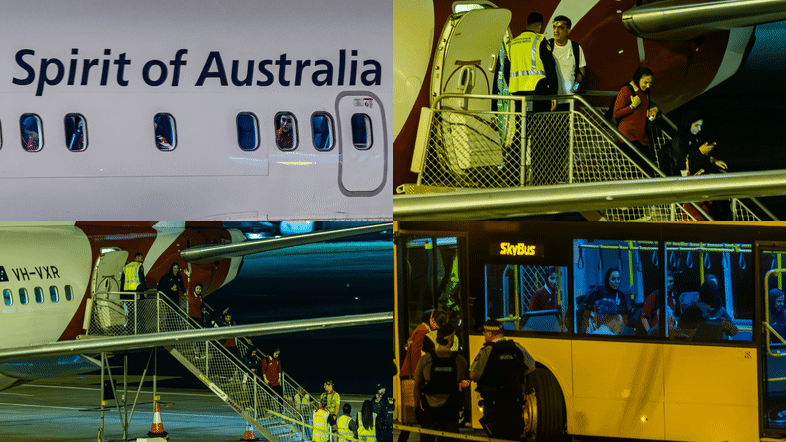
The air in Sydney felt heavy, and it wasn't just the humidity. While the rest of the city went about its Tuesday, a high-stakes drama unfolded at the airport that perfectly captured the sheer desperation of the current US-Iran conflict. One Iranian player, part of a visiting delegation, simply refused to board the plane back to Tehran. It’s a move that screams louder than any diplomatic cable. When a professional athlete risks everything to stay in a foreign land, you know the situation back home has moved past "tense" into something much darker.
That individual act of defiance happened right as the Pentagon dropped a massive verbal hammer. Washington isn't whispering anymore. They’ve warned Tehran to expect the most intense day of strikes yet. We aren't talking about a few surgical drones hitting empty warehouses in the desert. This is a full-scale shift in posture. If you’ve been following the incremental escalations over the last few months, forget them. The rules of engagement just changed.
Why Sydney Became the Unlikely Front Line
Most people looking at the US-Iran war live updates are focusing on the Persian Gulf. They're watching the Strait of Hormuz. But the incident in Australia matters because it shows the internal fracturing of the Iranian state. Reports from the ground confirm that at least one player remained behind, seeking protection as the rest of the team was ushered toward departure.
Imagine the pressure. You’re representing your country on a global stage while your government is on the verge of a kinetic war with a superpower. For this player, the flight home wasn't a return to family; it was a one-way ticket into a combat zone or worse. Australian federal police have been tight-lipped, but the message is clear. The Iranian domestic front is leaking. People are jumping ship before the first Tomahawk missiles even clear their tubes.
This isn't just about sports. It’s about the psychological collapse that happens when a population realizes their leaders have steered them into a dead end. The US knows this. Every defection, every refusal to return, and every street protest is a data point for Central Command. They see a regime that's brittle.
Washington Drops the Hammer with Most Intense Warning
The rhetoric coming out of the White House and the Pentagon has shifted from "deterrence" to "dismantling." The warning of the "most intense" day of strikes isn't just a threat. It’s a pre-computation of targets. Military analysts suggest this refers to a multi-domain assault. We’re looking at cyberattacks on the power grid, electronic warfare to blind radar, and a relentless waves of cruise missiles.
The US has moved carrier strike groups into striking distance, but the real story is the land-based bombers. B-2 Spirits have been spotted staging in strategic locations. These aren't tools for "sending a message." They’re tools for erasing command and control centers.
Why now? Because the "measured response" phase failed. For weeks, the US tried to trade blows 1-for-1. It didn't work. Tehran kept pushing through its proxies, thinking the US was too bogged down in domestic politics to commit. They guessed wrong. The current administration has decided that a short, violent shock is better than a long, grinding war of attrition.
The Target List No One Wants to Talk About
When the US says "most intense," they mean they're going after the IRGC's crown jewels.
- Coastal Defense Batteries: These are the Silkworm and Noor missiles that threaten global shipping.
- Drone Manufacturing Hubs: The factories in Isfahan and surrounding areas that supply the very tech harrassing US bases.
- Communication Hubs: Cutting the head off the snake by taking out the encrypted networks used by leadership.
It’s a gamble. A massive one. The hope is that by hitting everything at once, you paralyze the Iranian military's ability to even launch a counter-response. You hit them so hard they spend the first 24 hours just trying to figure out who's still alive.
The Human Cost of Strategic Hubris
It's easy to talk about "strikes" and "assets." It's harder to talk about the people living in Tehran or Mashhad. They’re the ones currently hoarding fuel and bread. The Iranian Rial has plummeted to historic lows in the last six hours. If you’re a shopkeeper in Iran right now, your life savings just evaporated because of a war you probably didn't ask for.
The US says it doesn't want regime change, but its actions suggest otherwise. By targeting the economic and military infrastructure, they’re making the country ungovernable. The Iranian leadership is backed into a corner. And a cornered regime is the most dangerous kind. They have a massive arsenal of ballistic missiles, and if they feel the end is near, they might just use them all.
I’ve spoken to analysts who think the US is overestimating its "shock and awe" capability. Iran isn't Iraq in 2003. They have deep-buried facilities. They have a decentralized command structure. A "most intense" day of strikes might just be the opening bell of a decade-long disaster.
What Happens When the Sirens Start
If the US follows through on this warning tonight, the global economy will feel it by breakfast. Oil prices are already twitchy. A full-scale strike on Iranian soil would likely push Brent crude past 120 dollars a barrel instantly. That’s not a "market adjustment." That’s a global recession trigger.
For the player in Sydney, the choice was simple: stay and live, or go back and witness the fire. For the rest of us, we’re stuck watching the tickers. The US is betting that Tehran will fold under extreme pressure. History suggests that Iranians tend to tighten their grip when foreigners start dropping bombs.
The next 24 hours are the most critical we’ve seen in decades. If the strikes begin, there’s no "undo" button. We’re moving from a cold war to a white-hot one in the blink of an eye. Watch the flight trackers. If you see diplomatic planes leaving the region, you have your answer. Move your assets into "safe haven" holdings like gold or stable bonds now. If the strikes hit the scale the US is promising, the volatility will be unlike anything we've seen since the 1970s. Get your news from primary sources and ignore the social media noise. The real signals are in the troop movements and the silent departures of athletes.