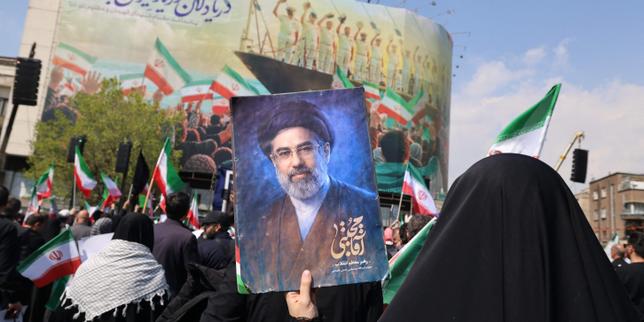
The Islamic Republic of Iran has long utilized the shadow of the gallows to communicate with its population, but the timing of its most recent judicial killings signals a specific, desperate shift in state strategy. While the world prepares for the spring equinox, Tehran is busy clearing its death rows. The execution of four political prisoners on the eve of Nowruz—the Persian New Year—is not a random act of bureaucratic cruelty. It is a deliberate application of state terror designed to preempt the very hope that the holiday represents. By hanging dissidents when the nation is meant to be celebrating renewal, the clerical establishment is issuing a grim reminder that in their version of Iran, the only thing that truly cycles is the rope.
These four men were not criminals in any sense recognized by international law. They were casualties of a legal system that views dissent as a form of "war against God." To understand why these executions happened now, one must look past the individual case files and into the internal anxieties of a regime that has never fully recovered from the "Woman, Life, Freedom" protests. The state is no longer just punishing past actions. It is aggressively managing future risks by eliminating the symbols of resistance before they can become focal points for holiday gatherings.
The Weaponization of the Persian Calendar
Nowruz is deeply ingrained in the Iranian soul. It is a pre-Islamic celebration of light over darkness, a concept that often runs perpendicular to the austere, religious gloom favored by the ultra-conservative factions in Qom and Tehran. For the regime, the holiday is a security nightmare. People gather in the streets. Families travel. The usual grip of the morality police loosens as millions of citizens shift their focus toward tradition and community rather than the state’s rigid mandates.
By carrying out executions in the final days of the year, the judiciary ensures that the national conversation is dampened by grief. It is a psychological operation. When a family sits down for their Haft-Sin meal, the news of the gallows hangs over the table. This is calculated to transform a period of potential mobilization into a period of mourning. In the eyes of the Revolutionary Guards, a mourning population is a manageable population.
Torture as a Tool of Evidence
The judicial process leading to these deaths was a farce. In Iranian political cases, the "evidence" almost always consists of a televised confession. To the uninitiated, these videos look like a legal victory for the state. To those who have spent years tracking the Ministry of Intelligence, they are the fingerprints of a brutal interrogation process.
Interrogators use a combination of sleep deprivation, threats against family members, and "white torture"—total sensory deprivation—to break a prisoner's psyche. Once the prisoner is broken, they are handed a script. This script is then filmed and presented in court as an "uncooperative" confession that justifies a death sentence under the charge of Moharebeh.
The legal mechanism is simple and deadly. The Revolutionary Courts operate outside the standard penal code, often denying defendants the right to choose their own lawyers. In many cases, the defense attorney is a state-appointed official whose primary job is to convince the defendant to repent rather than to argue the merits of the case. The trial itself can last less than fifteen minutes. A man’s life is weighed, judged, and discarded in the time it takes to drink a cup of tea.
The Regional Message of the Hangman
Tehran does not act in a vacuum. These executions are also a signal to the "Axis of Resistance" and to Western powers. At a time when Iran is navigating complex geopolitical waters—balancing its relationship with Russia, managing its nuclear brinkmanship, and funding proxies across the Middle East—internal stability is its most precious currency.
If the regime appears weak at home, its leverage abroad diminishes. By showing a total lack of restraint in its use of the death penalty, the government is signaling to its regional rivals that it remains firmly in control. It is a display of "sovereign cruelty." It tells the world that no amount of international pressure or human rights sanctions will stop the state from doing whatever is necessary to survive.
The Myth of Judicial Independence
It is a mistake to view the Iranian judiciary as a separate branch of government. In the Islamic Republic, the head of the judiciary is appointed directly by the Supreme Leader. The courts are an extension of the security apparatus, serving as the "legal" wing of the intelligence services.
When the judiciary moves to execute four political prisoners at once, it is not following a legal timeline; it is following a political directive. The Supreme Leader’s office determines the rhythm of the gallows. The judges are merely the executors of his will.
Economic Despair and the Need for a Scapegoat
The Iranian economy is in a state of managed collapse. Inflation is rampant, the rial is a ghost of its former value, and the middle class has been effectively erased. In such an environment, the threat of a popular uprising is constant. History shows that when a government cannot provide bread, it provides spectacles of "justice."
Executions serve as a grim distraction. By labeling dissidents as terrorists or foreign agents, the state attempts to redirect the public’s anger. They want the starving worker to blame the "subversive" in the prison cell rather than the billionaire cleric in the government office. It is a classic diversionary tactic, but its effectiveness is waning. Each new execution creates a new set of martyrs, and in Iran, the culture of martyrdom is a double-edged sword that the regime may eventually fall upon.
The Silence of the International Community
Global reaction to these killings has followed a weary, predictable pattern. There are statements of "deep concern" from Brussels and Washington. There are social media campaigns and hashtags. But for the men on death row, these gestures are hollow.
The regime has learned that it can weather the storm of international condemnation as long as the oil keeps flowing to its primary buyers and its security ties with authoritarian allies remain intact. Sanctions have been priced in. Diplomacy is seen as a game of delay. Unless there is a fundamental shift in how the world engages with Tehran’s human rights record—moving beyond rhetoric and into tangible diplomatic consequences—the gallows will continue to stay busy.
The Role of Diaspora Activism
The Iranian diaspora has become the primary voice for those silenced inside the country. They provide the documentation that the state tries to suppress. They verify the names, the dates, and the locations of the executions. This information is vital because the Iranian government often buries political prisoners in unmarked graves, attempting to erase their existence entirely.
Without the work of these activists, the world would not even know the names of the four men executed this week. Their work turns a secret state killing into a global event, forcing the regime to at least acknowledge the blood on its hands.
A Legacy Written in Blood
The immediate future for Iran’s political prisoners looks bleak. There are dozens more currently on death row, their fates tied to the shifting moods of the security council. The regime believes that by killing a few, it can frighten the many. It is a gamble that has worked for forty years, but it is a strategy with diminishing returns.
You cannot execute an entire generation’s desire for change. You can hang the protesters, you can torture the organizers, and you can silence the journalists, but the underlying grievances—the poverty, the corruption, and the lack of basic dignity—remain. Every time a rope tightens around the neck of a dissident, the knot between the people and the state loosens just a little bit more.
The four lives taken this week were not the first, and they will not be the last. As the new year begins, the people of Iran are left to wonder how many more chairs will be empty by the time the next spring arrives. The state has chosen its path: it will rule by the noose until the noose is all it has left.
Monitor the trial dates of the "Ekbatan" defendants; they are the next likely targets in this judicial purge.