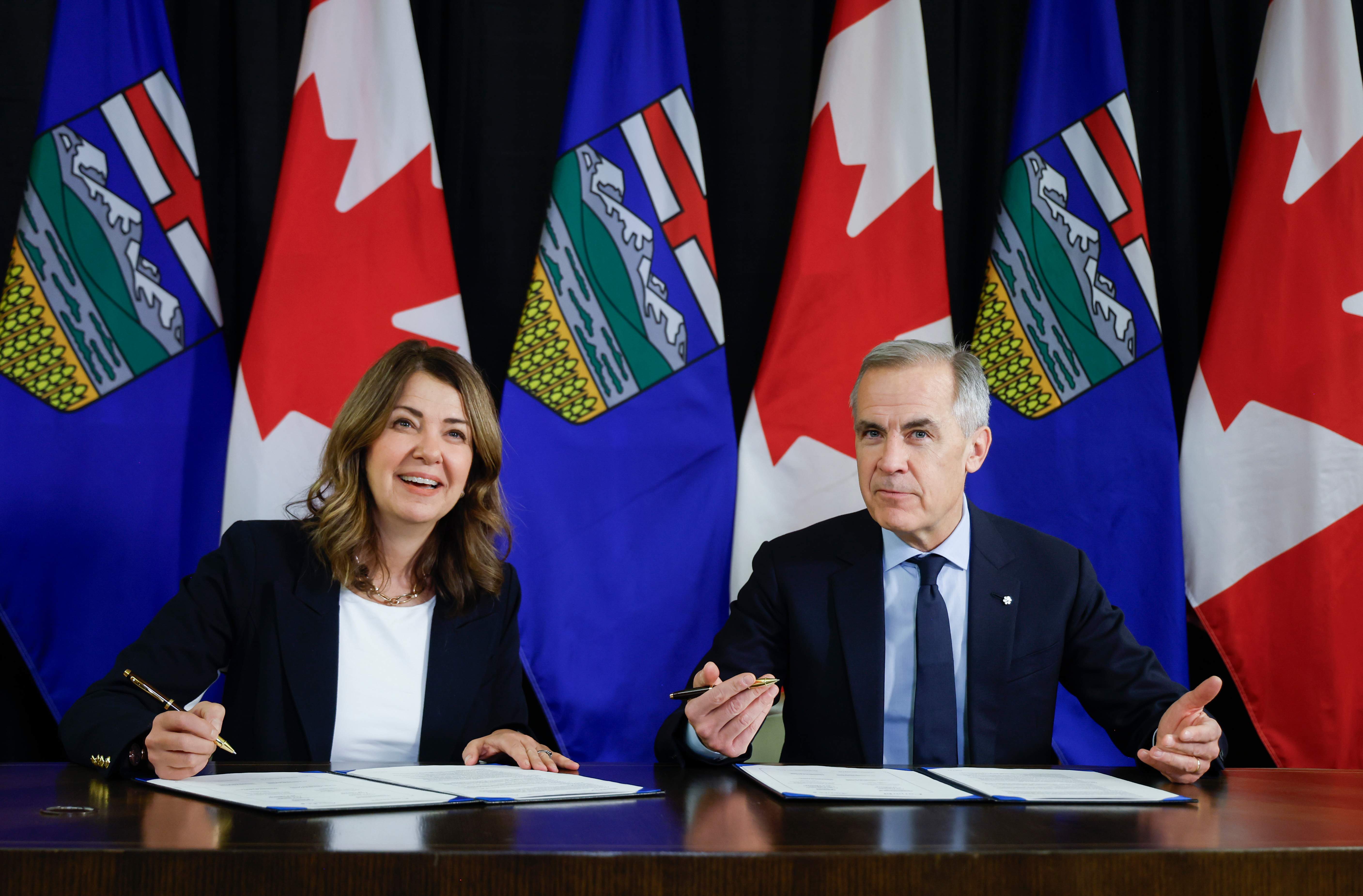
Mark Carney says a referendum might shake investor confidence. It is a predictable line from a man whose career is built on the preservation of the status quo. To the central banker, "uncertainty" is the ultimate boogeyman. To anyone actually deploying capital in the real world, uncertainty is where the alpha is hidden.
The consensus is lazy. It suggests that institutional investors are skittish deer, easily startled by the rustle of a ballot box. This view assumes that the billions currently sitting on the sidelines in the oil patch are waiting for a permission slip from a "stable" political environment. They aren't. They are waiting for a price signal and a regulatory path that doesn't change every time a new federal minister has a vision for the 2030s.
Carney’s warning is not a neutral observation. It is a tool of discipline. By framing democratic friction as a threat to "investor confidence," the globalist elite attempt to preemptively veto any policy that deviates from the approved narrative. If you believe the headlines, Alberta is flirting with economic suicide. If you look at the balance sheets, Alberta is the only place in the country with the backbone to defend the industries that actually pay the bills.
The Stability Trap
Global capital does not crave stability. It craves predictability. There is a massive difference.
Russia was "stable" for decades until it wasn't. The current Canadian federal regulatory environment is "stable" in its hostility toward resource extraction. You can be predictably bad, and investors will flee. You can be "unstable" and chaotic in your pursuit of a better deal, and investors will beat a path to your door if the internal rate of return (IRR) justifies the noise.
When Carney talks about confidence, he is talking about the comfort of the Toronto-Montreal corridor. He is not talking about the private equity shops in Houston or the sovereign wealth funds in the Middle East. Those players have seen real instability. They have operated in jurisdictions where "referendum" is replaced by "expropriation at gunpoint." To suggest that a democratic vote on a pension plan or a constitutional clarification is a deal-breaker for these entities is an insult to their intelligence.
The Cost of the "Confidence" Tax
We have been paying a "confidence tax" in Canada for ten years. We have suppressed our own competitive advantages to soothe the sensibilities of international observers who will never invest a dime here anyway.
Think about the logic being sold to you:
- Alberta must remain quiet and compliant to attract investment.
- Compliance means accepting federal mandates that actively dismantle Alberta's primary industries.
- Therefore, to "attract investment," Alberta must destroy the reason anyone wants to invest in Alberta.
It is a circular suicide pact. The disruption caused by a referendum is a feature, not a bug. It is a signal to the market that the province is willing to fight for its jurisdictional autonomy. In the long run, an autonomous Alberta with control over its own fiscal levers is a far more attractive destination than a province that functions as a branch plant for a federal government that views it as an inconvenient carbon source.
Dissecting the Carney Doctrine
Mark Carney represents the "Environmental, Social, and Governance" (ESG) establishment. For this group, "confidence" is code for "alignment with the transition."
But the "transition" is hitting a wall of physics and math. I have seen funds dump billions into "green" hydrogen projects that don't have a prayer of reaching a positive NPV (Net Present Value). Meanwhile, they starve the producers of the very energy that keeps the lights on.
When a figure like Carney warns about a referendum, he is protecting the policy consensus that allows this capital misallocation to continue. He wants a friction-less path for federal policy because friction leads to questions. Questions lead to audits. Audits reveal that the "green" investment landscape is often a house of cards propped up by subsidies that the taxpayer can no longer afford.
The Pension Play
The most cited "threat" to confidence is the potential for an Alberta Pension Plan (APP). The argument is that moving away from the CPP (Canada Pension Plan) creates administrative chaos.
Let's look at the numbers. Alberta’s demographic profile is significantly younger than the rest of the country. A standalone plan would, by definition, require lower contribution rates or provide higher benefits. For a corporation looking to set up shop, lower payroll taxes are a massive incentive.
The "instability" of the transition is a one-time cost. The "stability" of being tethered to a national plan with an aging demographic and a shrinking worker-to-retiree ratio is a perpetual liability. If you were a CFO, which one would you choose?
The Fallacy of the Scared Billionaire
I have sat in boardrooms where the "political risk" of Alberta was discussed. The conversation isn't about the referendum. It’s about the Impact Assessment Act. It’s about the Clean Electricity Regulations. It’s about the fact that it takes twelve years to get a mine approved in this country while our competitors do it in three.
The referendum is a symptom of a broken federation, not the cause of the economic malaise. To blame the victim for screaming is a classic gaslighting tactic. The capital flight Carney fears has already happened. It happened when the Northern Gateway was killed. It happened when Energy East was strangled by regulatory goalpost-shifting.
If a referendum is what it takes to reset the relationship and create a "firewall" around the provincial economy, then it is the most pro-business move the government can make. It is a declaration of sovereignty over the most valuable assets in the nation.
Why the Market Actually Loves a Fight
Contrarian investors—the ones who actually make money—look for "hated" assets. Alberta is currently a "hated" jurisdiction in the halls of the World Economic Forum. That makes it a value play.
When a government stands up to a centralized power, it creates a risk premium. Yes, the cost of debt might tick up by a few basis points in the short term. But it also creates the potential for a massive regulatory dividend. If Alberta wins even half of its demands for autonomy, the efficiency gains from bypassing federal bureaucracy will dwarf any temporary increase in borrowing costs.
Imagine a scenario where Alberta manages its own environmental approvals. You could cut project timelines by 40%. You could reduce legal overhead by 25%. No investor is going to walk away from that because they’re "worried about the tone of the debate." They will be too busy calculating their increased margins.
The "People Also Ask" Delusion
People ask: "Will an Alberta referendum cause a recession?"
The answer: The federal policies that the referendum seeks to challenge are already causing a slow-motion recession in the resource sector. You are choosing between a sharp, productive conflict now or a terminal decline later.
People ask: "Does Mark Carney know more about the economy than the Alberta government?"
The answer: Carney knows more about the global financial architecture. The Alberta government knows more about the physics of getting things out of the ground. One produces white papers. The other produces the heating oil that keeps you from freezing in February.
The Institutional Cowardice of the C-Suite
Why do some Alberta business leaders echo Carney’s concerns? Because many of them are terrified of their own shadows. They have been trained to value "quiet" over "results."
I’ve watched CEOs prioritize their invitation to the next Ottawa summit over the long-term interests of their shareholders. They mistake a lack of conflict for a healthy environment. It isn't. It’s a graveyard. A business environment without political tension is an environment where the state has already won and the private sector has surrendered.
The referendum is the sound of the private sector—and the people who power it—refusing to surrender. It is messy. It is loud. It is exactly what a healthy, functioning democracy looks like when it's being squeezed by an overreaching central authority.
The Strategy for the Bold
If you are an investor, you don't listen to the warnings of retired central bankers who haven't had skin in the game for a decade. You look at the underlying assets.
Alberta has:
- The world's third-largest oil reserves.
- A highly skilled, young workforce.
- The lowest debt-to-GDP ratio in the country.
- A government that is finally willing to act as a shield against federal overreach.
The "uncertainty" Carney laments is actually a discount. He is handing you a gift. He is suppressing the price of entry based on a theoretical "confidence" crisis that has no basis in the physical reality of the energy market.
While the "consensus" crowd is busy fretting over the headlines, the smart money is positioning itself for the inevitable reality: the world needs what Alberta has, and Alberta is finally realizing it doesn't need to ask for permission to sell it.
Stop waiting for a "stable" environment that will never come. The federal government has made it clear that "stability" means the managed decline of Western Canada. If you want growth, you have to embrace the friction. You have to realize that the most dangerous thing for Alberta isn't a referendum—it's the silence of compliance.
The next time you hear a suit from a global bank talk about "investor confidence," check their portfolio. They are likely shorting the very future they claim to be protecting.
Ignore the noise. Bet on the friction.
Would you like me to analyze the specific fiscal implications of an Alberta Pension Plan compared to the current CPP framework?