For decades, Canada relied on a frozen fortress to guard its northern flank. The Arctic ice was thick, predictable, and impassable, serving as a natural shield that required little more than symbolic presence. That shield is melting. As the ice thins, the geopolitical temperature is rising, and Ottawa finds itself in a frantic, multi-billion-dollar race to build the specialized steel necessary to maintain its relevance in the High North.
The centerpiece of this effort is the National Shipbuilding Strategy (NSS), a sprawling industrial endeavor that has recently shifted into high gear with the awarding of definitive contracts for two massive polar icebreakers. These are not mere service vessels; they are the heavy lifters of national sovereignty. Without them, Canada risks becoming a spectator in its own backyard while Russian and Chinese assets move with increasing freedom through the central Arctic.
The Massive Cost of Sovereignty
Maintaining a presence in the Arctic is an expensive proposition that has historically been plagued by delays and shifting budgets. The projected cost for the two new polar icebreakers—the CCGS Imnaryuaq and CCGS Arpatuuq—has ballooned to an estimated $8.5 billion. To put that in perspective, the original 2008 budget for a single heavy icebreaker was roughly $720 million.
The financial strain reflects the sheer complexity of these machines. A Polar Class 2 (PC2) vessel is essentially a floating fortress designed to operate in temperatures as low as -50°C and crush through multi-year ice that would peel a standard hull like a tin can.
- Seaspan Vancouver Shipyards: Awarded a $3.15 billion contract to build one vessel, with construction already underway and a target delivery of 2032.
- Chantier Davie: Secured a $3.25 billion contract for the second vessel, the "Polar Max" design, leveraging its acquisition of Finland’s Helsinki Shipyard to accelerate the timeline for a 2030 delivery.
The price tag is high because the expertise required to build these ships had effectively vanished from Canadian shores. For over 60 years, Canada did not build a heavy icebreaker. Reclaiming that industrial capacity in real-time while the global security environment deteriorates is a high-stakes gamble with taxpayer money.
The ICE Pact and the Great Power Pivot
Canada is no longer acting in a vacuum. In late 2024, the ICE Pact—a trilateral memorandum between Canada, the United States, and Finland—formalized a shared intent to dominate the polar shipbuilding market. This isn't just about sharing blueprints; it’s a defensive industrial alliance.
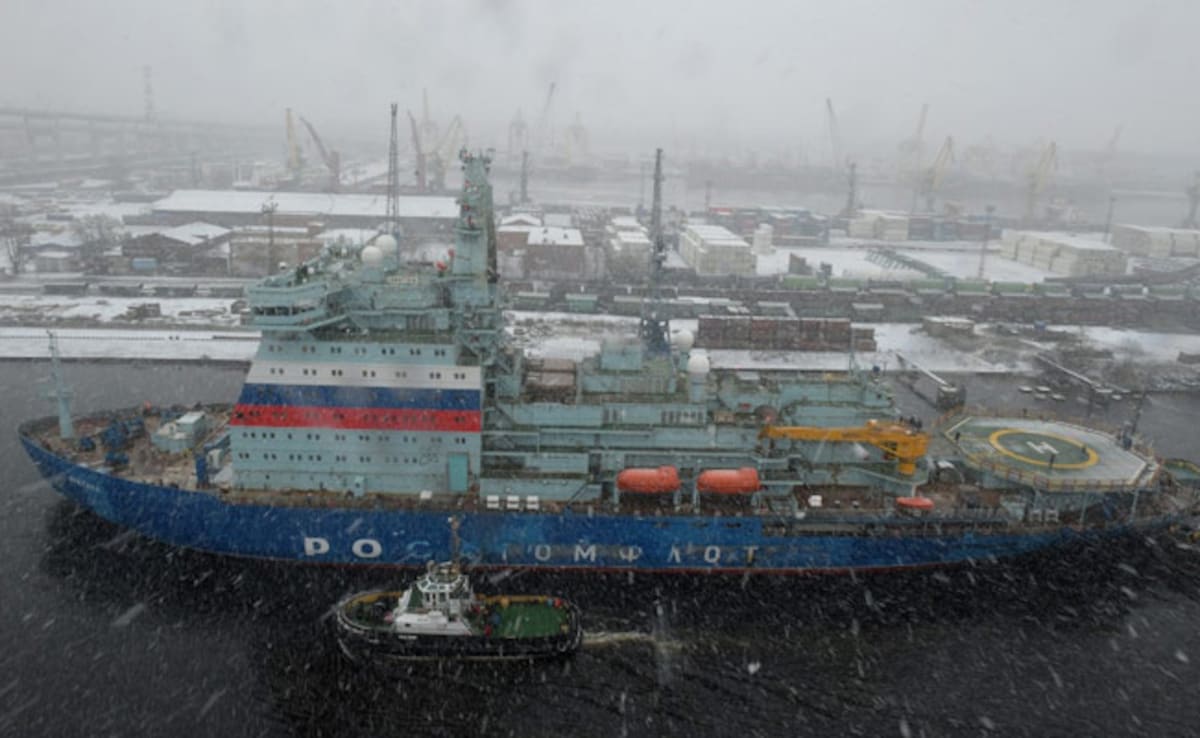
The math is simple and sobering. Russia currently operates the world’s largest icebreaking fleet, including nuclear-powered leviathans that can stay at sea for months. China, despite having no Arctic coastline, has declared itself a "Near-Arctic State" and is rapidly expanding its "Polar Silk Road" through a growing fleet of research vessels that often double as intelligence-gathering platforms.
By partnering with Finland, the world leader in ice-going technology, Canada and the U.S. are attempting to bypass the decades of research and development they missed during the post-Cold War lull. The collaboration allows Chantier Davie to utilize Finnish designs to ensure the Polar Max meets its 2030 deadline—a date that is non-negotiable given that the current flagship, the CCGS Louis S. St-Laurent, is more than 50 years old and nearing its structural limit.
Technical Superiority vs. Tactical Reality
The new ships are engineering marvels. Seaspan’s design features an ice-classed azimuthing propulsion system and over 40MW of installed power, allowing the ship to pivot 360 degrees in thick ice. This maneuverability is critical for escorting commercial vessels or responding to search-and-rescue emergencies in the Northwest Passage.
However, a ship is only as effective as the infrastructure supporting it. The Nanisivik Naval Facility, intended to be a primary refueling hub, has faced its own litany of delays and scaled-back ambitions. Without a robust network of deep-water ports and satellite communication that functions reliably above the 70th parallel, these multi-billion-dollar ships remain tethered to the south.
Furthermore, unlike their Russian counterparts, Canadian icebreakers are not armed. They are civilian-manned Coast Guard vessels. While they provide "hard power" in terms of physical presence and the ability to project authority, they lack the deterrent capacity of a true naval fleet. This creates a strategic gap: Canada can see what is happening in the Arctic, and it can eventually get there, but it currently lacks the teeth to enforce its will if a foreign actor decides to ignore the rules of the road.
The Vanishing Buffer
The urgency is driven by a paradox. As the ice disappears, the need for icebreakers actually increases. Loose, drifting "growlers" and unpredictable ice floes make navigation more dangerous for the tankers and cruise ships now venturing north.
If Canada cannot provide the escort and safety services required for these waters, other nations will. The U.S. has already expressed concerns that Canada might be a "military freeloader" in the north, a sentiment that could lead to Washington taking a more unilateral approach to Arctic security. For Ottawa, building these ships is as much about managing the relationship with the Americans as it is about countering the Russians.
The era of the Arctic as a quiet, frozen frontier is over. The new icebreakers are the price of admission to a theater where the rules are still being written. If the schedules slip further or the costs continue to spiral, the "icebreaking superpower" Canada aims to be will remain a paper tiger while the real power shifts to those who have already mastered the cold.
Would you like me to analyze the specific economic impact of the National Shipbuilding Strategy on the Quebec and British Columbia regional economies through 2030?