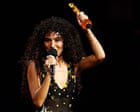
The Brit Awards moved to Manchester in 2026 to escape the stale air of London’s O2 Arena, but they couldn't escape the industry’s most predictable habit: crowning a single winner and muting the dissent. Olivia Dean walked away as the undisputed queen of the night, securing four major wins including Artist of the Year, Album of the Year for The Art of Loving, and Pop Act. Yet, as the confetti settled in the Co-op Live arena, the story wasn't just about her historic sweep. It was about a broadcast that seemed terrified of the very artists it was supposed to celebrate.
While the "full list of winners" circulating in the press offers a tidy summary of success, it ignores the friction that defined the ceremony. This was a night where the music was loud, but the mute button was faster.
The Olivia Dean Monopoly and the Death of Competition
Olivia Dean’s dominance was a foregone conclusion for anyone tracking the numbers over the last year. Since last summer, The Art of Loving has been a permanent fixture in the UK Top 5. Her victory in the Song of the Year category for "Rein Me In" (shared with Sam Fender) cemented a year where her voice was inescapable.
But a sweep of this magnitude raises uncomfortable questions about the Brit Awards' voting academy. When one artist takes Artist, Album, and Pop Act, the "genre" categories begin to feel like consolation prizes rather than distinct honors. Lily Allen, whose West End Girl was a critical darling and a cultural lightning rod in 2025, went home empty-handed despite three nominations. The message from the BPI is clear: commercial momentum trumps cultural conversation every single time.
Censorship in Manchester
The move to Manchester was billed as a homecoming for British music’s soul, but ITV treated the live feed with the suburban caution of a 1950s vicar. The most jarring moment came during the acceptance speech for International Group. Brooklyn’s Geese—who pulled off a genuine upset by beating K-pop giants Huntr/x—found their moment of triumph scrubbed by the broadcaster.
Drummer Max Bassin’s attempt to use the platform for a "Free Palestine" message was met with immediate audio muting and a swift cut to a wide shot. It wasn't an isolated incident. Host Jack Whitehall, returning for his sixth stint, saw a joke regarding Lord Peter Mandelson and "the list" (an apparent nod to the Epstein files) scrubbed from the feed with static noise.
This level of editorial intervention feels less like safeguarding "family viewing" and more like a desperate attempt to keep the music industry’s political consciousness in a box. When Jacob Alon, the Critics’ Choice winner, held up a keffiyeh during Sharon Osbourne’s tribute to the late Ozzy Osbourne, the cameras were suspiciously slow to react.
Winners Who Actually Mattered
Beyond the Dean juggernaut, the 2026 winners list does provide a roadmap of where the industry is actually finding its creative spark.
- Dave: Reclaimed his throne as the Hip-Hop/Grime/Rap Act winner. His album The Boy Who Played the Harp proved that he is still the only artist capable of marrying chart dominance with genuine poetic weight.
- PinkPantheress: Made history as the first woman to win Producer of the Year. This is perhaps the most significant win of the night, acknowledging that the "bedroom pop" generation is no longer just a trend—it is the architecture of the modern sound.
- Wolf Alice: Secured Group of the Year for the second time. Frontwoman Ellie Rowsell used her speech to tackle the crumbling infrastructure of the UK music scene, noting that being a musician "shouldn't feel like a golden ticket, but a viable career decision."
- Sault: The mysterious collective winning R&B Act was a rare moment of the Brits rewarding artistry over visibility. Sault doesn't do interviews, doesn't do red carpets, and barely exists in the traditional PR machine. Their win suggests the academy might still have a pulse.
The International Shift
The international categories usually serve as a "who's who" of the Billboard 100, but 2026 offered a slight pivot. Rosalía taking International Artist over Taylor Swift and Sabrina Carpenter was a deserved nod to Lux, an album that pushed Spanish-language music into avant-garde territory rather than just chasing reggaeton trends.
Similarly, Rosé and Bruno Mars winning International Song of the Year for "APT." showed the enduring power of a perfectly crafted pop hook, even if it lacked the experimental edge of their competitors.
The Ozzy Tribute and the Identity Crisis
The night ended with an all-star tribute to Ozzy Osbourne, who was posthumously awarded the Lifetime Achievement honor. Robbie Williams fronted a band that included Metallica’s Robert Trujillo, delivering a rendition of "No More Tears" that was technically proficient but felt strangely out of place in a room that had spent the previous three hours celebrating Olivia Dean’s breezy soul-pop.
It highlighted the Brits’ ongoing identity crisis. The ceremony wants to be a gritty celebration of British culture, but it is bound by the requirements of a primetime ITV slot and a corporate sponsorship deal with Mastercard. You cannot have "rock and roll chaos" if you are prepared to mute a drummer for saying the wrong thing.
The 2026 Brit Awards proved that British music is in a healthy state commercially, with artists like Olivia Dean and Sam Fender capable of generating massive domestic and international numbers. However, the ceremony itself feels increasingly like a sanitized product. When the most memorable moments are the ones the broadcaster tried to hide, the awards risk becoming a footnote to the actual culture they claim to represent.
Would you like me to break down the demographic shifts in this year's voting academy?