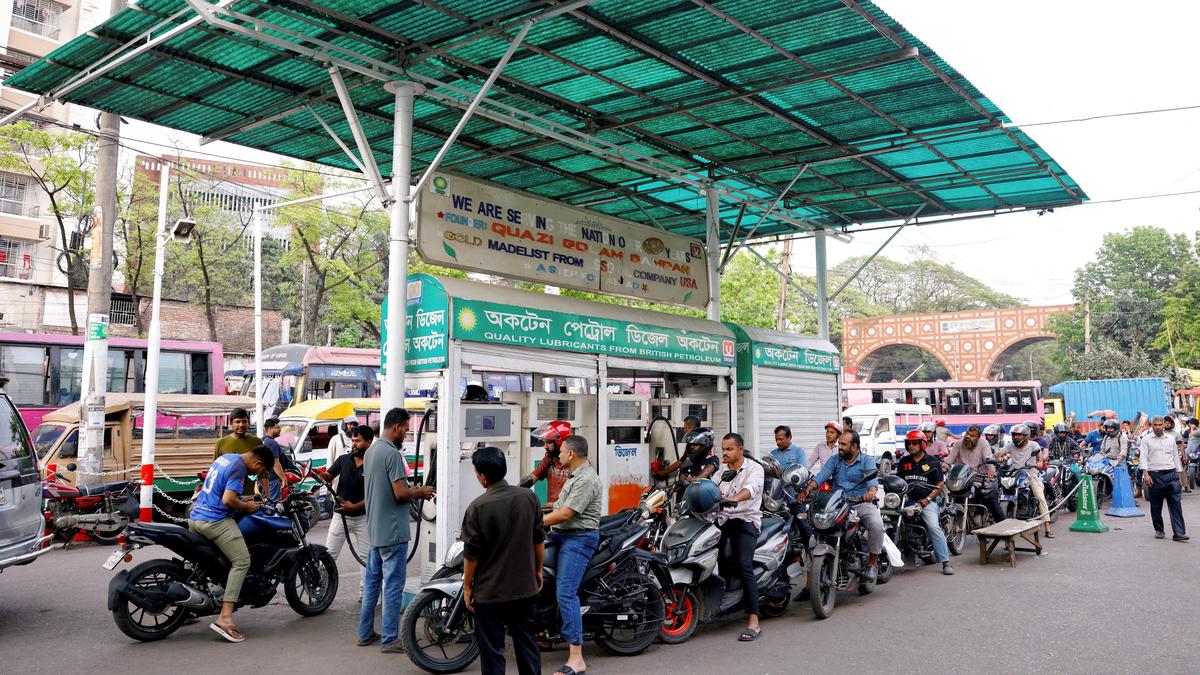
The headlines are bleeding. Every major outlet is running the same tired script: "Bangladesh rushes to secure $2 billion from the World Bank and IMF to survive an energy crisis." They frame it as a rescue mission. They paint a picture of a nation caught off guard by global market volatility and a sudden shortage of greenbacks.
They are wrong.
This isn't a "rush" for a loan. It is a desperate attempt to subsidize a decade of catastrophic policy failures. If you think $2 billion solves a systemic energy collapse, you aren't looking at the balance sheets. You’re looking at a band-aid on a gunshot wound.
The media focuses on the symptom—the liquidity crunch. The disease is an energy architecture built on the back of expensive, imported fossil fuels and "capacity charges" that reward idle power plants for doing absolutely nothing.
The Myth of the "Sudden" Crisis
Most analysts tell you that the Ukraine-Russia conflict or global supply chain hiccups caused this. That’s the "lazy consensus." It allows policymakers to shrug and blame external forces.
The truth is more biting. Bangladesh’s energy policy has been a slow-motion car crash since 2010. The government pivoted hard toward Liquefied Natural Gas (LNG) and coal, abandoning domestic gas exploration. They gambled that global prices would stay low forever. They lost.
I have watched dozens of emerging markets make this exact mistake. They trade energy sovereignty for "quick" infrastructure wins. When you stop drilling your own soil because it's cheaper to buy from Qatar or the spot market, you aren't growing. You are becoming a hostage.
The $2 Billion Math Doesn't Work
Let’s talk about the money. The "People Also Ask" crowd wants to know: "Will the IMF loan stabilize the Taka?" or "Can $2 billion fix the power outages?"
The answer is a hard no.
Bangladesh’s outstanding bills to private power producers and international oil companies are already hovering around the $3 billion to $4 billion mark. Do the arithmetic. A $2 billion loan doesn't even clear the existing debt. It’s a revolving door. The money comes in from Washington, D.C., and flows immediately out to the bank accounts of fuel suppliers and independent power producers (IPPs).
Nothing goes to the grid. Nothing goes to the consumer.
The Scandal of Capacity Charges
If you want to understand why the lights are going out in Dhaka while the government is "rushing" for loans, you have to understand the Capacity Charge.
This is a contractual obligation where the government pays private power plant owners even if they don't produce a single kilowatt of electricity. Over the last 15 years, Bangladesh has paid out more than $10 billion in these charges.
Imagine a scenario where you hire a taxi to sit in your driveway. You pay the driver $100 a day just to exist. When you actually need a ride, you find out you can't afford the gas. That is the Bangladesh power sector.
We are seeing a massive transfer of wealth from the general taxpayer to a handful of well-connected energy moguls. The $2 billion loan isn't "securing the energy future." It is paying the "taxi drivers" to keep sitting in the driveway.
The Foreign Exchange Trap
The competitor's article likely mentions the "depleting forex reserves." Again, they miss the nuance.
The reserves aren't just low; they are being liquidated to defend an indefensible exchange rate. For years, the Bangladesh Bank kept the Taka artificially strong. This killed the competitiveness of the garment sector—the nation’s only real source of dollars—and encouraged capital flight.
Now, the gap between the official rate and the "kerb market" (the black market) is a chasm. When the IMF demands "market-based exchange rates" as a condition for that $2 billion, the Taka will plummet.
- Result 1: Inflation hits 12% or higher.
- Result 2: Import costs for fuel spike even further.
- Result 3: The $2 billion buys even less fuel than it did yesterday.
This is a feedback loop of failure.
Stop Fixing the Loan, Start Killing the Contracts
The advice being given by "experts" is to take the loan, raise electricity prices for the public, and wait for global markets to cool.
This is terrible advice.
Raising prices on a population already struggling with record-high egg and rice prices is a recipe for civil unrest. Instead of squeezing the consumer, the government needs to perform surgery on its own contracts.
- Invoke Force Majeure: The global energy shift is a valid reason to renegotiate the "No Power, No Pay" clauses in IPP contracts. If you don't produce, we don't pay. Period.
- Aggressive Domestic Exploration: Bangladesh sits on one of the world's largest untapped deltaic gas reserves. Why is the state-run BAPEX underfunded while billions go to LNG imports? Because imports offer "commissions." Domestic drilling offers only hard work and energy security.
- Audit the "Quick Rental" Plants: These were supposed to be temporary fixes for a power gap in 2010. It is 2026. They are still here, sucking the life out of the budget.
The High Cost of "Easy" Money
The downside to my contrarian approach? It’s painful. Renegotiating contracts scares off "investors." But let's be honest: the current "investors" are rent-seekers. They aren't bringing innovation; they are bringing a bill.
If Bangladesh continues to chase loans to pay for fuel it cannot afford, it will end up like Sri Lanka. The $2 billion isn't a victory. It’s a countdown.
The IMF isn't a savior. They are a liquidator. They will demand the removal of subsidies, which will spark protests. They will demand currency devaluation, which will erase the middle class.
The Wrong Question
People ask: "How fast can we get the loan?"
The right question: "Why do we need a loan to pay for energy we can't even deliver to our factories?"
The garment industry, which accounts for 80% of exports, is currently facing 4 to 6 hours of power cuts a day. Production is dropping. Orders are moving to Vietnam and India. If the industrial engine dies, there will be no dollars left to pay back the $2 billion, the $4 billion, or the $10 billion that comes after.
We are witnessing the death of the "Import-Led Energy Growth" model. It was a fantasy built on cheap credit and stable markets. Both are gone.
Stop cheering for the loan. Start mourning the policy.
The $2 billion is gone before it even hits the account. It’s already been spent on yesterday's mistakes. If the government doesn't stop paying for idle plants and start drilling for its own gas, the next "rush" won't be for a loan—it will be for the exits.
The lights aren't just flickering; the fuse has already burned out.