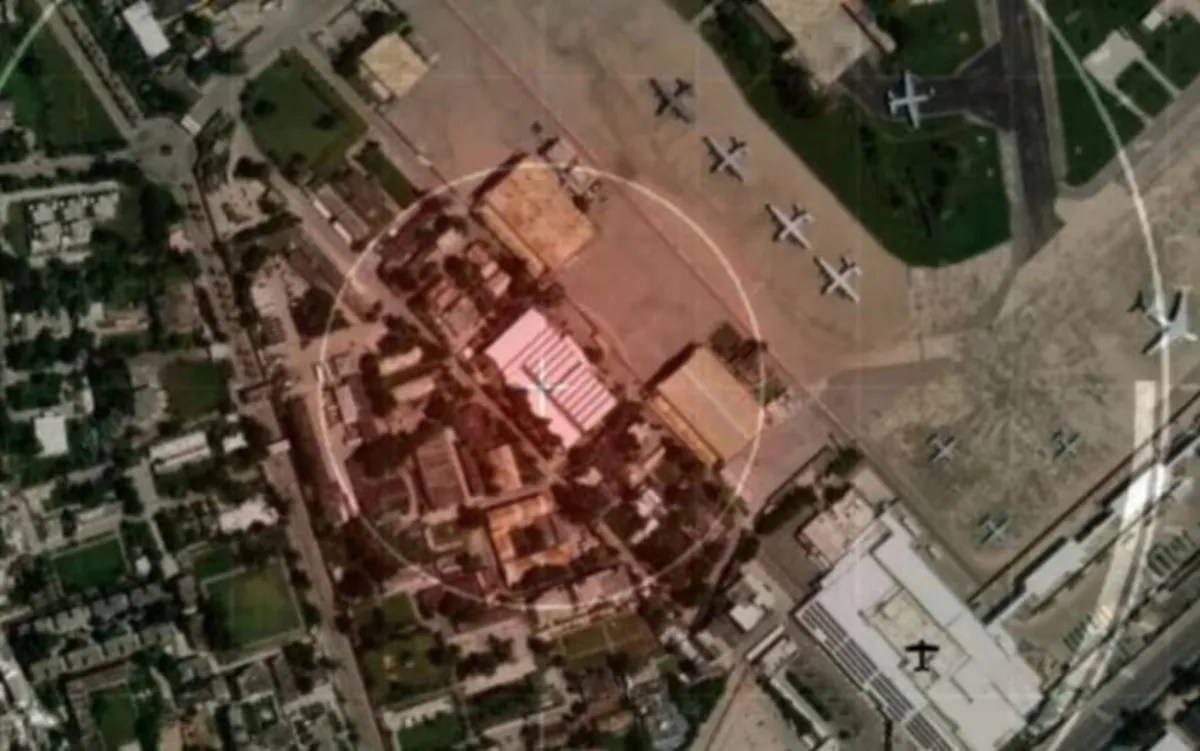
The headlines are screaming about a regional wildfire. They want you to believe that while the Middle East burns between Tehran and Tel Aviv, Kabul has decided to open a second front against Islamabad. They call it "chaos." They call it "spillover."
They are wrong.
What we are witnessing isn't the erratic behavior of a "failed state" in Afghanistan or the desperate lashing out of a fractured Pakistan. It is the violent recalibration of the Silk Road. If you are watching the exchange of fire at the Durand Line and thinking about "terrorism" or "religious extremism," you are falling for the surface-level narrative. You are missing the cold, hard logic of geography and the brutal competition for the transit corridors of the next century.
The Myth of the "Unstable" Taliban
The mainstream media loves the narrative of the Taliban as a group of disorganized insurgents who accidentally inherited a country and now don't know how to run it. This perspective is lazy. Since 2021, the Kabul administration has shown a ruthless, singular focus on one thing: Strategic Autonomy.
When Afghanistan launches airstrikes or border skirmishes against Pakistan, it isn't an act of mindless aggression. It is a calculated middle finger to the "Strategic Depth" policy that Islamabad has tried to enforce for decades. For forty years, Pakistan viewed Afghanistan as its backyard—a place to park proxies and ensure a friendly buffer against India.
That era is dead.
Kabul is now signaling to the world—specifically to Beijing and Moscow—that they are no longer a Pakistani satellite. They are open for business, and they will use kinetic force to prove they control their own borders. They aren't "unstable"; they are rebranding through fire.
Pakistan’s Impossible Choice
Pakistan is currently trapped in a geopolitical pincer movement of its own making. For years, the Pakistani establishment played a double game, supporting various factions to maintain influence. Now, the blowback is systemic.
But here is the nuance the "experts" miss: Pakistan’s military response isn't about security. It’s about Economic Survival.
Pakistan is broke. The China-Pakistan Economic Corridor (CPEC) is the only IV drip keeping the economy twitching. To keep the CPEC viable, Pakistan must demonstrate it can secure its Western frontier. If they can't stop cross-border raids, the Chinese engineers pack up and go home. Every rocket fired across the border is actually a budget negotiation. Islamabad is trying to prove to its creditors that it is still the regional policeman, even as the "police station" is falling apart from within.
The Drone Revolution Nobody is Talking About
While the world focuses on the politics, the technology of these skirmishes has fundamentally shifted the balance of power. We are seeing the "Bayraktar Effect" play out in the mountains of the Hindu Kush.
Historically, a state like Pakistan held a massive conventional advantage over a group like the Taliban. That advantage has evaporated. The proliferation of low-cost, off-the-shelf drone technology and left-behind Western hardware has leveled the playing field.
- Asymmetric Airpower: You don't need a billion-dollar air force to conduct an "airstrike" anymore.
- Precision Intelligence: Commercial satellite imagery and encrypted comms mean Kabul's commanders have better situational awareness than many NATO officers did twenty years ago.
- Zero-Cost Attrition: Afghanistan can afford a border war; Pakistan, with its skyrocketing inflation and IMF mandates, cannot.
This isn't a "clash of civilizations." It’s a showcase of how $500 drones can neuter a nuclear-armed military’s border strategy.
The India-Iran-Afghanistan Triangle
If you want to understand why these border strikes are happening now, look at the map—not the one in a history book, but the one in a logistics office.
Iran and India have been quietly working on the Chabahar Port. This is the "Pakistan Bypass." If Afghanistan can secure its routes to the west and south through Iran, it no longer needs the port of Karachi. It no longer needs to play nice with Islamabad.
The recent flare-ups are a symptom of Afghanistan’s pivot. They are literally fighting to disconnect from the Pakistani trade monopoly. By engaging in border conflicts, Kabul is telling the world: "We have other options."
The Real Winners
- China: They sit back and wait. Whether the border is controlled by Islamabad or Kabul, Beijing just wants the minerals. They will sign a deal with whoever is left standing.
- Arms Dealers: The black market for "lost" NATO equipment is the most liquid economy in the region.
- Regional Hegemons: Iran benefits every time Pakistan is distracted on its Western flank, allowing Tehran more breathing room to manage its tensions with Israel and the US.
The "Failed State" Fallacy
I have seen analysts blow millions of dollars in "stability aid" based on the assumption that if you just give these regions enough money, they will stop fighting. This is a fundamental misunderstanding of the incentive structures.
Conflict is the primary export of a landlocked nation seeking leverage.
The fighting isn't a sign that the system is breaking; the fighting is the system. It is how these actors communicate their "ask" to the global powers. When the Taliban strikes Pakistan, they aren't looking for a territory. They are looking for a seat at the table where the regional transit fees are distributed.
Stop Asking "When Will it End?"
The question is flawed. It won't "end." It will evolve.
The border between Pakistan and Afghanistan—the Durand Line—was drawn by a British bureaucrat with a pen and a lack of local knowledge in 1893. It is a fake line. Expecting it to be a site of peace is like expecting water not to flow downhill.
The real question you should be asking is: Who controls the lithium?
Beneath the soil where these skirmishes are happening lies one of the world's largest deposits of lithium and rare earth minerals. The "war" you see on the news is a smoke screen for the "mining rights" being negotiated in private villas in Doha and Dubai.
The Brutal Reality of Regional Realignment
If you are waiting for a diplomatic solution, you are going to be waiting a long time. Diplomacy requires a shared reality, and right now, Kabul and Islamabad are living in two different centuries.
Pakistan is trying to maintain a 20th-century colonial border.
Afghanistan is trying to build a 21st-century resource-extraction hub.
The friction between these two goals is heat, and heat leads to fire. This isn't a "distraction" from the Iran-Israel conflict; it is the eastern wing of the same collapse of the post-WWII order. The old borders are melting. The old alliances are worthless.
Don't look at the soldiers. Look at the pipelines. Look at the fiber optic cables. Look at the mineral surveys. That is where the real war is being won, and right now, the "insurgents" in Kabul are playing a much smarter game than the "generals" in Islamabad.
The next time you see a report about an airstrike in the mountains, don't feel pity. Feel the shift in the global axis. The center of gravity is moving, and it’s moving through the Khyber Pass, whether the rest of the world is ready for it or not.
Forget the "war on terror." This is the war for the supply chain.
Stop reading the headlines and start reading the geology reports.